Yuen: ICE keeps knocking on her door. Her neighbor keeps standing watch.

President Trump wants Americans to believe Minnesotans resent our immigrant neighbors. A friendship on a quiet suburban street tells a different story.

Columnist Icon
The Minnesota Star Tribune
December 16, 2025 at 9:30PM
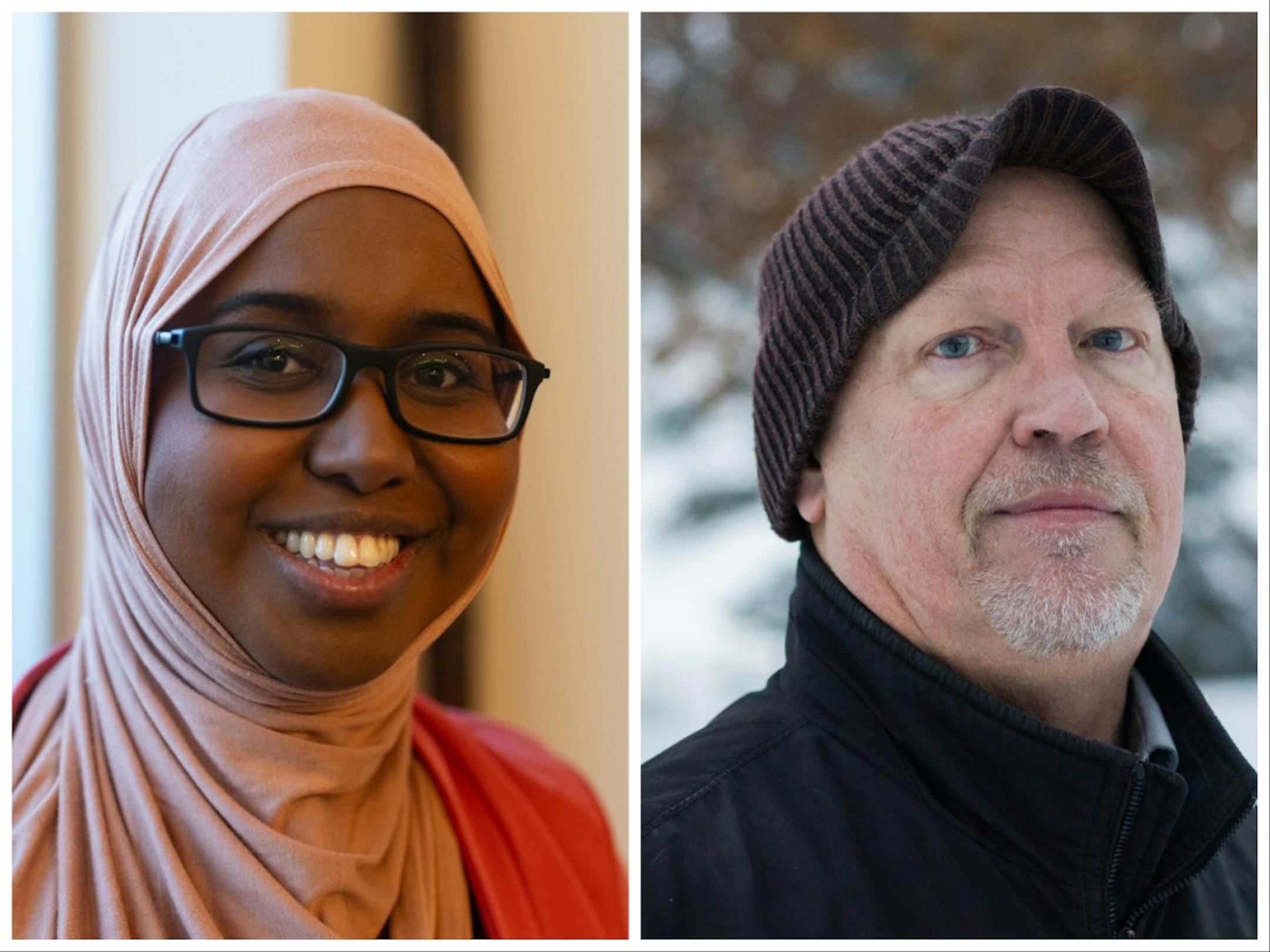
Deqa Muhidin of Apple Valley says immigration agents have come to her house three times in recent months seeking someone who doesn't live there. “For Deqa, it’s been an inconvenience,” said neighbor Rob Briody. “For me, it’s been a cry to protect my neighborhood.” (Aaron Nesheim/Sahan Journal, Jaida Grey Eagle for the Minnesota Star Tribune/For the Minnesota Star Tribune)

The ICE agents descend on Deqa Muhidin’s home, usually five or six unmarked SUVs at a time. The first visit came around 6:30 in the morning. They banged on the door of her 1970s suburban rambler and surrounded the area, she recalled, some toting rifles and wearing vests marked “POLICE ICE.”

Each time, they inquired about an individual who has never lived in Muhidin’s Apple Valley home. Each time, the Somali American mom and educator explained that she hasn’t spoken to the man, a childhood friend, in years. The agents have politely apologized to her, promising they won’t come back.

But they have now visited her three times in recent months, including twice over the past couple weeks as the Trump administration has intensified its crackdown on mostly Somali and Latino immigrants in the Twin Cities.

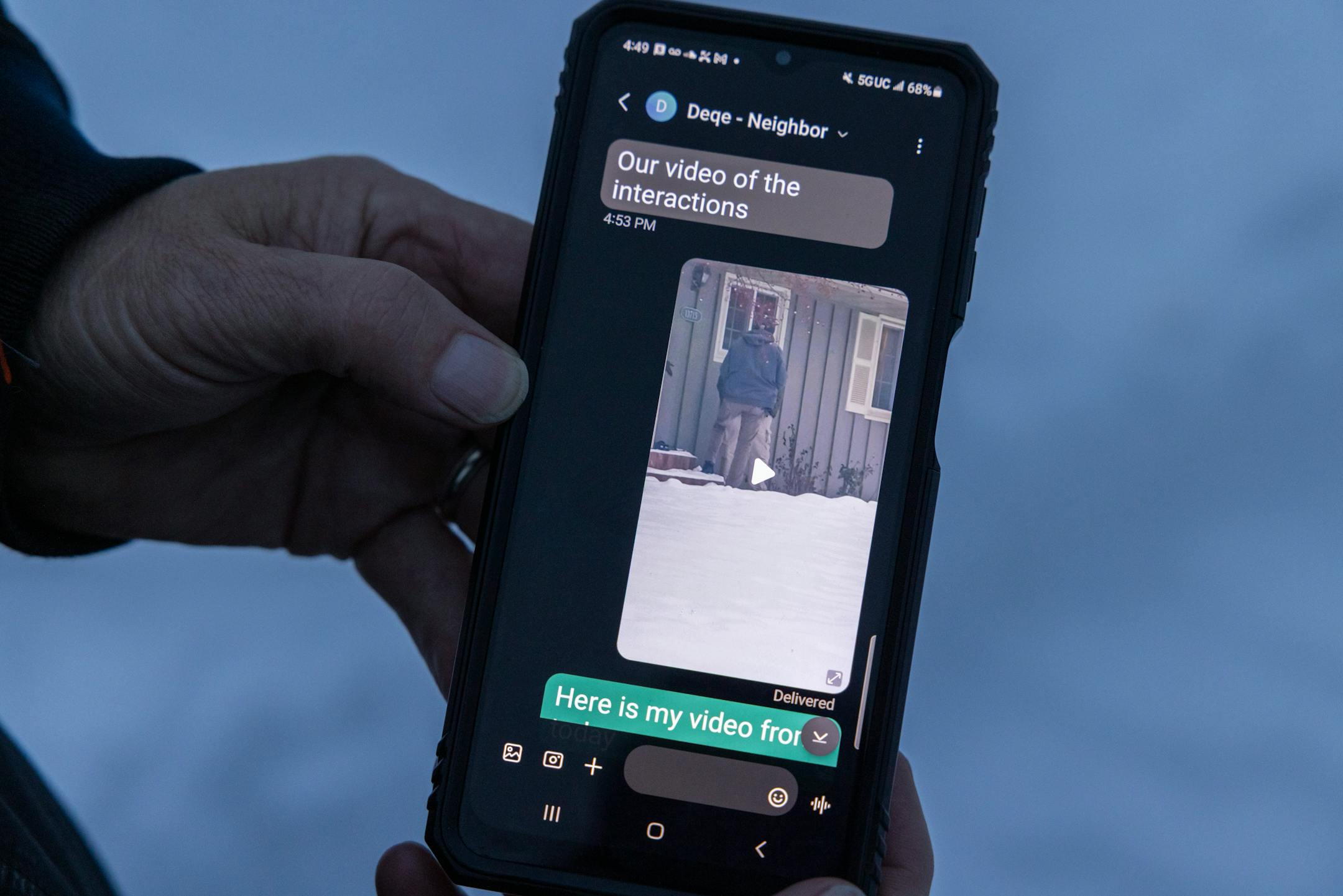
At the third encounter, on Dec. 5, Rob Briody stepped outside to record the interaction on his phone. Briody is Muhidin’s next-door neighbor. He is horrified by the repeated questioning from ICE and has done everything in his power to look after Muhidin’s family, including an offer to patrol their home.

“For Deqa, it’s been an inconvenience,” said Briody. “For me, it’s been a cry to protect my neighborhood.”

Recent immigration sweeps in the Twin Cities have left many Minnesotans wondering how they can help the immigrants in their lives. President Donald Trump would have Americans believe that we resent our Somali neighbors and wish, as he does, that they “go back to where they came from.”

Yet the friendship between Muhidin and Briody shows how interwoven our communities have grown, with many Minnesotans expressing solidarity for their immigrant neighbors in ways both raucous and quiet. Activists have mobilized around ICE actions, protesting arrests and documenting the confrontations. During snowfalls, shovel-ready residents have surprised their Somali neighbors by clearing their driveways.

View post on Instagram
 

Muhidin, 40, who along with her husband and children is a U.S. citizen, said she’s taking each day in stride. ICE has not responded to a request for comment.

“It feels like a dystopian world where everyone in my life is scared,” she said. “I am coping with it by saying we’re being led by someone who loves uncertainty, threatening people and feeding off chaos. This is a chaotic time, but this, too, shall pass.”

A Somali American woman wearing a bright mustard-color hijab, dark framed glasses and pink lipstick smiles for the camera.
Deqa Muhidin said ICE agents have shown up at her Apple Valley home three times, looking for someone who does not live there. (Provided)

It helps, she said, that the guy next door has her back. Briody contacted the city’s police chief and attended Saturday morning coffee klatches hosted by his state legislator to sound the alarm that ICE was in Apple Valley.

“He looks out for us in ways I could have never imagined,” Muhidin said of Briody.

Talking over the fence

Muhidin and her husband, Mohamed, moved into the house, their first ever, five years ago. Mohamed and Briody bonded by talking over the fence — just “just dumb guy stuff,” as Briody puts it — what mowers they want to buy, which weeds are invasive and how to fertilize the lawn.

Now Muhidin and her husband have three young children and the trappings of American suburban life. A swing set. A trampoline. That aforementioned lawn mower.

Muhidin was home on a July morning when ICE startled her at the front door. She learned they were looking for a childhood friend whom she had allowed to use her mailing address. An agent told Muhidin he had committed a misdemeanor about 15 years ago, when he was in his late teens.

She showed the agents her and her husband’s U.S. passports and the birth certificates of their kids. They warned her that if she reached out to the man they were searching for, she could be charged with obstructing justice, Muhidin recalled.

Muhidin knew she needed to explain the commotion to others on her block. She reached for her phone and found the contact that she had saved as “Rob Neighbor.” Briody, a 64-year-old white empty nester who tracks his steps on brisk walks around the neighborhood, was taken aback. He said his community is waking up to the fact ICE is everywhere.

“My goal is to make people know that innocent people are being targeted,” he said. “These are not ‘illegal’ people being affected. These are people who are citizens, people who have green cards.”

Rob Briody shows a text message exchange with neighbor Deqe Muhidin. (Jaida Grey Eagle for The Minnesot Star Tribune )

As ICE operations focus on dense urban neighborhoods of Minneapolis and St. Paul, they’re also unfolding across the metro area, shaking up fast-changing suburbs where immigrants live and work.

Over the weekend, agents arrested an Ecuadorian cook in Brooklyn Park after luring him out of the coffee shop where he worked. In Chanhassen, ICE agents surrounded a construction site where two men worked in the brutal cold on the roof of an unfinished house.

Briody said standing up for his neighbors is as natural as caring for packages on their doorstep. “We are here for our neighbors,” Briody said. “It’s the Minnesota way. We look after them, they look after us.”

Terror around her

Muhidin said each time ICE showed up at her door, anywhere from seven to 15 agents appeared on site. Some were repeat visitors. Each encounter lasted just minutes. By the third visit, she was irritated that they were back again.

Muhidin’s mom, rattled by the ICE encounters, has moved out of her daughter’s house, worried that she’ll be snatched. “She’s convinced they’re here to take citizens,” Muhidin said. “She’s scared by the rhetoric that’s out there. Just this morning, she said, ‘I want to come back, but I can’t.’”

A survivor of Somalia’s civil war, Muhidin remembers stepping over dead bodies when she was a kid. A shootout targeted her neighborhood, and her mom’s shoulder still carries shrapnel from the gunfire. Past trauma helps Muhidin put the current political climate in context. “We’re alive. We’re home,” she said.

Muhidin moved to the United States in 2000. She says Trump has vastly underestimated the relationships Somali Americans have built with their fellow Minnesotans. This is a place, she notes, where schoolkids of all backgrounds squeal when they see that sambusas are being served at lunchtime.

A 2025 Bush Foundation fellow, Muhidin helped establish the Somali heritage language program in Minneapolis Public Schools. Although it was largely intended for students of Somali descent, eight white children, two African American and one Asian American student are enrolled, she said.

“Their parents’ argument is that it’s heritage to them because Somali is a language of their community,” Muhidin said. “I have videos of the kids singing ‘I am proud to be Somali’ together.”

She declined Briody’s offer to patrol her house around the clock, saying her family will be protected by their citizenship. She’s grateful he and another neighbor, a U.S. military veteran, stood watch during the last visit. If ICE decides to leave her alone, she says it’s because of Briody’s refusal to look the other way.

“If the case was flipped, I would have done the same for Rob,” she said. “I promised him sambusas.”

about the writer

about the writer

Laura Yuen

Columnist

Laura Yuen writes opinion and reported pieces exploring culture, communities, who we are, and how we live.

See Moreicon

More from Culture

See More
card image
Aaron Nesheim/Sahan Journal, Jaida Grey Eagle for the Minnesota Star Tribune/For the Minnesota Star Tribune

President Trump wants Americans to believe Minnesotans resent our immigrant neighbors. A friendship on a quiet suburban street tells a different story.

card image