African owner of South Korean-founded Yon’s Foods kimchi wants Minnesota-grown ingredients

The Ethiopian family who bought the Burnsville brand three years ago is hunting for local napa cabbage farmers to replace wholesale crops from California and Canada.

The Minnesota Star Tribune
August 21, 2025 at 11:01AM
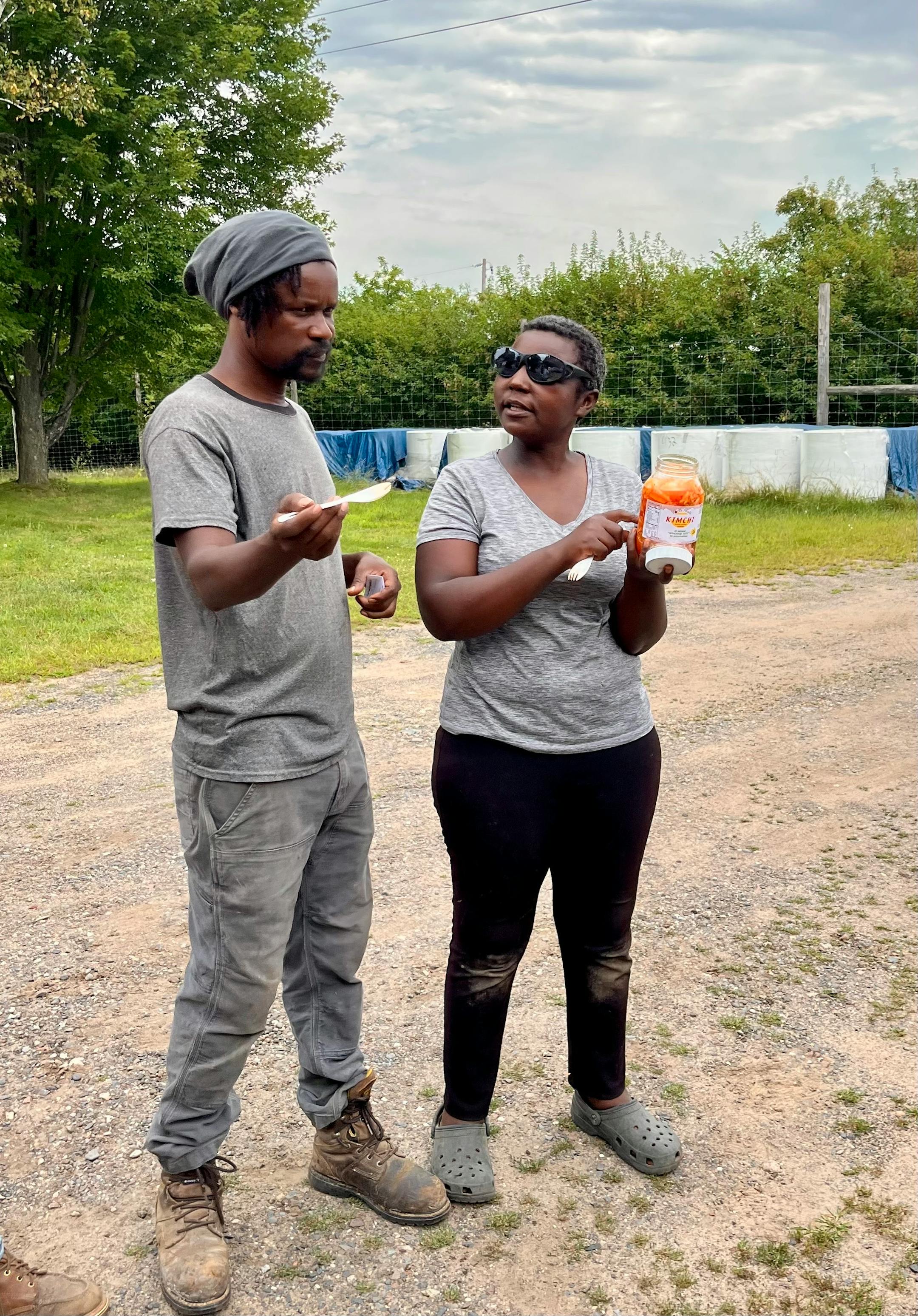
Yon's Foods owner Tsehai Wodajo, left, with Moses Momanyi at his farm outside Cambridge, Minn., on Aug. 15 talk about the possibility of sourcing local cabbage for the Minnesota kimchi-maker. (Brooks Johnson/The Minnesota Star Tribune)

Yon’s Foods has been supplying the Twin Cities with kimchi for decades, packing the Korean staple in Burnsville and stocking the jars at local Cub stores and Asian markets.

The fermented cabbage, doused in chili flakes and fish sauce, still uses the original recipe and packaging from founder Yon Quinlan, who emigrated from South Korea and started the company in 2003.

But it’s Ethiopia native Tsehai Wodajo, the new owner as of three years ago, who is forging connections in the local African community to make this Korean side dish wholly Minnesotan.

Wodajo, with Quinlan as an adviser and mentor, aims to build a local supply of napa cabbage, daikon radishes and perhaps even garlic to fill those jars of kimchi.

That’s no easy feat in the land of corn and soy. Sourcing locally, at this size, is more than a phone call or a contract to sign; it takes time and trust.

“That’s the thing: It does take years, sometimes, to build these partnerships up,” said Jennifer Alexander, a regional marketing specialist with the Minnesota Department of Agriculture. “It’s so cool when you get to see success stories of local supply chains being built from the ground up. Because it’s not easy.”

Just inside the entrance to their small farm in rural Isanti County last week, Moses and Lonah Momanyi ate a forkful of Yon’s kimchi right out of the jar. And then another.

If they’re going to grow cabbage for the fermented Korean condiment, it helps being fans of the finished product.

Wodajo, with her son and daughter-in-law, visited the farm in their search for a local source of 1,500 pounds of napa cabbage per week, and maybe some daikon radish too.

“It would be a win-win,” Wodajo said.

Yet even after two hours at the Dawn2Dusk Farm, the conversation built to “let’s keep talking.”

“I think we can start with a few farmers. We’ll know by the beginning of the year,” said Moses Momanyi, a native of Kenya who has organized dozens of fellow African immigrant farmers into cooperatives around the state. “These are new farmers, so over the winter, it will require a few meetings.”

Napa cabbage grows well in Minnesota’s climate and can yield 20 tons per acre, so it wouldn’t take much land to amply supply the kimchi-maker during the growing season.

“There is the potential. Napa is not that hard to grow,” Lonah Momanyi said. “It’s just that with the local food hubs we supply, it’s not something they have been buying.”

Dawn2Dusk Farm owners Moses and Lonah Momanyi try Yon's Foods kimchi at their farm near Cambridge, Minn. on Aug. 15. (Brooks Johnson/The Minnesota Star Tribune)

Today, Yon’s sources cabbage from wholesalers that move the leafy heads from California or Canada.

Meanwhile, corn and soy dominate Minnesota farmland, typically becoming animal feed or vehicle fuel. Federal farm programs also tend to favor those large cash crops rather than fruit and vegetable producers, encouraging grain supply no matter the demand.

So for a new crop of Minnesota napa cabbage to reach local kimchi jars — as opposed to planting something else for the certainty of established markets — farmers will have to take a leap of faith.

“All the systems have really incentivized big global supply chains and even national supply chains,” said Matt Barthelemy, project coordinator at the nonprofit Renewing the Countryside. “In our lifetimes, we’re going to see some big changes, and I think we need durability in local foods. And so that’s one reason why it’s really exciting to do this work now in a really joyful way, instead of doing it when we’re kind of desperate.”

Wodajo’s son, Fufa Abera, manages the business and said prices they pay for cabbage fluctuate between $23 to $42 per box. The company is willing to pay more than the lowest wholesale price.

“As long as we can source it locally,” he said.

Wodajo, 67, was a radio journalist in Ethiopia before a long career as a social worker in Hennepin County, alongside running the nonprofit Resources Enriching African Lives.

The lifelong cook plans to release her own line of Ethiopian sauces and potentially add more flavors of kimchi to the mix. But the original kimchi has retained the same recipe and packaging. The website, however, is in line for a reboot so it can offer online ordering.

“Things are really moving even better than when we received it, and it has potential for us to grow,” Wodajo said of the company.

Having a Minnesota-grown element to promote the brand could only help, she figures. No matter how long it takes to get there.

“This is our first connection,” she said. “We’re open to exploring and reaching out to other farmers.”

about the writer

about the writer

Brooks Johnson

Business Reporter

Brooks Johnson is a business reporter covering Minnesota’s food industry, agribusinesses and 3M.

See Moreicon

More from Agriculture

See More
The Abbey Church is a landmark on the St. John's University campus located in Collegeville.
The Minnesota Star Tribune

Local nonfiction: “Greater Minnesota” travelogue details a home-grown returnee’s conversion.

card image
card image