

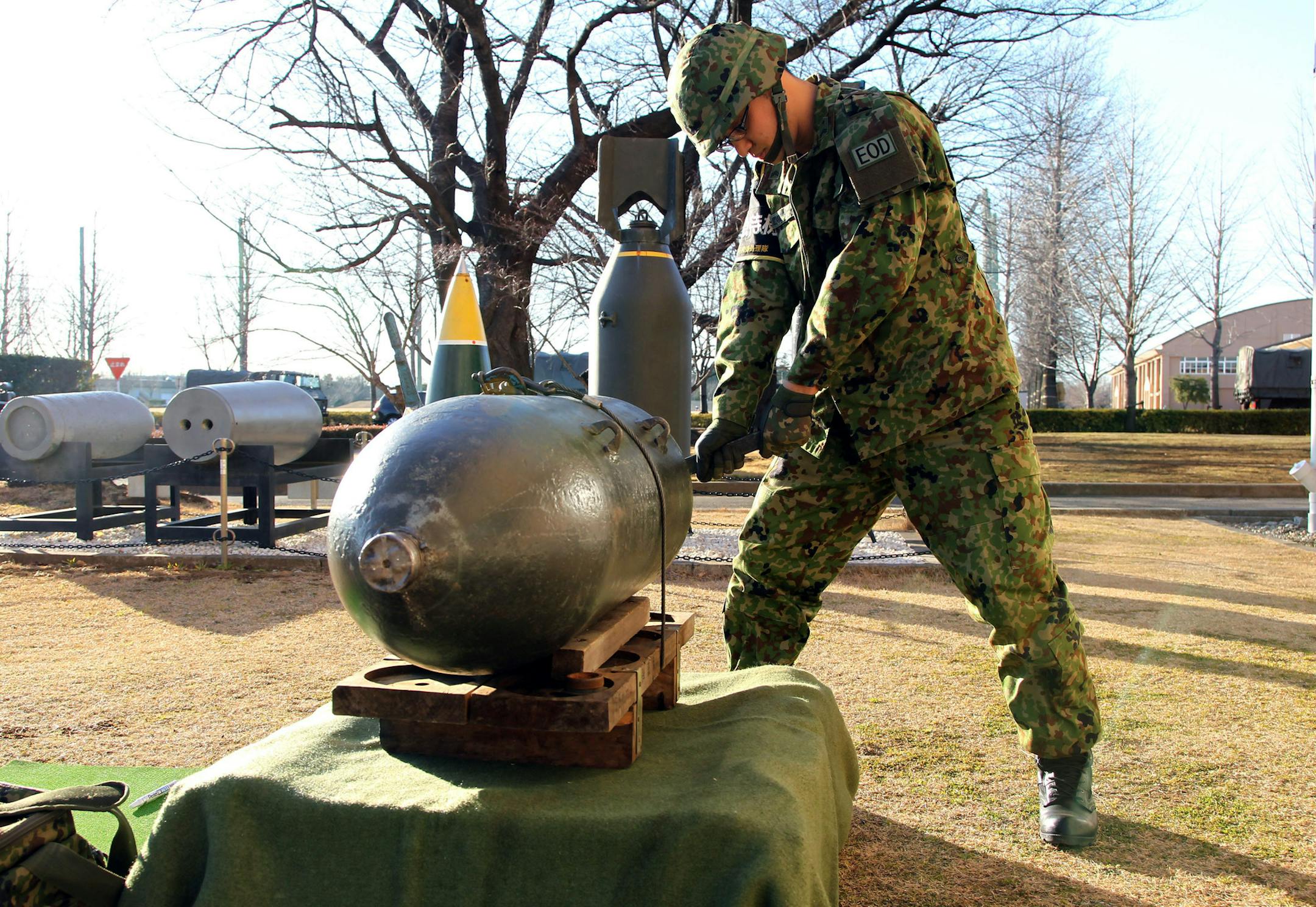
For the prime minister, Shinzo Abe, it was a milestone. Last Thursday a panel published its long-awaited report recommending that the country's "self-defense forces" (SDF) be allowed to act more like a normal army.
At present, in Article Nine of its constitution, Japan renounces war as a sovereign right. For Abe, rewriting the clause is a cherished aim. For most Japanese, that remains several steps too far. So Abe, backed by the panel, has a narrower goal: reinterpreting the constitution in ways that, for the first time, allow for "collective self-defense" — that is, would let Japan aid its allies, notably America, should they come under attack.
The recommendations stop far short of allowing combat missions overseas. Assuming that the recommendations become law, only collective defense related chiefly to the protection of Japan will be permitted, meaning in practice in its near-abroad. But in a country aware of its past imperial rampages through Asia and proud of its postwar pacifist credentials, even this change faces opposition. Public support for Abe's changes has been ebbing. In particular, his coalition partner, New Komeito, has grave doubts. The party is backed by Soka Gakkai, the country's biggest (and staunchly pacifist) Buddhist organization.
New Komeito's support is critical and, for the fact that it is not a given, Abe has partly himself to blame. His visit in December to Tokyo's Yasukuni shrine, which honors war criminals as well as the war dead, appalled the party. Its leader, Natsuo Yamaguchi, deplores Japan's bad relations with China and South Korea. Both countries are wary of Japan being seen to boost its armed forces. Still, New Komeito may yet come around. It seems to have been heartened by President Obama's endorsement, when he visited Tokyo last month, of the desire to reinterpret the constitution. It was just the boost that Abe needed.
Obama's endorsement makes sense. The panel's recommendations ought to help Japan act as a more effective partner should the United States find itself, for instance, in combat with North Korea or defending Taiwan. Indeed, the debate about collective self-defense is taking place in parallel with an overhaul of defense guidelines between America and Japan, the first in 17 years.
For the first time, Japan could provide logistical support, including the supply of ammunition, fuel, transport and medical services, to front-line American forces in the event of a crisis on the Korean Peninsula. Japan could also provide America with more help in intelligence, surveillance and reconnaissance. And the self-defense forces would have clear permission to shoot down North Korean missiles heading for American bases or territory.
Separately, in UN-approved peacekeeping operations, Japanese soldiers could bear arms for the first time. Japan's small peacekeeping force in Iraq a decade ago was a laughingstock: It had to be defended by Australians.
Assuming it wins New Komeito's approval, the government must now pass more than a dozen amendments to existing bills that enforce the current ban on collective self-defense. Though the coalition controls both houses of the Diet, the process could still take years, says Gen Nakatani, a colleague of Abe's in the Liberal Democratic Party (LDP) involved in the talks on collective defense.


