

On Sunday, the U.N. held its annual World Press Freedom Day under the theme "Journalism without Fear or Favour."
On Monday, the awarding of Pulitzer Prizes projected that ethos — and then some.
Indeed, international reporting revealing repression and corruption was evident in several key categories, including international reporting, which was won by the New York Times "for a set of enthralling stories, reported at great risk, exposing the predations of Vladimir Putin's regime."
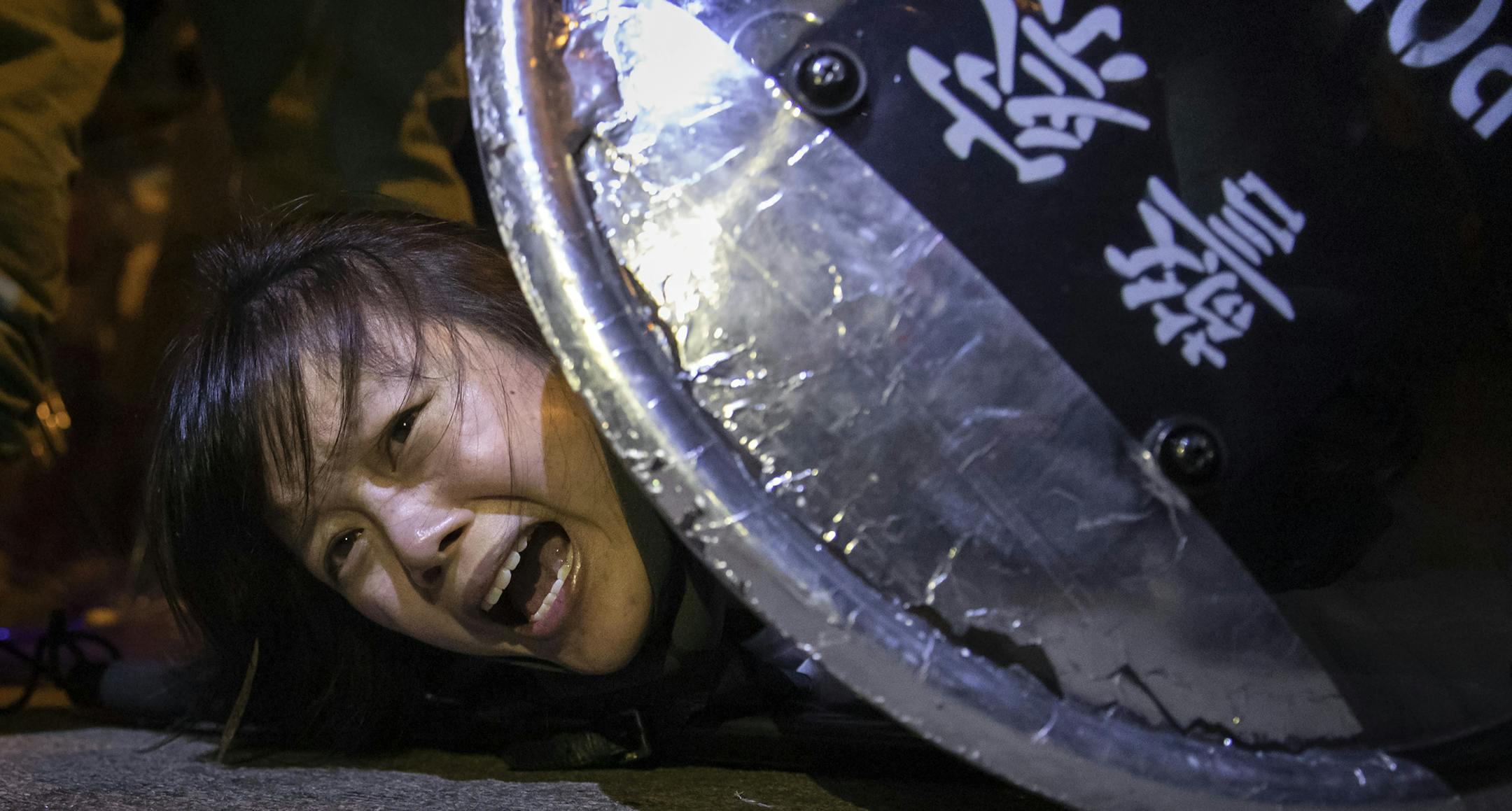
Another authoritarian government's abuses were vividly depicted by Reuters, which won the breaking news photography category "for wide-ranging and illuminating photographs of Hong Kong as citizens protested infringement of their civil liberties and defended the region's autonomy by the Chinese government."
Regrettably, it's not just repressive regimes crushing dissent: Some ostensible democracies like India do too, as witnessed by feature photography winners from the Associated Press for their "striking images captured during a communications blackout in Kashmir depicting life in the contested territory after India stripped it of its semi-autonomy."
Sometimes the international injustice spans nations, as it did in two key categories: feature writing, won by Ben Taub of the New Yorker "for a devastating account of a man who was kidnapped, tortured and deprived of his liberty for more than a decade at the Guantanamo Bay detention facility, blending on-the-ground reporting and lyrical prose to offer a nuanced perspective on America's wider war on terror." And in a new, overdue category, audio reporting, for "The Out Crowd," which the judges deemed "revelatory, intimate journalism that illuminates the personal impact of the Trump Administration's 'Remain in Mexico' policy." That award was won by Molly O'Toole of the Los Angeles Times, Emily Green, a freelancer working for Vice News, and the staff of public radio's "This American Life."
Life in America can be corrupt, too, as evidenced by the investigative reporting award given to Brian M. Rosenthal of the New York Times "for an exposé of New York City's taxi industry that showed how lenders profited from predatory loans that shattered the lives of vulnerable drivers, reporting that ultimately led to state and federal investigations and sweeping reforms."
Many of the victims were immigrants witnessing the American dream turn into a nightmare. Others often tragically cast as "the out crowd" in an inconsistent America were the subject of Pulitzer-worthy exposés.


