Hormel Foods Corp.'s fiscal third-quarter profit rose 2 percent as the company showed that peanut butter and bacon can work out for investors, not just slapped together in a State Fair concoction.
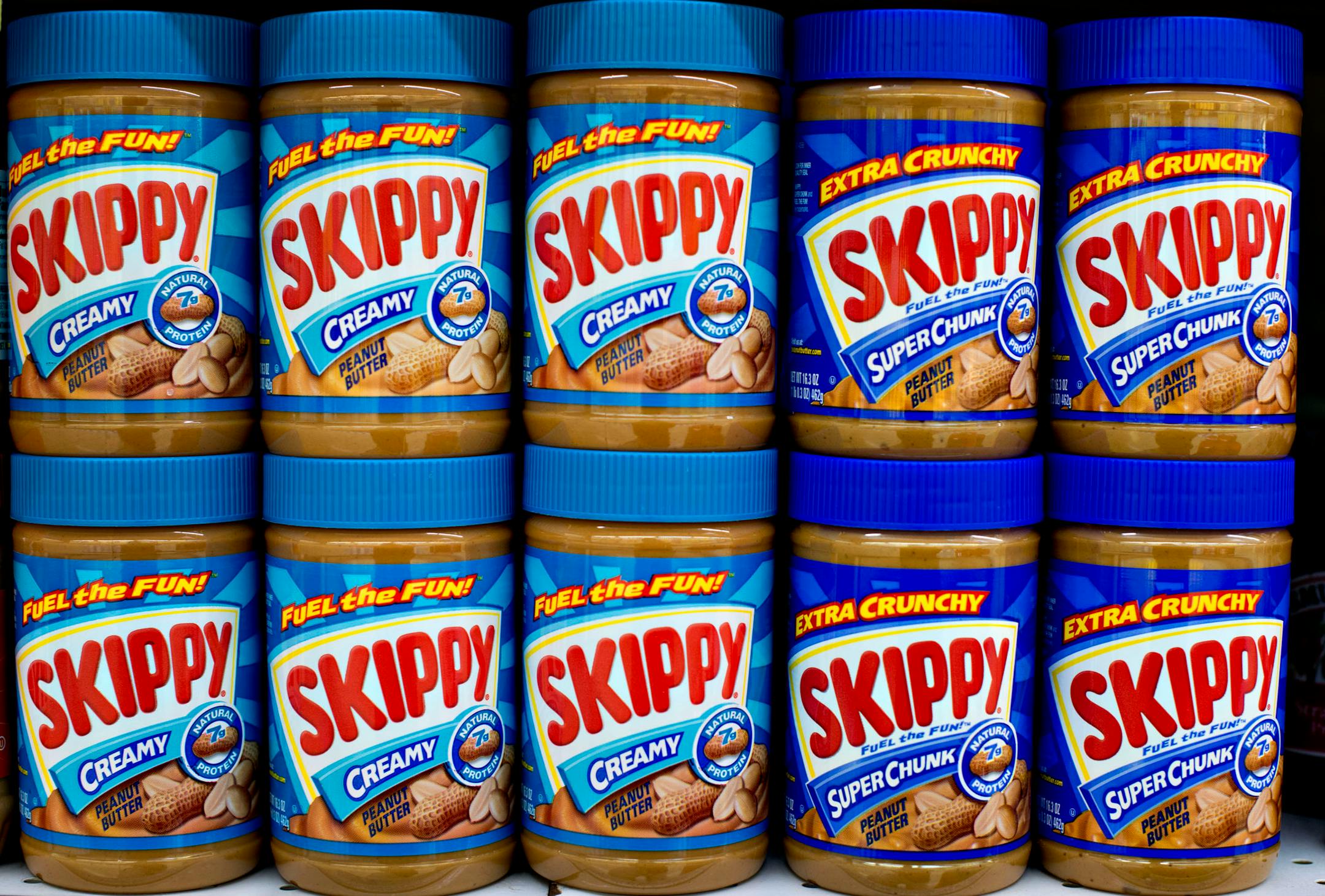
Hormel's acquisition of Skippy peanut butter products earlier this year helped it offset the pressure that higher pork prices had on profits for bacon in the latest quarter.
The Austin, Minn.-based company said net profit amounted to $113.6 million for the three months ended July 28, slightly below analysts' forecasts but up from $111.2 million in the same period a year ago. Revenue was $2.2 billion, up 8 percent from the year-ago period.
For Hormel executives, the results underscored the importance of their strategy of relying less on products that are driven by commodity prices and more on packaged foods that yield more predictable results.
Hormel in January spent $700 million to acquire Skippy peanut butter and related products from Unilever. Hormel folded Skippy into its grocery products business, which showed a 27 percent jump in volume during the quarter. Without Skippy, the company said that volume of its grocery product unit would have declined 1 percent. The unit's operating profit jumped 32 percent.
"We're trying to create a portfolio that is less vulnerable to certain commodity movement," Hormel CEO Jeffrey Ettinger said during a conference call with analysts. "Buying into a category like peanut butter that has a different raw material, like guacamole, like salsa, we think those things have helped us."
The spike in pork bellies eroded margins in bacon and Hormel's broader refrigerated foods business, which accounts for about half of revenue and one-fourth of operating profit. It took the firm until late in the quarter to adjust.
But the difficulty was not enough to cause Hormel to change its earnings guidance for the rest of the fiscal year.