

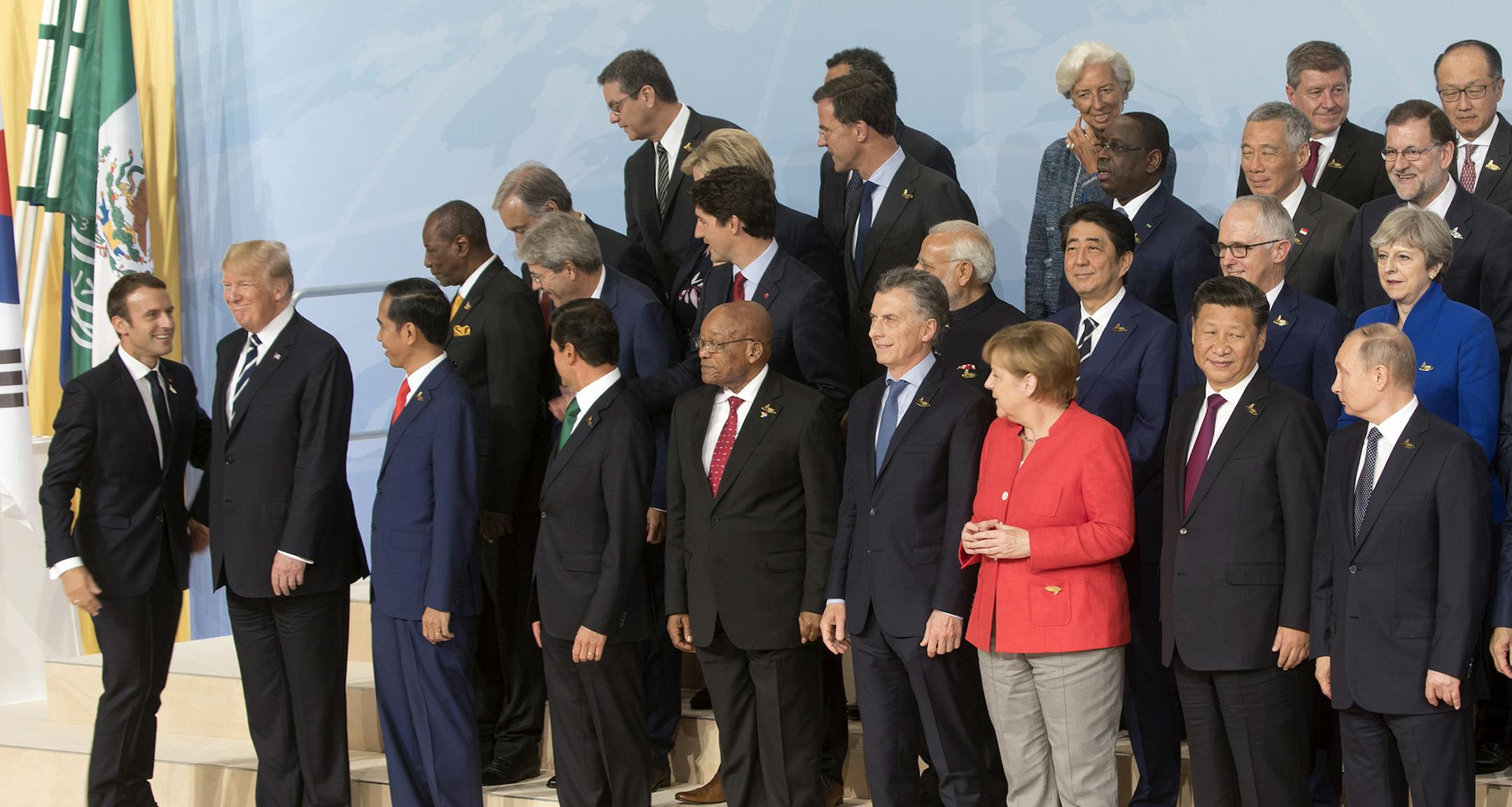
World leaders faced a full international inbox as they gathered in Hamburg, Germany, for the G-20 summit.
Some crises involved nations not present, like North Korea, Syria and Venezuela. Others concerned countries like China and Russia that are among the group of 20 leading economies. Still others are part of transnational challenges like terrorism, cybersecurity and a global migration crisis.
Tackling these challenges alone is unwise and unlikely. After all, there's little support at home or abroad for U.S. unilateralism, and global crises are best met with multinational responses. So coalitions need to be cobbled together, and such diplomatic craftsmanship requires respect.
Candidate Donald Trump seemed to sense the imperative of improving the world's view of the U.S. when he said in his first foreign-policy speech last April, "And always — always, always — we must make, and have to look at it from every angle, and we have no choice, we must make America respected again."
But as president, Trump has presided over the opposite effect, according to a new Pew Research Center poll headlined "U.S. Image Suffers as Publics Around World Question Trump's Leadership."
A median of only 22 percent of citizens in the 37 nations polled expressed "confidence in Trump to do the right thing when it comes to international affairs," compared with the 64 percent who expressed confidence in former President Barack Obama toward the end of his term.
Only two nations gave Trump higher marks than Obama: Support soared in Russia, with a 42-percentage-point increase from 11 to 53 percent, and it rose more modestly in Israel, from 49 to 56 percent.
Citizens in the other 35 nations expressed less confidence.


