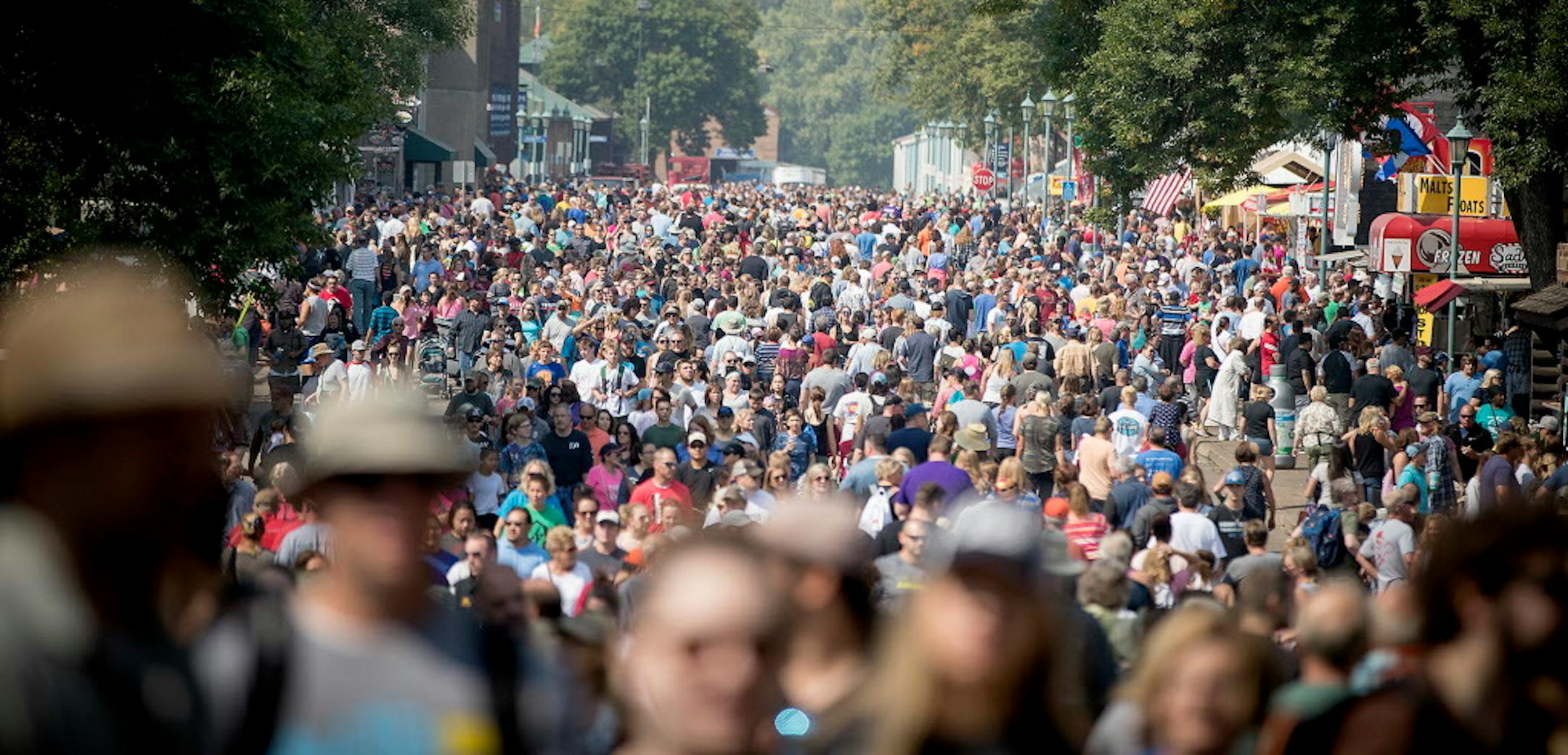
Advocates of the New Urbanism design movement prize dense, vibrant cities with an array of housing and jobs.
Guess what? We’ve got a model of New Urbanism right here in the Twin Cities: It’s called the Minnesota State Fair.
Is the Great Minnesota Get-Together a model of what our cities should look like?
Well, no.
But let’s not be too quick to dismiss the question. It’s instructive, when you look at how the fair resembles a small town, albeit one whose population is 98 percent transient. We might conclude that we love the fair because it’s the town we’d like to live in — if the lines were a bit shorter, that is.
Putting the mass in transit
The fair, you might have noticed, has no car traffic, yet there are streets and sidewalks. It looks like a city that banned cars, and doesn’t seem to mind. If one needs to get somewhere quickly, there are electric carts, propane-powered trolleys and two aerial transportation systems.
To get to the fair, you can drive your car, but the lots fill up fast, and the roads are clogged. Parking on the surrounding streets is permitted, but scarce. Hence savvy travelers take mass transit, which maintains a robust schedule — and even has a dedicated bus lane by the University of Minnesota.
This is more or less the dream for New Urbanism transit advocates.