

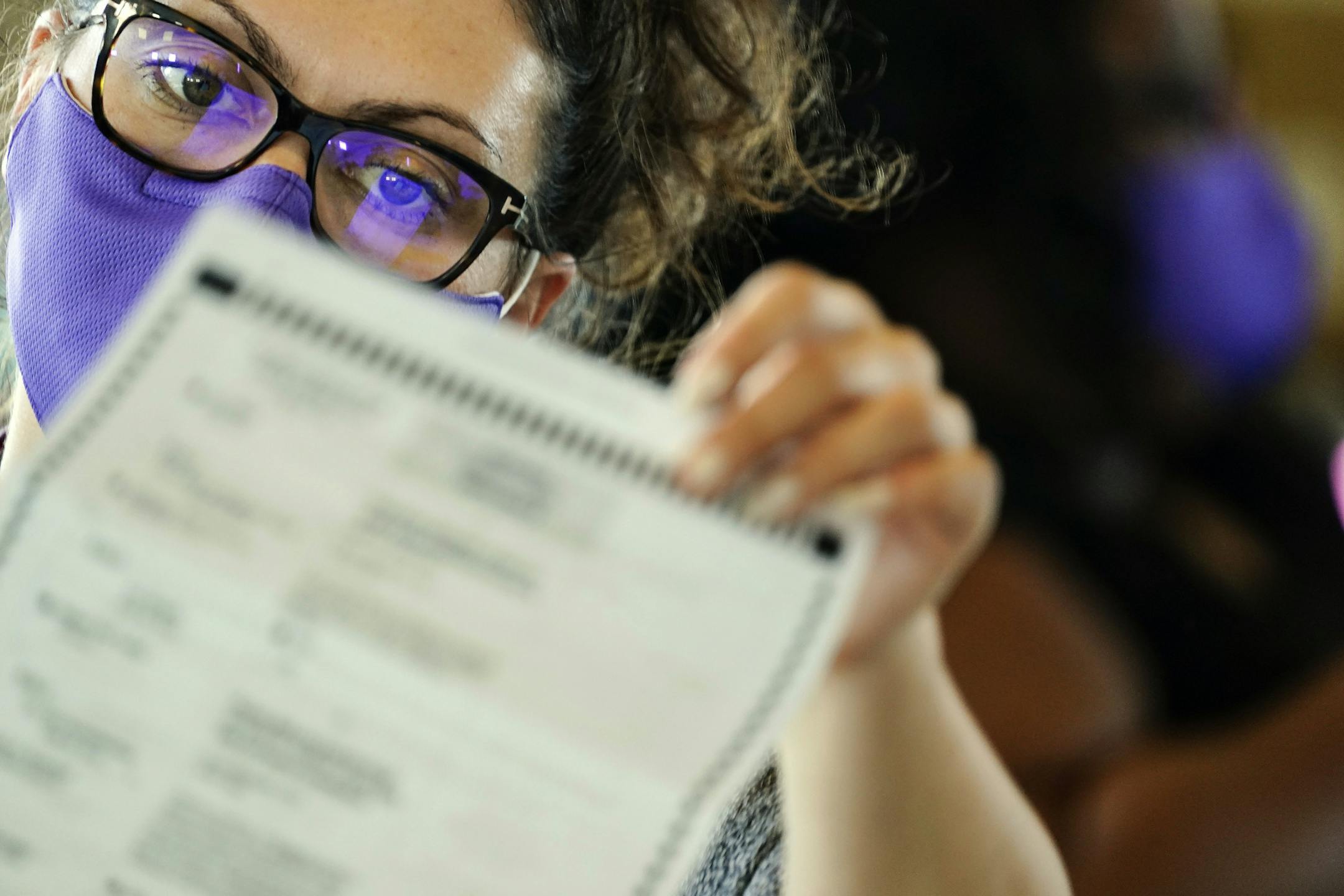
The current confusion and anxiety surrounding presidential vote-counting, with different states using different rules and procedures, make it natural to wonder: Wouldn't it have been better to let the federal government oversee the process?
The framers of the U.S. Constitution didn't think so, for reasons of principle. Some of the foundations of their thinking can be found in the Federalist Papers, written mostly by Alexander Hamilton and James Madison (with a few by John Jay), among the greatest works in all of political science and the most important contemporaneous explanation of the framers' thinking.
Federalist No. 51, written by Madison, may be the best of the 86 essays, and it speaks, with great specificity, to the situation following this week's national election. The least famous passage in that essay, and the most relevant today, is about one thing: federalism. It tells us a lot about how to think about vote-counting — and about the role of the president and Congress in that process.
The essay is mostly a celebration of the system of checks and balances. As Madison put it, "Dependence on the people is, no doubt, the primary control on the government; but experience has taught mankind the necessity of auxiliary precautions." The system of separated powers — Congress, the president, the judiciary — provides some of those precautions.
But that was not nearly enough. Madison drew attention to "considerations particularly applicable to the federal system of America." Ours is a "compound republic," he wrote, in the sense that "the power surrendered by the people is first divided between two distinct governments." There is the national government, and then there are the states, and this division creates essential security for "the rights of the people." In important cases, "the different governments will control each other."
These are abstract ideas, but they bear directly on presidential elections, and they help explain the constitutional provisions that govern them.
Under Article II, the states are plainly in charge. A central goal was to ensure the integrity of the election process, which would be badly endangered if a sitting president, or his allies in Congress, could engage in self-dealing. The 12th Amendment, ratified in 1804, says more about the process, but similarly ensures that the fundamental questions will be settled by state officials and state law.
Madison had this to say in the Federalist No. 10: "No man is allowed to be a judge in his own cause, because his interest would certainly bias his judgment, and, not improbably, corrupt his integrity." Under the Constitution, the president has no power at all over the electoral process. The role of Congress is narrowly circumscribed.


