

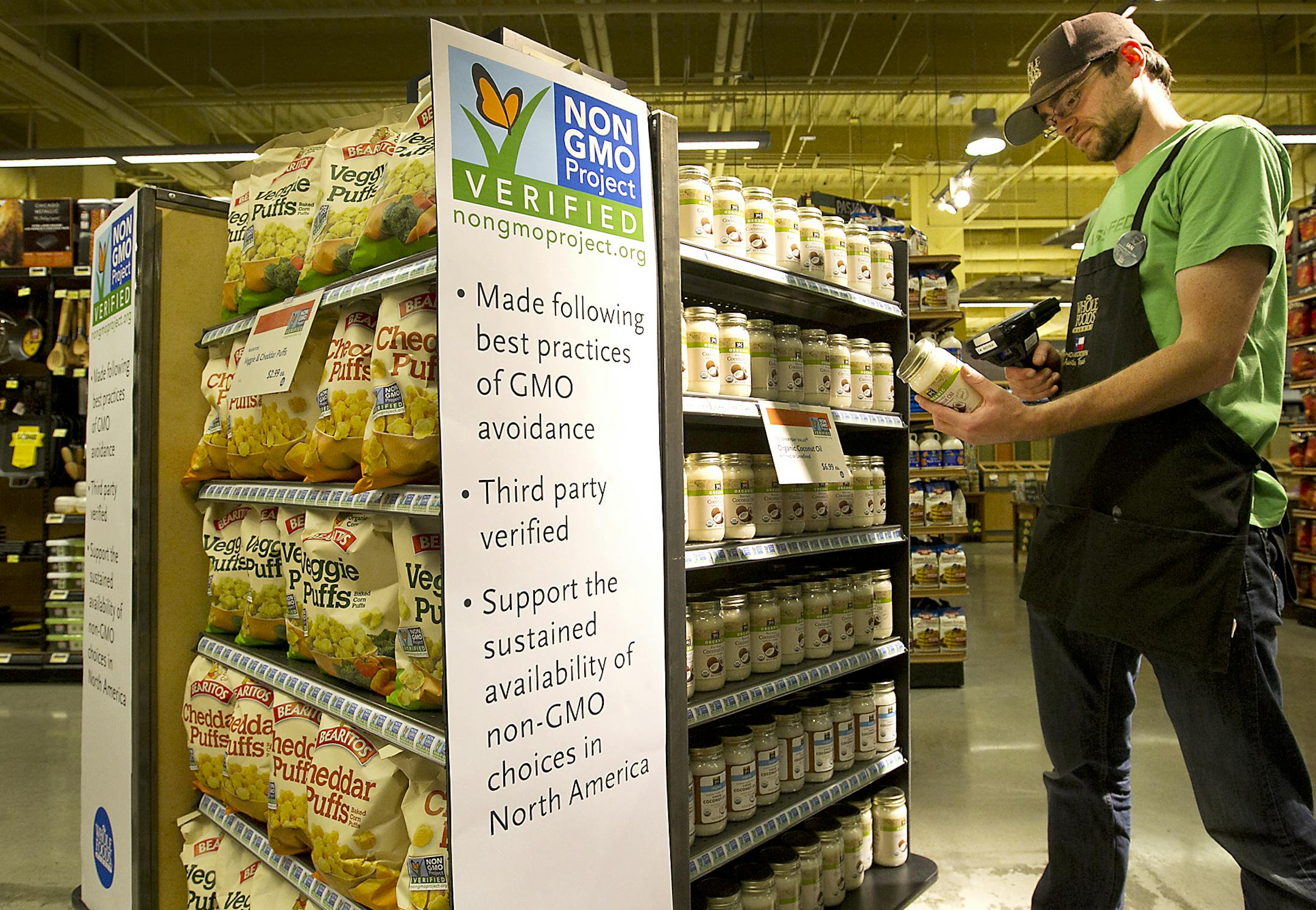
In the past few years, Whole Foods Market Inc. has gotten much stricter about where its products come from.
The natural foods grocer has rolled out a series of standards regarding animal welfare, seafood sustainability and genetically modified ingredients — to name a few — that is unprecedented in scope for a major food retailer.
Whole Foods officials say they're staying true to their core values, while also reacting to changing times and concerns from their customers.
"I would represent these latest efforts as a further step in a direction we've been pursuing for 32 years," said co-CEO Walter Robb. "Which is to provide some sort of clarity, some sort of definition, some sort of leadership in the marketplace."
And while it's impossible to predict the future, given Whole Foods' prominence, it could affect the larger grocery industry as well. While most chains have their own sets of standards, Whole Foods' appear to be the most stringent in the industry, analysts say.
"They've definitely taken it to a whole different level," said Brian Yarbrough, an analyst for Edward Jones. Since 2010, Whole Foods has unveiled the following standards:
• A color-coded rating program that measures the environmental impact of its wild-caught seafood. A green rating indicates the species is relatively abundant and is caught in environmentally friendly ways. The worst, a red rating, means the species is overfished, or that the methods used to catch it harm other marine life or habitats. Red-rated species were eventually phased out by Whole Foods.
• An animal welfare rating system for meats and other livestock products. The five-step rating system starts at step 1 (animals aren't crowded or kept in cages or crates) and goes to the highest tier, where animals spend their entire lives on the same farm.


