
What ICE agents can and can’t do — and what legal rights the public has during encounters

Our FAQ on warrants, masks and what legal observers can document.

The Minnesota Star Tribune
January 9, 2026 at 11:42PM
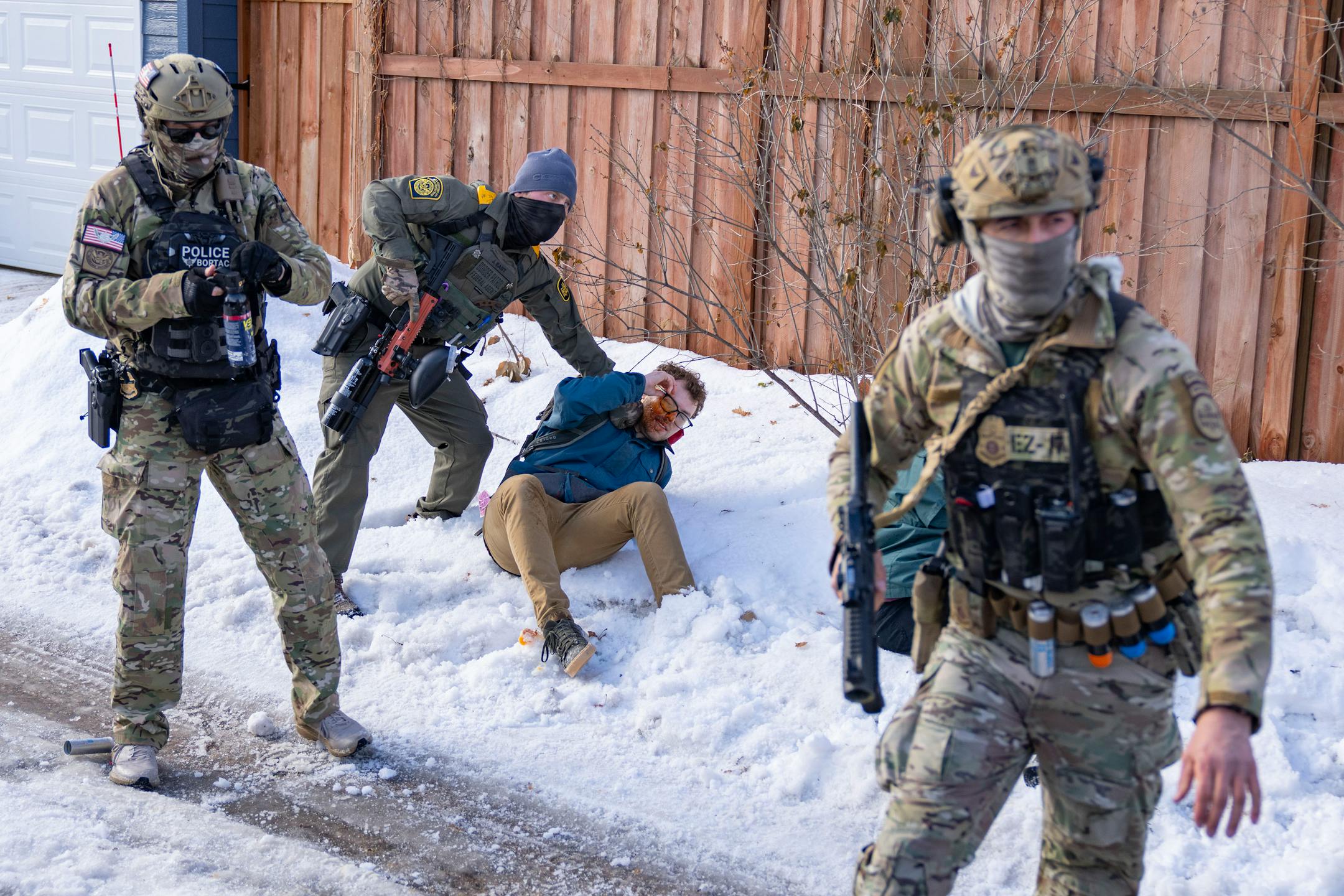
A U.S. Border Patrol agent holds down a bystander who was sprayed with chemical irritant while attempting to block an ICE vehicle from leaving the scene where Renee Good was shot and killed by Jonathan Ross, an ICE agent, in Minneapolis on Jan. 7. (Alex Kormann/The Minnesota Star Tribune)

As ICE conducts what it describes as the “largest immigration effort ever” in the Minneapolis–St. Paul area, federal agents have been questioning and arresting people inside homes, vehicles and businesses.

On Thursday, Jan. 8, Bridget Keller joined hundreds of others at Cedar Cultural Center in Minneapolis seeking answers to the same question: What rights do people have when Immigration and Customs Enforcement agents come to their neighborhood or knock on their door?

Keller said she wanted to attend the constitutional observer training run by Comunidades Organizando el Poder y la Acción Latina (COPAL) because of her 16-year-old’s fears about seeing agents near his school in Minneapolis.

“My son, who is Latino, asked me, ‘Is ICE going to approach me because of what I look like?’” Keller said.

The heavy ICE presence in Minnesota reverberated around the globe on Jan 7. when an agent fatally shot Renee Good, who was described as a “legal observer” by Attorney General Keith Ellison.

In bystander videos, Good’s vehicle was blocking part of a lane during an immigration enforcement action in south Minneapolis.

We asked legal experts what ICE agents can and can’t do, and about the rights of anyone who is approached by ICE or who witnesses an encounter.
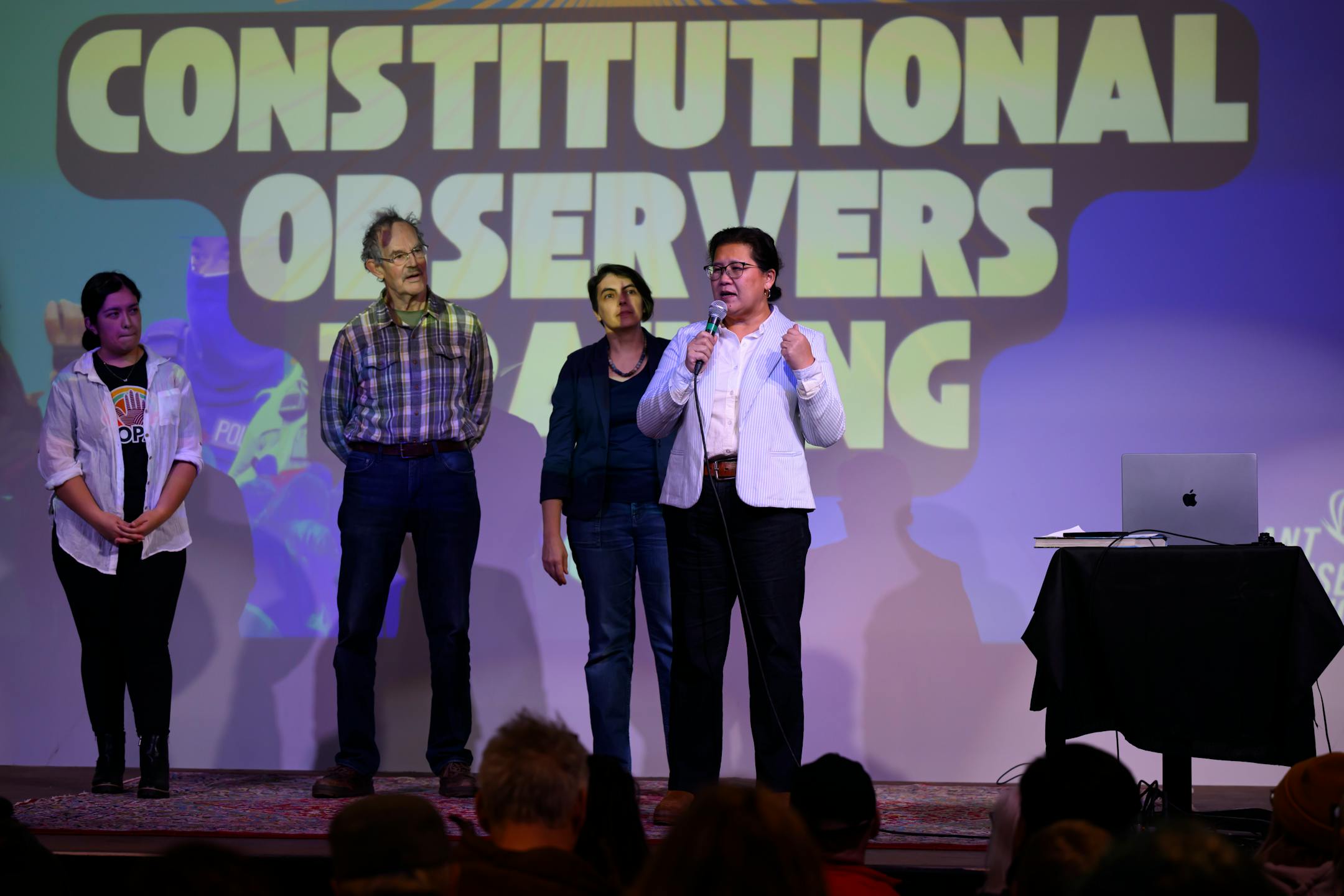
St. Paul Mayor Kaohly Her speaks at a constitutional observer training on Jan. 8 at the Cedar Cultural Center in Minneapolis. (Aaron Lavinsky/The Minnesota Star Tribune)

Does ICE need a warrant to arrest someone?

No, agents do not need judicial warrants to make arrests. ICE says agents can “initiate consensual encounters” to speak with people and briefly detain or arrest those they believe are not legally authorized to be in the U.S.
Does ICE need a warrant to enter a home or business?

Yes, to be allowed inside a home or private areas of a business, ICE must have a warrant signed by a judge with the correct name and address on it, says the Immigrant Law Center of Minnesota. It must be a judicial warrant, not an administrative warrant, which is issued by a noncourt agency, COPAL says. The organization recommends telling agents to slip the warrant under the door instead of opening it if ICE show up to a home.

According to guidelines from the Minnesota Attorney General’s Office, ICE can enter public areas such as a lobby, hospital waiting room or church sanctuary unless signs are posted marking those areas as private or inaccessible to ICE without a court-issued warrant or subpoena. You do not have to tell ICE agents whether a specific person is on the premises.

Can ICE agents wear masks?

The U.S. Department of Homeland Security (DHS) says ICE agents wear masks to prevent doxing — publishing their private identifying information online. However, many attorneys general, including Minnesota’s, have urged Congress to pass legislation that prohibits ICE masking.

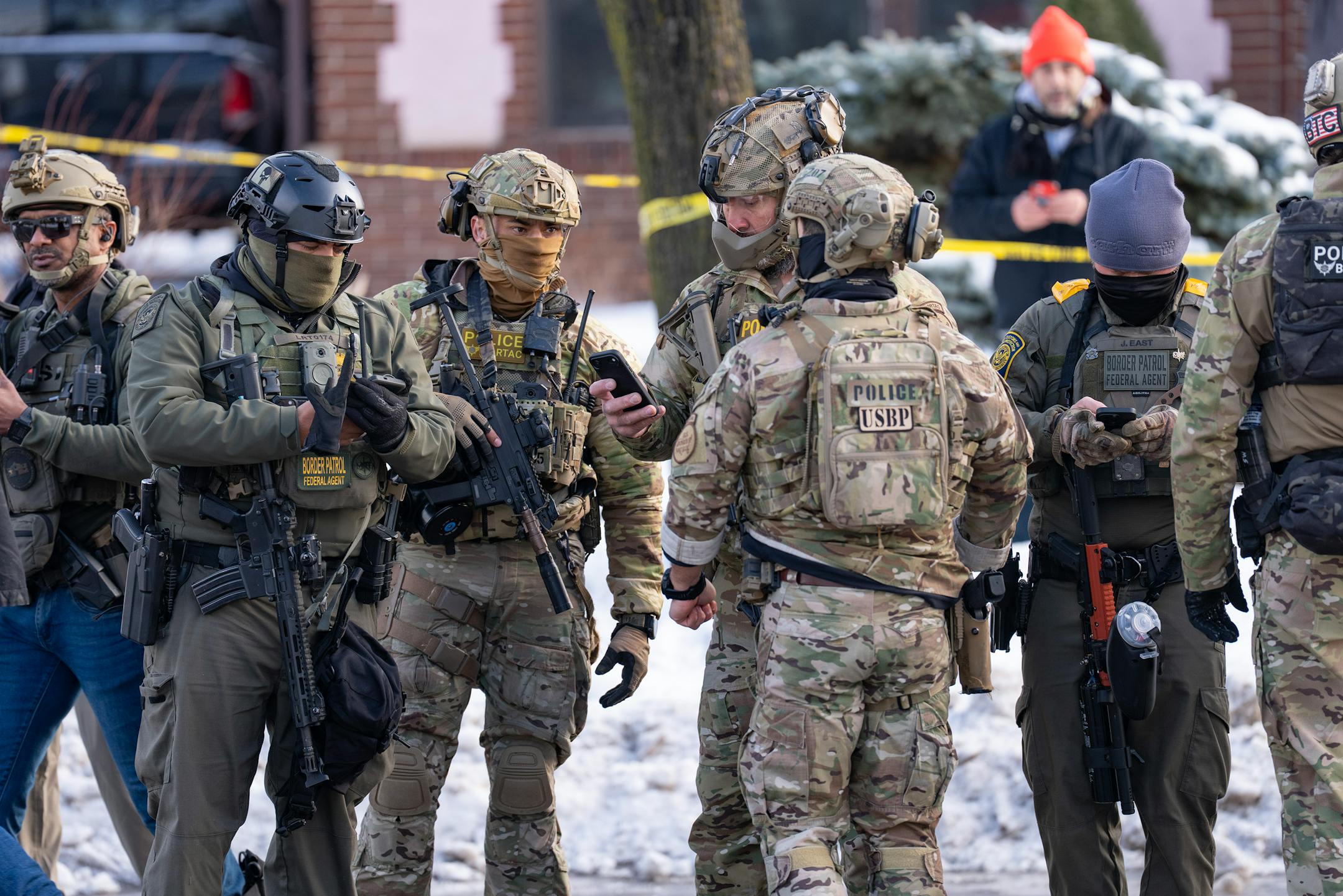
Federal agents huddle near the scene where federal agents shot and killed Renee Good in Minneapolis on Jan. 7. (Alex Kormann/The Minnesota Star Tribune)

Do ICE agents have to identify themselves?

Federal law requires ICE agents to identify themselves as immigration officers authorized to make an arrest “as soon as it is practical and safe.” They do not have to provide their names unless “required for public safety or legal necessity,” according to the DHS.

What should I do if I am approached by ICE?

Start with a question, says Tracy Roy, legal director of the Immigrant Law Center of Minnesota. “We recommend that folks ask, ‘Am I under arrest or am I free to leave?’” Roy says. If you are not being arrested, you may leave. The Minnesota American Civil Liberties Union (ACLU) recommends that anyone stopped by ICE should not run, argue, resist or obstruct agents.

If you are an observer, COPAL suggests verbally identifying yourself as one.

Should I carry immigration documents?

The Immigrant Law Center of Minnesota recommends carrying immigration or citizenship documents, such as a passport or green card. Your documents can show agents that they do not have reason to detain you, Roy said.

Do I have to answer ICE’s questions?

No. You have the right to remain silent and do not have to share information about where you were born or how you entered the U.S., per the National Immigration Law Center. You have the right to speak with a lawyer and do not have to sign documents without their counsel.

Can I document an ICE encounter?

Yes. Federal courts have ruled that the First Amendment protects the right to record law enforcement in public spaces.

COPAL recommends observers stay a safe distance from agents — about 8 feet — and avoid any physical contact. Video and photo recordings are best, but written recordings and witnessing an event can be used in legal proceedings, according to the group.

If an agent tells people to stand back, COPAL recommends observers point their camera at their feet and record them taking steps back.

While recording ICE is within the public’s First Amendment rights, the DHS says posting videos and photos of agents online is harassment that threatens their safety. It is illegal to obstruct or otherwise interfere with ICE arrests, and the DHS reports that its officers have seen a significant increase in assaults on agents and vehicles.

What is a legal observer?

According to the ACLU, legal observers are trained volunteers who attend demonstrations to collect evidence and serve as independent witnesses. They document interactions between police and protesters, including arrests, use of force and other official conduct, to ensure there is a factual record if allegations of misconduct arise.

The documentation gathered by legal observers can be used by attorneys, journalists or courts to evaluate what happened during a demonstration.

What should observers look for?

COPAL recommends that people document:

  • Language used by the officers.
    • Physical force.
      • Number of officers and any identification derived from their uniforms and badges, like the agency they work for and their names.
        • The vehicles, including the license plates and, if they are marked, the agency on it.
          • Whether people are being questioned or detained.
            • Answers by agents to questions.
              • Use of excessive force.

                What should I do with the recording?

                Observers can call COPAL’s hotline at 612-255-3112. COPAL works with a network of human rights groups and will work on identifying the person in the video and how best to advocate for them, Perez said.

                COPAL advises against posting incidents to social media to avoid potential harassment aimed at the observer and the person who was arrested.

                Can I follow ICE vehicles or blow whistles at agents?

                “Bystanders certainly can make noise, blow whistles and alert presence,” Roy says. “What they’re not legally allowed to do would be physically intervene, stop an arrest or potentially obstruct justice.”

                Sofia Barnett of the Minnesota Star Tribune contributed to this story.

                about the writers

                about the writers

                Rachel Hutton

                Reporter

                Rachel Hutton writes lifestyle and human-interest stories for the Minnesota Star Tribune.

                See Moreicon

                Alex Chhith

                Reporter

                Alex Chhith is a general assignment reporter for the Minnesota Star Tribune.

                See Moreicon

                More from News & Politics

                See More
                card image
                Anthony Souffle/The Minnesota Star Tribune

                Some Twin Cities schools are responding to rumors about ICE agents on school properties.