

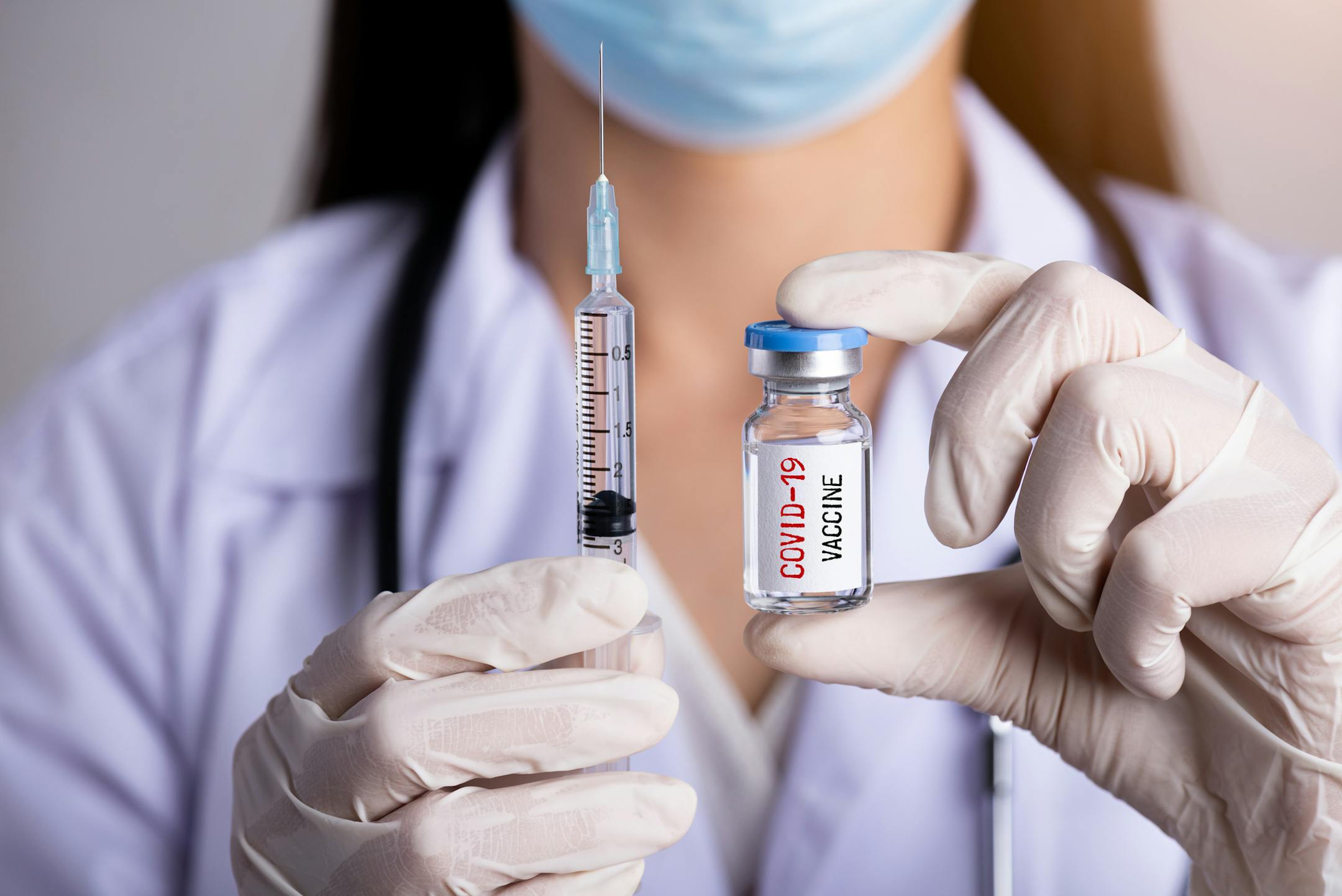
Former President Donald Trump's administration overpromised on coronavirus vaccines. In November, his secretary of health and human services said there would be 40 million doses available by the end of the 2020; he was off by about a month. Trump himself promised 100 million doses in that same period. Everything he and his team said was a sales pitch, designed to foster the false impression that the pandemic they let burn out of control was on the cusp of ending.
There's a growing consensus that Joe Biden's administration has done the exact opposite. "Biden's early approach to virus: Underpromise, overdeliver," says an Associated Press headline. In December, when Biden pledged 100 million vaccine shots in 100 days, some experts thought it was a reach. But now that the United States is already vaccinating a bit more than 1 million people a day, that figure is far too modest.
Biden seemed to acknowledge that on Monday, telling reporters that the United States could get to 150 million shots in 100 days. Even that, however, is not enough.
The pandemic has put members of the privileged pundit class in an unaccustomed position. I'm used to thinking about politics in terms of what the government should be doing for other people. Now, like millions and millions of others, I watch the administration with a frantic eye to my own family's survival. (I used to think of myself as a moderately savvy person, but I've yet to figure out how to get vaccine appointments for my parents.)
And so I track bits of data on things that previously meant nothing to me — like the production of low dead space syringes — with the terrified desperation of someone googling symptoms while awaiting biopsy results.
In my voracious consumption of vaccine news, I'd been baffled as to why the United States was aiming so low. Pfizer and Moderna, makers of the two vaccines that have been authorized for emergency use, have promised 200 million doses, enough for 100 million people, by the end of March. Dr. Ashish Jha, dean of the Brown University School of Public Health, told me he's in touch with people at both companies, and they've said they'll be able to deliver.
"We're probably on track for about 2 million doses a day, in terms of production," he said, and we should, in turn, "absolutely" be able to get 2 million doses a day into people's arms.
If that's true, anything less would be deeply disappointing.


