

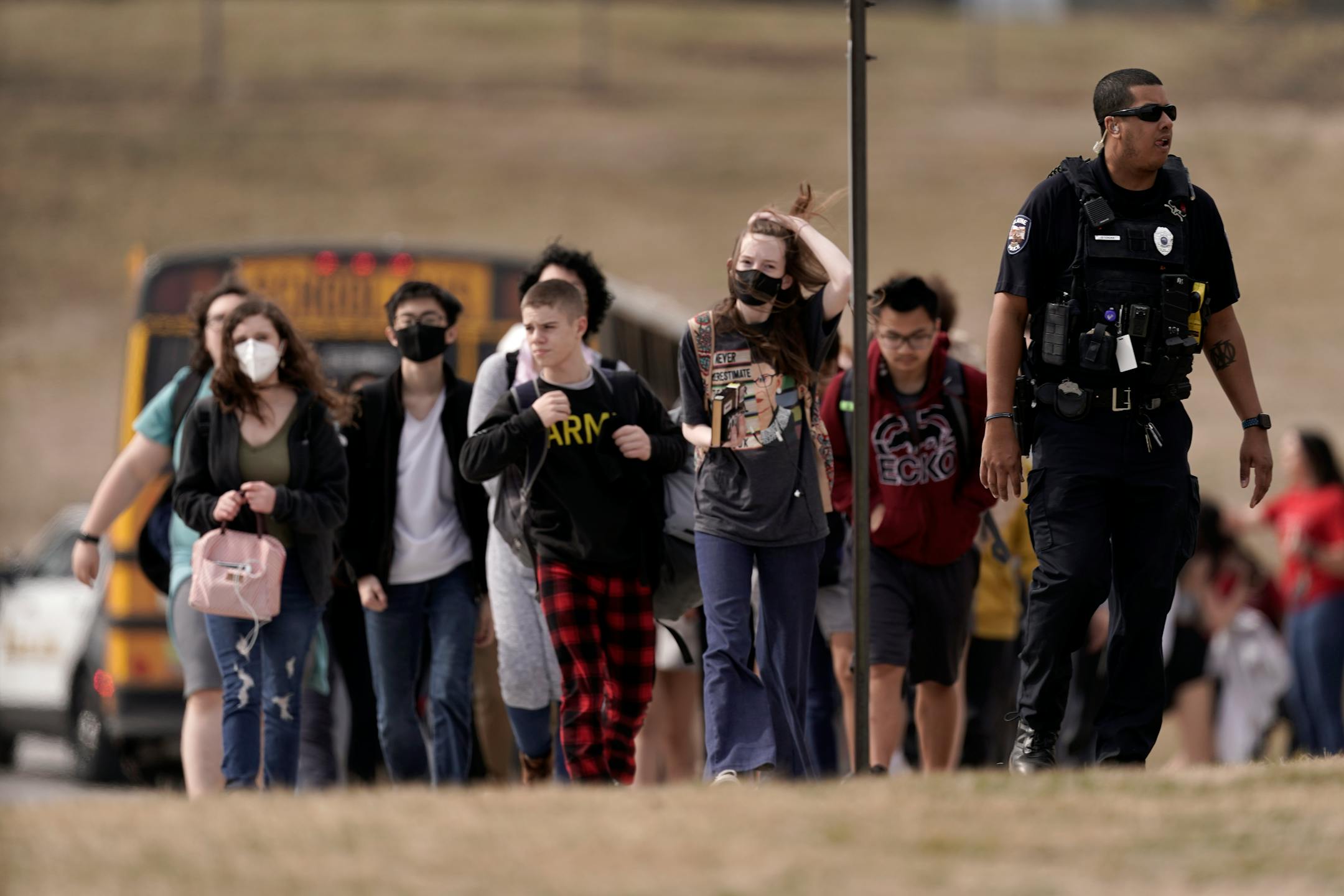
Sometime over the past decade, America seems to have resigned itself to thinking about mass shootings as if they were a kind of unavoidable natural disaster.
Like tornadoes or earthquakes, these localized catastrophes seem to come out of nowhere and could happen to any of us. They are quite rare; depending on how one defines a mass shooting, there are a handful to a few hundred in the U.S. every year. Yet even though they are estimated to be the cause of less than 1% of all gun fatalities, mass shootings carry a toll that surpasses their numbers, undermining our collective sense of well-being and public safety. The fear always lurks, the next Big One always just around the corner.
And just as for natural disasters, the most our country seems to be able to do about mass shootings now is hold drills to prepare for their inevitability. Our discourse over these incidents is trapped in a polarized doom loop. A shooting happens and everyone follows the same script. One side demands better gun laws, the other side offers prayers and cynically blames mental illness. Then we forget about the horror, at least until the next one. It's as if we've come to accept living in that classic Onion headline: "'No Way To Prevent This,' Says Only Nation Where This Regularly Happens."
But in a fascinating new book, "Trigger Points: Inside the Mission to Stop Mass Shootings in America," journalist Mark Follman makes the case that despite our intractable political and cultural differences, mass shootings don't have to be inevitable.
Follman argues that even in the absence of stronger gun regulations, we have been making progress in understanding and perhaps even preventing the most notable forms of mass shootings, rampages in which three or more people are deliberately and seemingly indiscriminately killed, often by a lone attacker.
Who's "we"? Mental health specialists, academic researchers, state and federal law enforcement officials, and administrators in schools and universities around the country. Follman explores the history and promise of a cross-disciplinary field known as "behavioral threat assessment," a set of ideas to help officials recognize and redirect a potential shooter away from violence. At the core of the model is the notion that mass shootings are not like lightning strikes — they are not just sudden, unforeseen attacks involving people who "snap." Mass shootings are more like avalanches: They take time to form, they generally follow a predictable pattern, and if you know what to look for, you can sometimes spot them a long way off, and perhaps even prevent them from happening at all.
The model varies, but behavioral threat assessment generally involves placing teams of trained counselors and administrators in schools, colleges, workplaces and other settings where shootings might occur. To stop a person from killing others, these teams look for patterns of behavior that research has shown people tend to exhibit on their way to mass attack. Among the "warning behaviors" of would-be attackers are acts of aggression and violence, stalking, threatening communications, a fascination with previous shooters and, of course, planning and preparation for an attack. In many cases these signs are glaring — the potential attacker's friends, family, classmates, teachers and others in the community often can't help noticing that the person is troubled.
Follman follows one threat team at Salem-Keizer Public Schools, a district in Oregon with about 40,000 students that was among the first of its kind in the country to adopt behavioral threat assessment. One of the team's cases involved a 17-year-old who had come to the attention of the Salem-Keizer threat response team in 2019, after teachers and students heard him make a number of frightening statements.


