During a global pandemic, when most people were stuck at home every day, all day, there was one TV show Americans couldn't stop watching: "The Office."
Viewers spent more than 57 billion minutes on Netflix binge-watching the sitcom's paper company drones - more than any other show on any streaming service, according to figures released by Nielsen, prompting speculation that many work-from-home employees were suddenly, inexplicably, nostalgic for their cubicles and their co-workers.
Oh, please. It's one thing to sit on the couch laughing at Michael and Dwight and Jim and Pam and another thing entirely to commute for an hour to sit in a cubicle.
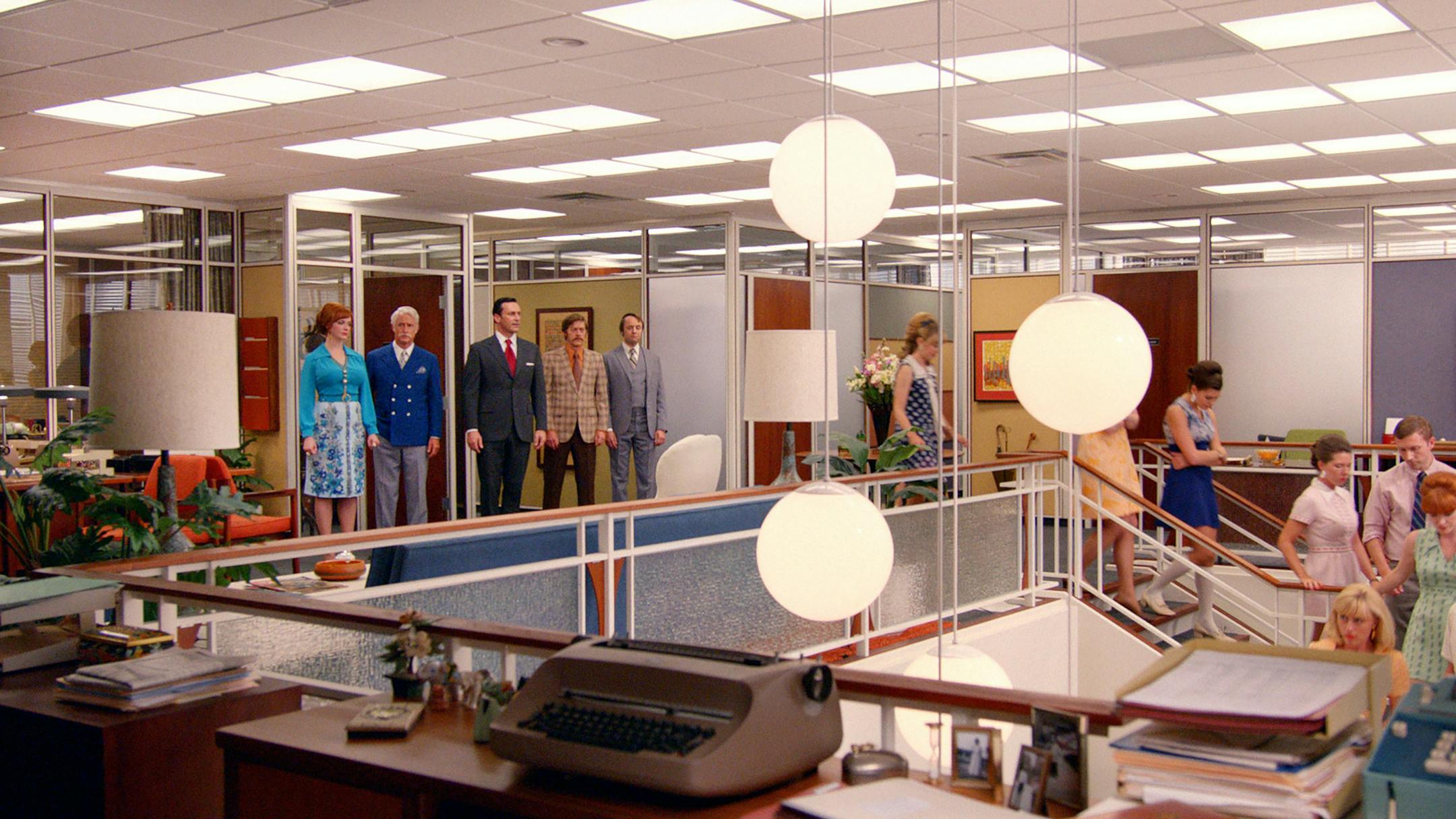
Until last year, going to the office was an inevitable, immutable fact of life for millions. We loved it. We hated it. We loved and hated it. But the office was always there, the center of the American Dream, the ladder to success, the open plan with windows that never opened, overwatered ficus trees and desks where we spend approximately 90,000 hours of our lives.
Then came the lockdown and the realization that our offices and our jobs are not necessarily the same thing. Zoom became a lifeline and a verb. The commute was 10 feet; the dress code shirts (and, for the love of God, pants).
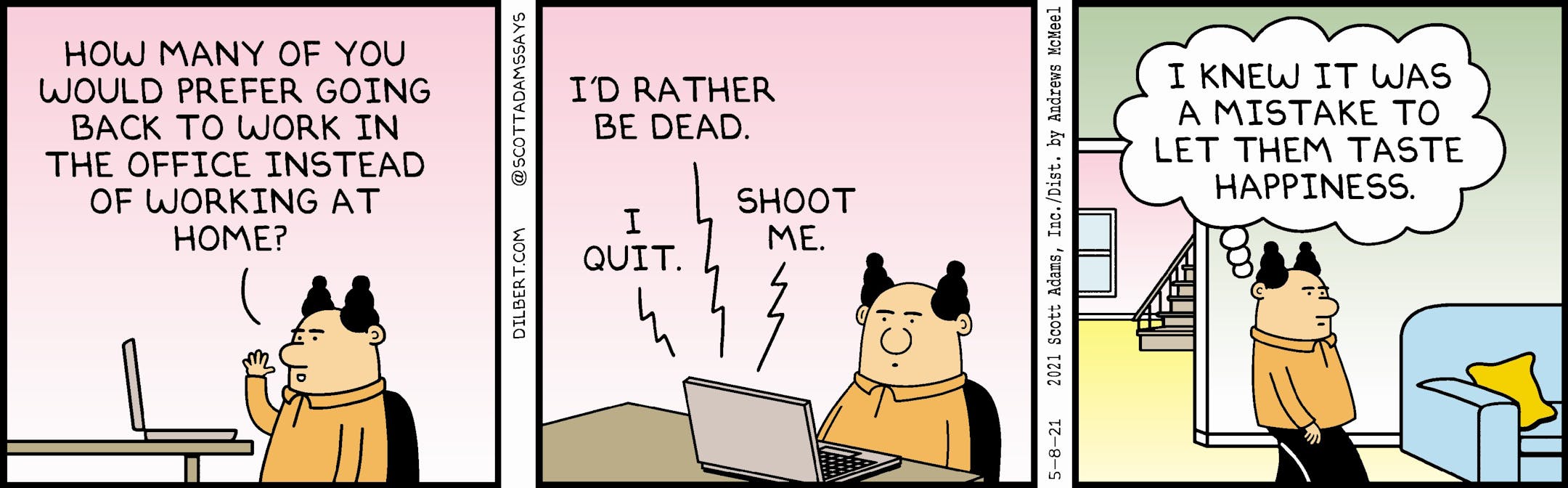
So the careful return to the traditional office has been met with an unprecedented amount of "Uhh, not so fast." This, of course, is the privilege of those who have options, unlike many essential workers who bore the brunt of the pandemic. But white-collar employees once at the mercy of corporate overlords have expressed an overwhelming preference for something other than the 9-to-5, 40-hour office of the past.
A Gallup poll taken between October and April found that 40 percent of white-collar workers would prefer to continue working remotely as much as possible, while 21 percent would rather return to the office (and 29 percent were not working remotely, while the rest didn't want to go back because of coronavirus concerns).
The Bureau of Labor Statistics says that workers are quitting their jobs in record numbers, and plenty more are reportedly considering leaving without the promise of some remote options. Employers who insist in-person work is necessary for collaboration and innovation have no data to back up that claim, reports the New York Times. And while measuring productivity can be maddeningly subjective, some argue it has remained stable or even increased in 2020.