

Opinion editor’s note: Strib Voices publishes a mix of guest commentaries online and in print each day. To contribute, click here.
•••
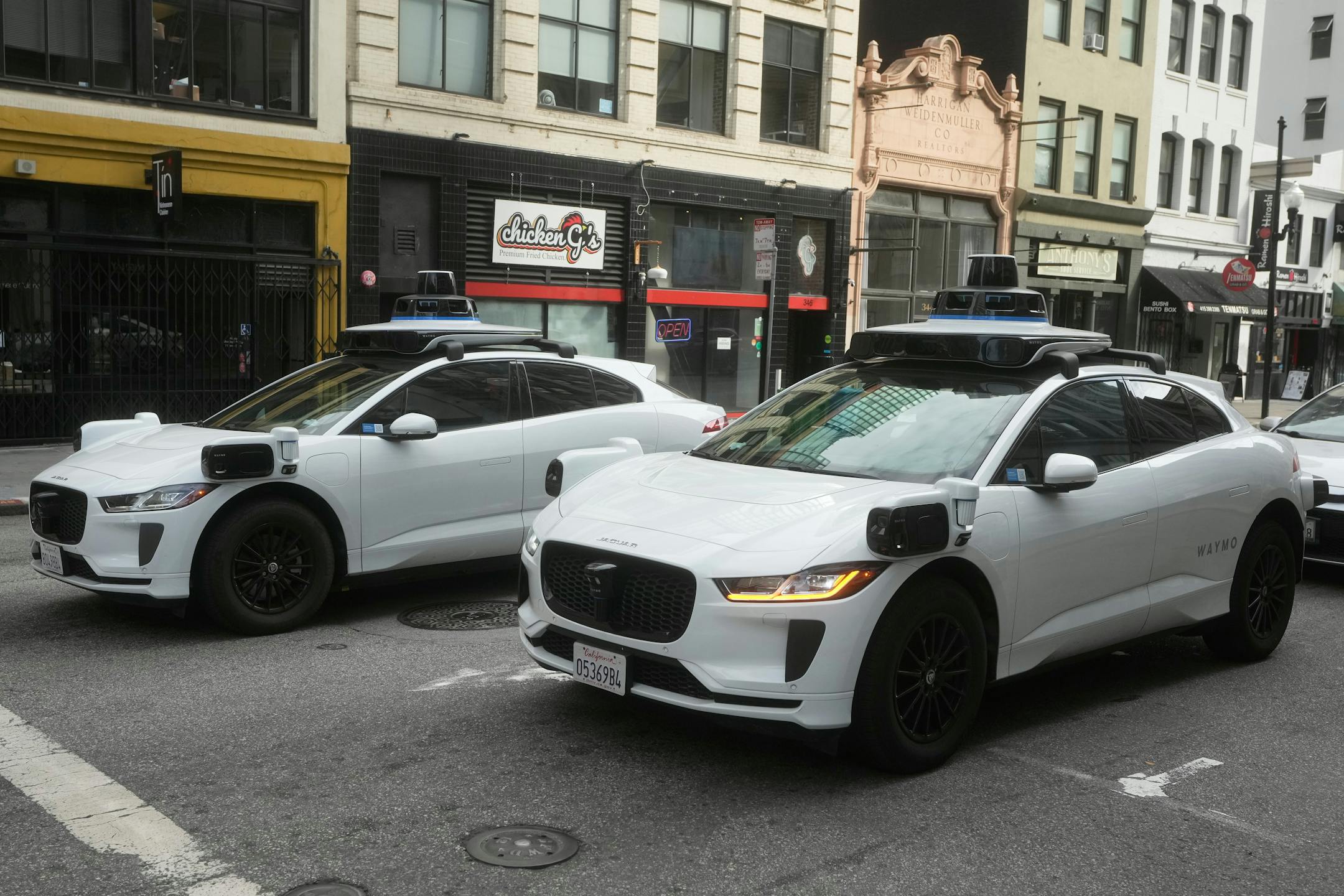
Last week, Waymo began testing its self-driving cars in Minneapolis, mapping our streets with human safety drivers behind the wheel. The California-based company eventually plans to deploy fully autonomous robotaxis here, joining cities like San Francisco, Phoenix and Austin where driverless Waymos already operate. In those cities, Waymo’s safety record has been remarkable — with dramatic reductions in crashes compared to human drivers.
But Minnesota’s legal uncertainty could prevent us from seeing those same safety benefits. We don’t explicitly ban autonomous vehicles, but our laws assume human drivers, creating legal uncertainty about whether driverless cars can operate here at all. That needs to change. Minnesota should clear the way for Waymo to test and eventually operate here.
The safety case for Waymo’s autonomous vehicles is overwhelming. A December 2024 study by Waymo and Swiss Re, one of the world’s largest insurance companies, analyzed more than 25 million miles of Waymo’s autonomous driving and found 88% fewer property damage claims and 92% fewer bodily injury claims compared to human drivers. Across 96 million autonomous miles as of June 2025, Waymo’s data indicates a significant safety advantage over human driving, with 91% fewer crashes resulting in serious injury or worse, 79% fewer crashes deploying air bags and an 80% reduction in overall injury-causing incidents. Even when crashes do occur, they often happen when Waymo vehicles aren’t even moving — stationary cars rear-ended or hit by human drivers. The first time a fully autonomous vehicle has been involved in a deadly crash occurred in San Francisco in January 2025, but Waymo wasn’t at fault: A human driver caused a six-car pileup that killed someone in another vehicle.
Minnesota needs this technology. We recorded more than 400 traffic deaths in 2024 and have already seen 337 through November 2025, with over 20,000 DWI arrests through September alone. Most of these tragedies result from human error, distraction and impairment — exactly the problems autonomous vehicles address.
What about robotaxis’ ability to handle Minnesota’s notorious winters? It’s a legitimate concern. Waymo has prepared by testing in Michigan’s Upper Peninsula, California’s Sierra Nevada and upstate New York. The Minneapolis testing now underway is a crucial next step to prove the technology can handle our climate. Given Waymo’s safety record and methodical approach elsewhere, there’s no reason to doubt that the company will take this seriously. But Minnesota’s regulatory framework should still require rigorous winter testing before any full deployment.
Even with this safety and preparedness record, resistance persists. In late October, a Waymo vehicle killed Kit Kat, a beloved bodega cat who roamed the Mission District in San Francisco and was affectionately known as the Mayor of 16th Street. The cat’s death was genuinely tragic for the neighborhood that loved him. But the outsized outrage revealed something important about how we think about autonomous vehicles. Human drivers kill countless animals nationwide every year without generating headlines, memorials or calls for regulation. They also kill more than 40,000 people annually in the United States. Waymo vehicles killed zero people. Yet Kit Kat’s death dominated news coverage and sparked regulatory proposals.


