
Skull found in Wisconsin woods belonged to Stillwater woman whose family thought had been cremated

The big mystery now for Twin Cities police is trying to figure whose cremated remains were handed over to Alice Peterson’s family.

The Minnesota Star Tribune
August 14, 2025 at 1:01PM
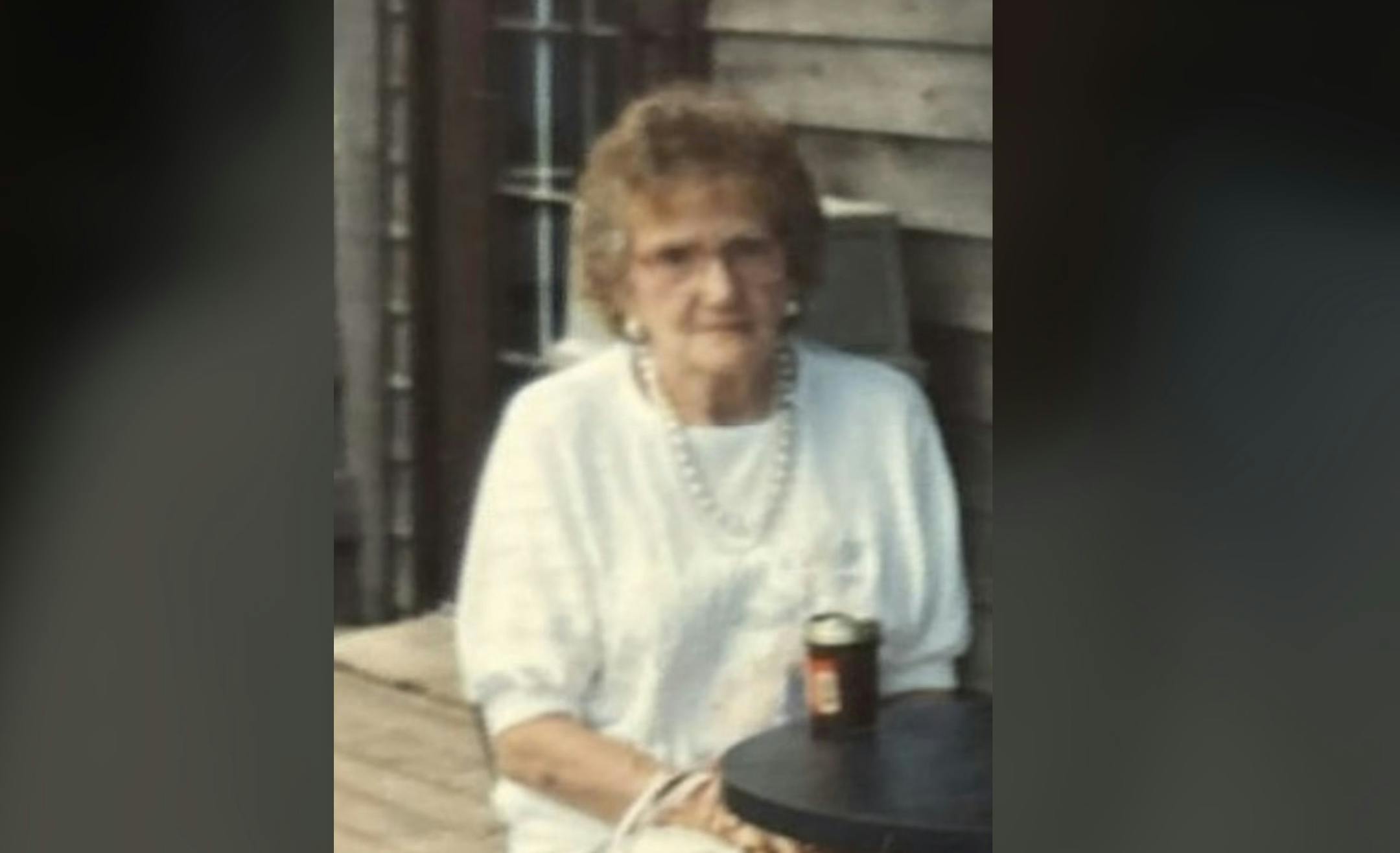
Alice Peterson (St. Croix County (Wis.) Sheriff's Office)

A skull found in the woods by Boy Scouts in western Wisconsin nearly a quarter-century ago has been identified as that of a woman whose loved ones thought they had received her cremated remains soon after she died in a Twin Cities hospital, according to police.

Two decades of various DNA and genetic testing confirmed the skull belonged to Alice Catharina Peterson, who lived in Stillwater when she died in 2001 at age 92.

Police made the disclosure in a search-warrant affidavit filed in Ramsey County District Court that cleared the way for investigators to collect records from Forest Lawn Cemetery in Maplewood, where Peterson was cremated.

The Maplewood Police Department said Wednesday that it continues investigating whose cremains the Peterson family received from the cemetery, but the odds are “very low” that the mystery will be solved.

“We don’t know whose remains those are, and they are no longer recoverable,” police Lt. Michael Hoemke told the Minnesota Star Tribune on Wednesday. “They were spread by the family.”

As for how Peterson’s skull ended up in the woods, Hoemke could only say, “We’re not sure.”

The Star Tribune has been unable to reach any of Peterson’s relatives.

Messages were left with Forest Lawn Cemetery for further details about the handling of the cremation.

Hoemke said his department found no wrongdoing in the actions of the cemetery or Simonet Funeral Home in Stillwater, which handled the arrangements for Peterson’s family.

The skull’s discovery has been the subject of news reports over the years, initially when it was found and as recently as 2022 on the 20th anniversary of the find.

The St. Croix County Sheriff’s Office brought this case to the nonprofit DNA Doe Project in 2021 in hopes of unraveling the long-running mystery.

The California-based organization debunked initial beliefs that the skull belonged to a much younger woman of Asian or Native American heritage and narrowed her ancestry to Swedish, read a project statement disclosing the skull as Peterson’s.

The Project’s Robin Espensen added that a woman living in Stockholm, Sweden, was the only DNA match closer to a fourth cousin that could be found.

From there, the DNA Doe Project followed the family tree until they came up with Peterson, who was born Alyce Philen. The project contacted a niece, whose DNA was a major factor in confirming the skull was Peterson’s.

“This is the first time that I have seen a Doe identified as someone who had a death certificate and who was supposedly cremated,” project case manager Eric Hendershott said in a statement. “The fact that Alyce’s skull ended up where it did was a real shock, but I’m glad that the team was able to identify her and reunite her with her family.”

According to the police affidavit:

In October 2002, a group of hikers from the Andersen Scout Camp in Houlton, Wis., found a trash bag in a ravine several hundred yards from the road. Inside was a human skull “in the late stages of decomposition,” the filing read. The bag and skull were turned over to the St. Croix Sheriff’s Office.

Medical professionals, a medical examiner and a forensic anthropologist examined the skull and concluded that it was severed from the body at the base of the neck, likely with a hand saw.

Peterson died “body fully intact,” on July 23, 2001, at Regions Hospital in St. Paul following a medical emergency. An autopsy found that she died from an aortic aneurysm. She was cremated at Forest Lawn two days later.

However, while her family “did receive cremated remains ... it has not been confirmed that those remains are Peterson,” according to the affidavit, submitted by police on Aug. 6.

Police interviewed a crematorium funeral director in St. Paul and learned more about some of the documentation practices in the profession.

The director said a crematorium employee will pick up the body and usually check for the identification on the hospital toe tag. The employee will also unzip the body bag and glance at the face for further confirmation, the director said.

From there, the director continued, the body is moved to the crematorium, and stored in a cooler until a death certificate is finalized.

The body, still in the bag, is put in a cremation box and then cremated, the director said.

about the writer

about the writer

Paul Walsh

Reporter

Paul Walsh is a general assignment reporter at the Minnesota Star Tribune. He wants your news tips, especially in and near Minnesota.

See Moreicon

More from News & Politics

See More
card image
Renée Jones Schneider/The Minnesota Star Tribune

A federal lawsuit alleges a Maryland company never delivered the lessons meant to tie into the city’s college savings program for newborns.