

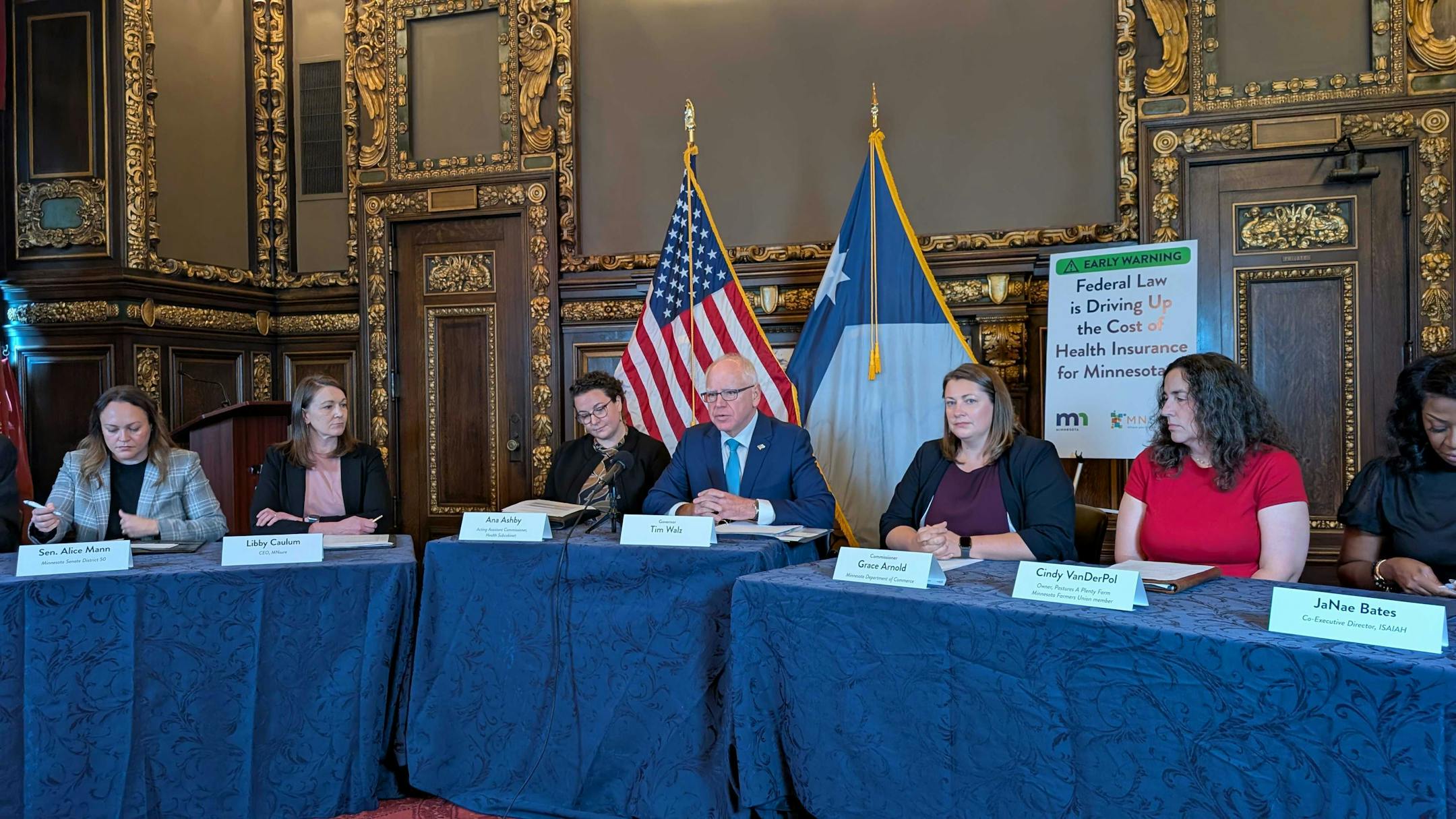
Minnesotans who buy their own health insurance will pay significantly more out of pocket next year when premiums are expected to jump, and Gov. Tim Walz is blaming his political foes for their plight.
The governor, a Democrat running for re-election, faulted President Donald Trump and the Republican-controlled Congress on Tuesday for allowing some federal tax credits to expire next year that would have kept health plans on the individual market more affordable.
Some cost increases could be dramatic. For instance, a Mankato couple in their early 60s with an income of $89,000 would not qualify for tax credits without Congressional action. Their premiums would rise from less than $500 to nearly $2,000 per month, state officials estimated.
“Nationally, insurance rates are going to be as high as they’ve been in 15 years and we’re seeing that be true in Minnesota,” Walz said.
The Washington, D.C.-based Paragon Health Institute, which was founded by a former Trump advisor, has called for letting the enhanced tax credits expire. The health policy group said the credits were meant to provide temporary relief, and otherwise will add to deficit spending by the government while inflating health care prices.
“Congress has better options to broaden choice and improve affordability,” Paragon Health Institute said in a report this month. The group called the subsidies “COVID credits,” and said the funding has “led to an explosion in fraudulent spending.”
Higher premiums coming
Health insurers have filed proposed 2026 premiums for coverage sold via MNsure, the state’s health insurance exchange. So far the largest insurance providers have proposed price increases of 12% to 26%, according to the Minnesota Department of Commerce. The state is expected next week to approve final rates.
The governor gathered two state DFL lawmakers, cabinet members and some effected Minnesotans for a news conference at the Capitol to urge Congress to extend the tax credits next year. These so-called “enhanced credits” have been supplementing subsidies available to individuals who buy coverage under the federal Affordable Care Act (ACA).



![Main entrance to the Gonda Building. For more than a century, the city of Rochester has been shaped and defined by the Mayo Clinic. Now the Mayo has a $6 billion vision to reshape the city and itself.Wednesday, February 21, 2013 ] GLEN STUBBE * gstubbe@startribune.com ORG XMIT: MIN1302211648220346](https://arc.stimg.co/startribunemedia/DW2TKC4EDLZZOGDOC5ZEYZNOJ4.jpg?&w=252&ar=3:2&fit=crop)
