
USDA reports cite ‘critical’ issues in University of Minnesota animal labs

The U was the only college or university in Minnesota with any issues recorded in its labs by the federal agency in 2024.

The Minnesota Star Tribune
October 18, 2025 at 2:55PM
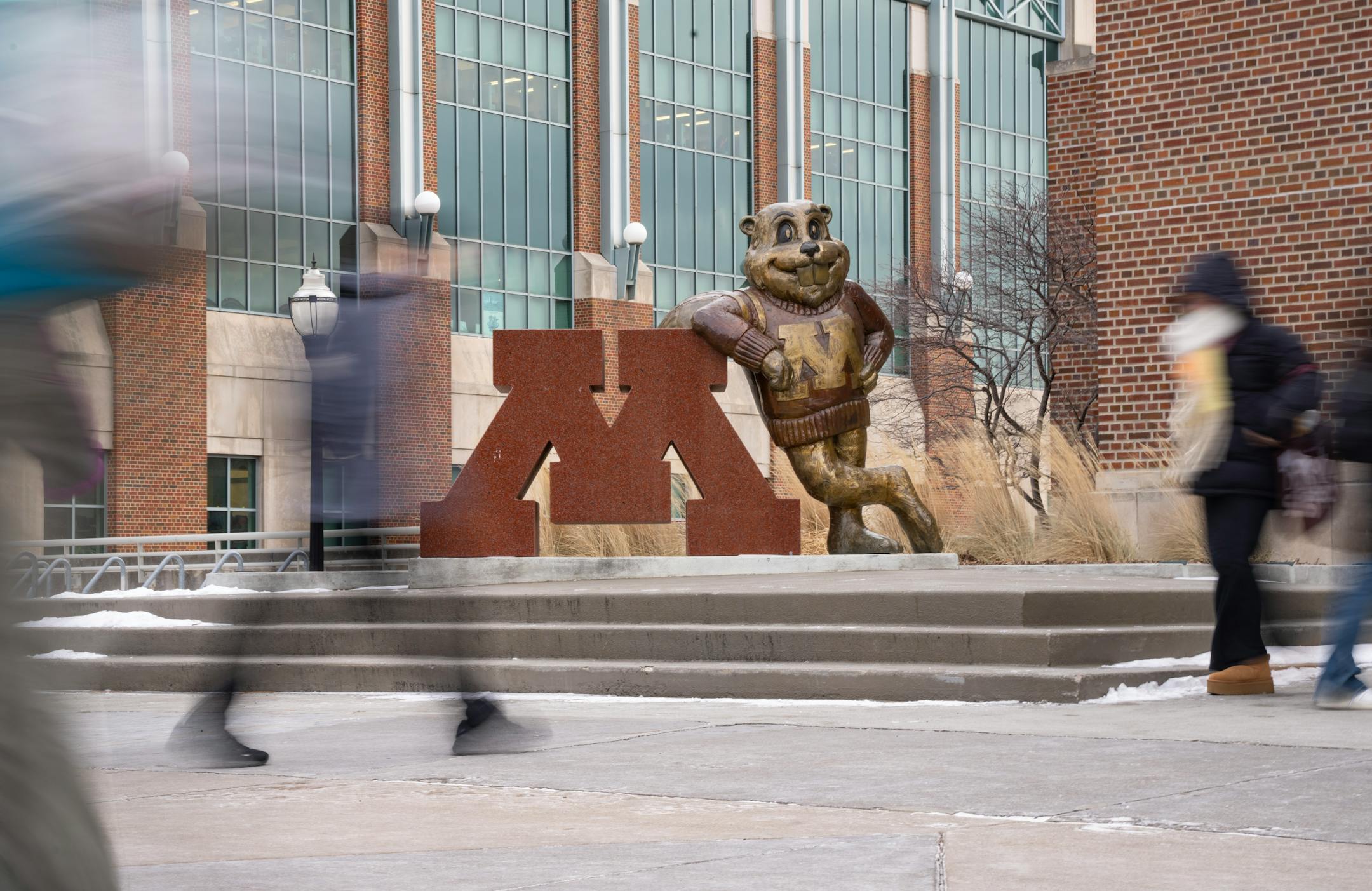
Students pass a statue of Goldy Gopher at the University of Minnesota in Minneapolis in 2024. (Alex Kormann/The Minnesota Star Tribune)

The University of Minnesota’s animal laboratories in Minneapolis had eight issues labeled “critical” in 2024 during U.S. Department of Agriculture (USDA) inspections, according to a new advocacy organization’s report released this month.

Among research facilities, the U was the only college or university in the state that the USDA’s Animal and Plant Health Inspection Service listed as having lab animal concerns in 2024; its lab sites in St. Paul, Spring Valley and Duluth had no issues. Two Minnesota companies also had violations that year.

Critical issues are serious and include those that directly impact animals’ health and welfare, said Meredith Blanchard, the senior management of advocacy and policy at the National Anti-Vivisection Society, an animal rights group.

“Minor violations are fairly common at research institutions, but a cluster of critical violations like this is far less typical and reflects a higher level of concern,” she said.

All violations referenced in the National Anti-Vivisection Society’s annual report of all USDA violations related to animal welfare were verified by the Minnesota Star Tribune using the USDA’s website.

The U has nearly 500 pigs, 400 guinea pigs, 350 hamsters and nearly 250 each of primates and sheep, plus many other mammals, used for research in labs. Animals used just for breeding weren’t counted.

The most serious item included an instance in 2023 when three monkeys weren’t given water for four consecutive days because the water valve in their cage was turned off, though an employee signed off on checking water availability twice a day; the monkeys recovered. The worker responsible was no longer allowed to work with animals.

Also in 2023, three primates had their fluids restricted to increase motivation. The minimal amount of water wasn’t given on seven different days. In addition, a vet wasn’t consulted when water restrictions were increased.

“The facility was unable to ensure that all personnel involved in the care, treatment and use of the above documented animals were qualified to fulfill their responsibilities ... resulting in negative impact on the health and wellbeing of these animals,” the USDA said.

A sheep was once given too little pain medication, the report said. Another sheep wasn‘t given the required pain medication or antibiotics at times during its recovery from a “painful procedure.”

On three occasions, the USDA reported that primates were injured when they escaped. One sustained a “small contusion” during a training session and another received a toe injury requiring amputation when its paw entered another monkey’s cage. A third monkey got loose, breaking a beaker. It cut its mouth on the glass.

Seven out of eight U violations were self-reported by those working in the labs, some logged in 2023, before the USDA vet’s visit and report.

The USDA didn’t comment because its spokesperson was on furlough due to lapsed government funding.

A U spokesperson said the university is “fully committed to the highest standards of research integrity,” especially related to humanely caring for animals. The U takes its oversight responsibilities “very seriously and works diligently, in full cooperation and transparency with federal inspections” to resolve concerns arising from self-reported incidents or monitoring of animal studies.

“The isolated events outlined in these inspection reports were unacceptable, and decisive corrective actions have been implemented,” the statement said, adding that the U continues to strengthen preventative training for animal research.

There were more problems in the U’s animal labs this year. In 2025, the USDA wrote up one noncritical issue related to not following surgery rules. Two monkeys’ surgeries took seven and a half hours each instead of the one to three hours they were supposed to take. One wasn’t given enough medicine after surgery and then received its medicine late. The same animal wasn’t monitored for 40 minutes after surgery though constant monitoring was required.

“Protocol is not being followed for several of the rhesus macaques with cranial implants,” a USDA report said, adding that implants weren’t cleaned on five occasions and not following protocol could result in animal suffering or death.

Dakota County Technical College (DCTC) in Rosemount also had two noncritical violations recorded in 2025, both administrative in nature.

The issues were corrected, a spokesperson said.

“Neither administrative issue negatively affected animal health or well-being. We provide professional and humane care for the animals we help treat through our veterinary technician program and train our students to prioritize animal well-being as they graduate and join veterinary practices,” said DCTC’s spokesperson.

about the writer

about the writer

Erin Adler

Reporter

Erin Adler is a news reporter covering higher education in Minnesota. She previously covered south metro suburban news, K-12 education and Carver County for the Minnesota Star Tribune.

See Moreicon

More from Minneapolis

See More
card image
Anthony Soufflé/The Minnesota Star Tribune

The police department’s second-in-command has issued a memo saying “Failure to comply shall result in discipline.”

card image
card image