How a federal shutdown affects Minnesota

Minnesota’s two U.S. senators voted against a Republican budget measure Tuesday night, while GOP members of the delegation laid the blame on Democrats.

The Minnesota Star Tribune
September 30, 2025 at 10:00AM
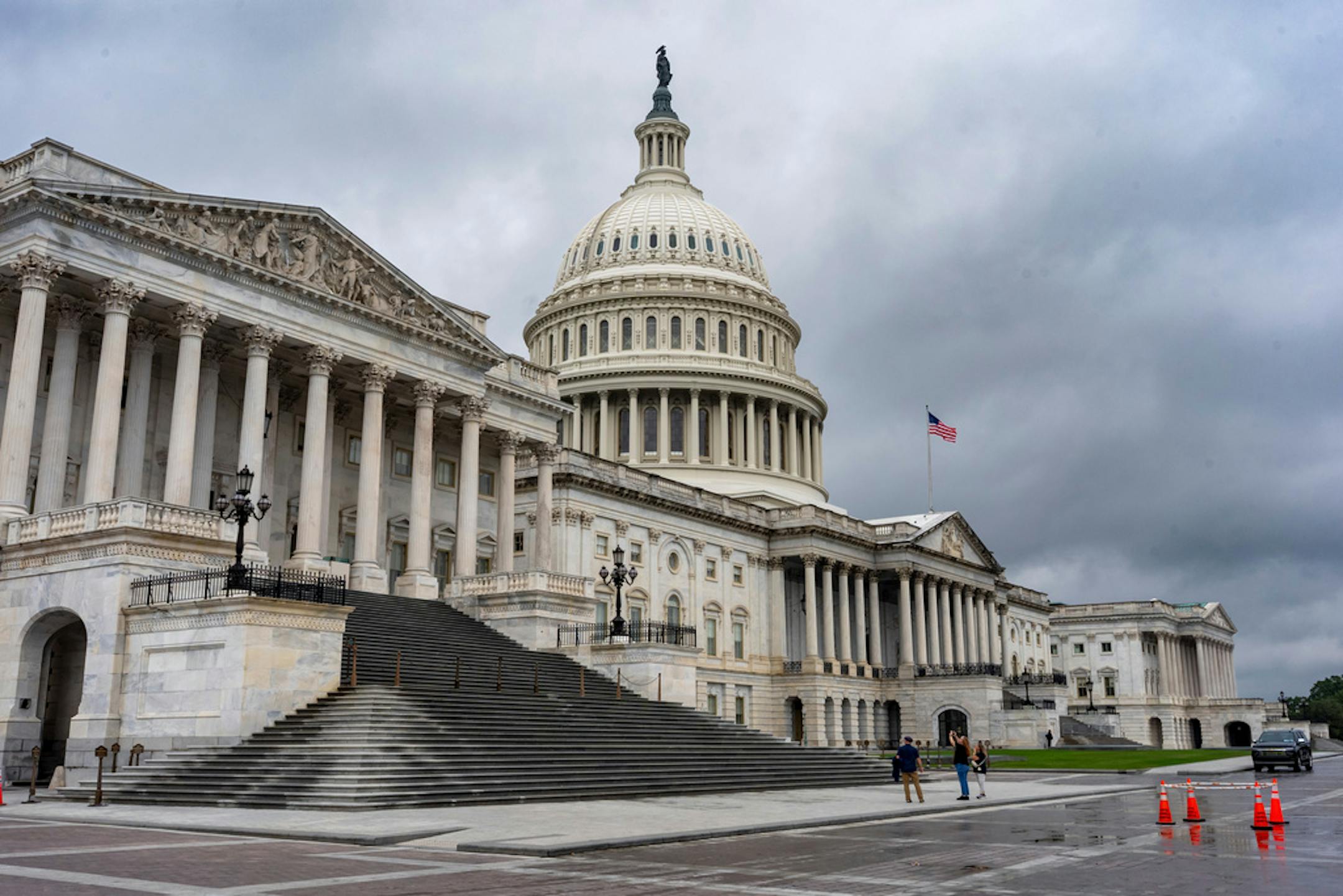
The Capitol is seen during rainy weather just days before federal money runs out, which could trigger a government shutdown. (J. Scott Applewhite/The Associated Press)

The federal government shut down on Wednesday, as Democrats and Republicans deadlocked in budget negotiations over whether to extend Affordable Care Act tax credits and reverse Medicaid cuts that Republicans enacted earlier this year.

Some federal workers in Minnesota may now have to go to work without pay, while certain services could see lags or stop altogether.

The shutdown might also have more significant consequences: The Office of Management and Budget has warned that mass layoffs via reduction in force notices could go out to federal workers who are in programs or projects that are not fully funded as of Wednesday, as well as those that are not in line with President Donald Trump’s priorities.

Here’s what to know about the ongoing shutdown and its affects in Minnesota:

What will happen to federal employees in Minnesota?

Minnesota is home to about 20,000 federal workers, or 35,000 when you factor in contractor positions, postal workers and members of the military, according to the Minnesota Federal Executive Board.

Federal employees in Minnesota “will not only be without temporary income as a result of a shutdown, but it is threatened that they will be without their federal careers permanently,” Ruark Hotopp, the national vice president of AFGE District 8, which represents many of the state’s federal employees, said in an email.

Hotopp said he does not yet know how many employees will be affected by layoffs in the state.

Tanna Morse, the president of AFGE Local 3129, a union that represents Social Security employees in Minnesota, said SSA employees will have to work without getting paid until the shutdown is over because they are considered “essential” employees.

She believes the plan is to permanently fire all non-essential federal employees to shrink the size of the federal government.

“This time around we believe the administration will try to fire everybody not considered ‘essential,’” Morse said.

What services will continue?

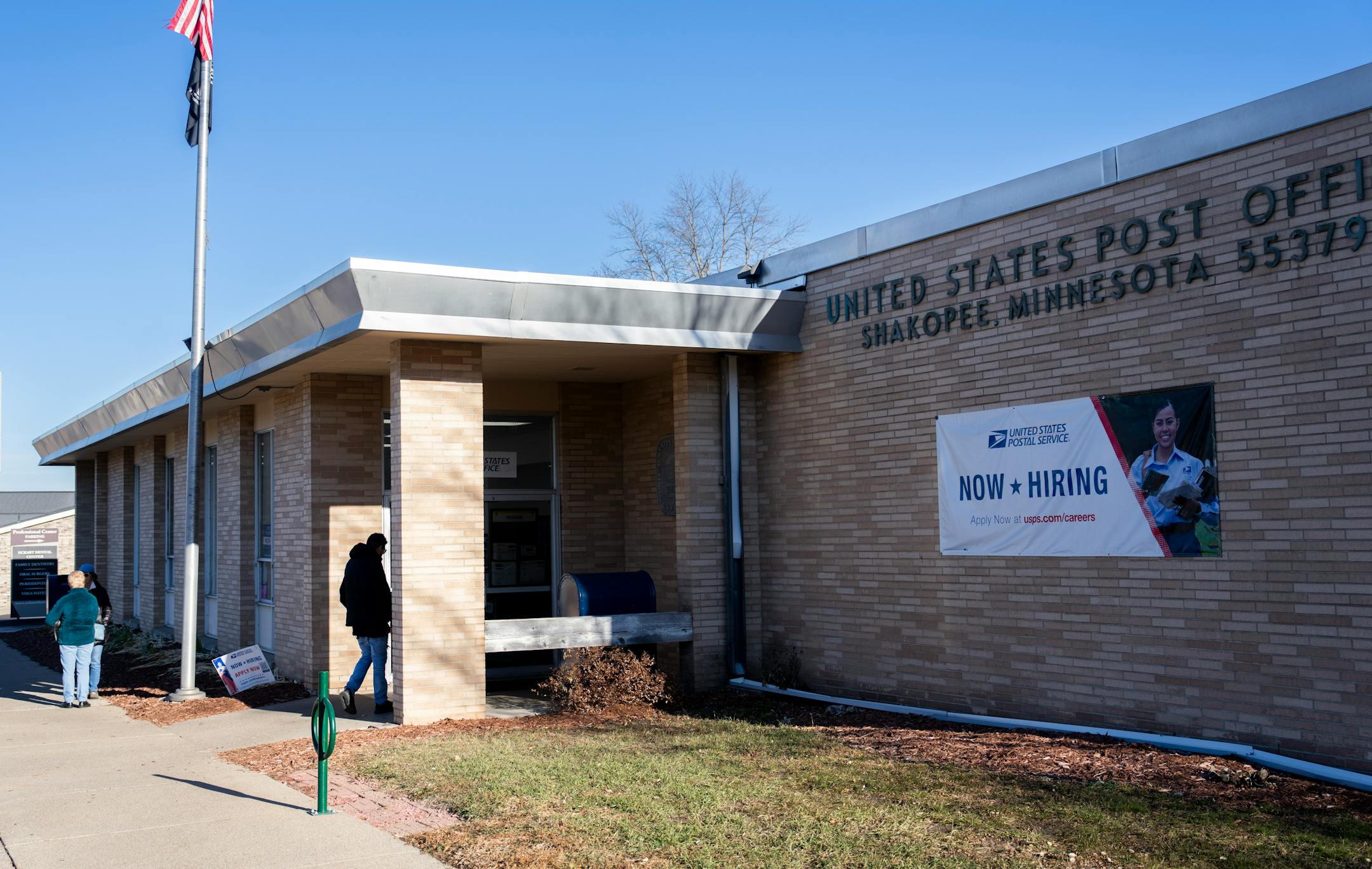
All post offices will remain open for normal business because the U.S. Postal Service is an independent entity mostly funded by its product sales and services.

The Minnesota Department of Human Services, which administers Medicaid, has also said the program will continue during the shutdown because it’s an essential service.

Minnesotans will also continue to receive Social Security benefits, as well as Social Security Disability Insurance and Supplemental Security income payments, the Social Security Administration confirmed.

The U.S Post Office in downtown Shakopee photographed Dec. 7, 2023. (Renée Jones Schneider/The Minnesota Star Tribune)

What about the National Guard?

Minnesota is home to 13,000 members of the National Guard, and during the shutdown, trainings, exercises and other events are expected to be rescheduled.

Federal civilian and dual-status employees of the Minnesota National Guard may also be furloughed without pay during the shutdown, said Army Maj. Andrea Tsuchiya, state public affairs officer at the Minnesota National Guard.

Any furloughed personnel will be required to receive back pay once they return.

Will a shutdown affect air travel?

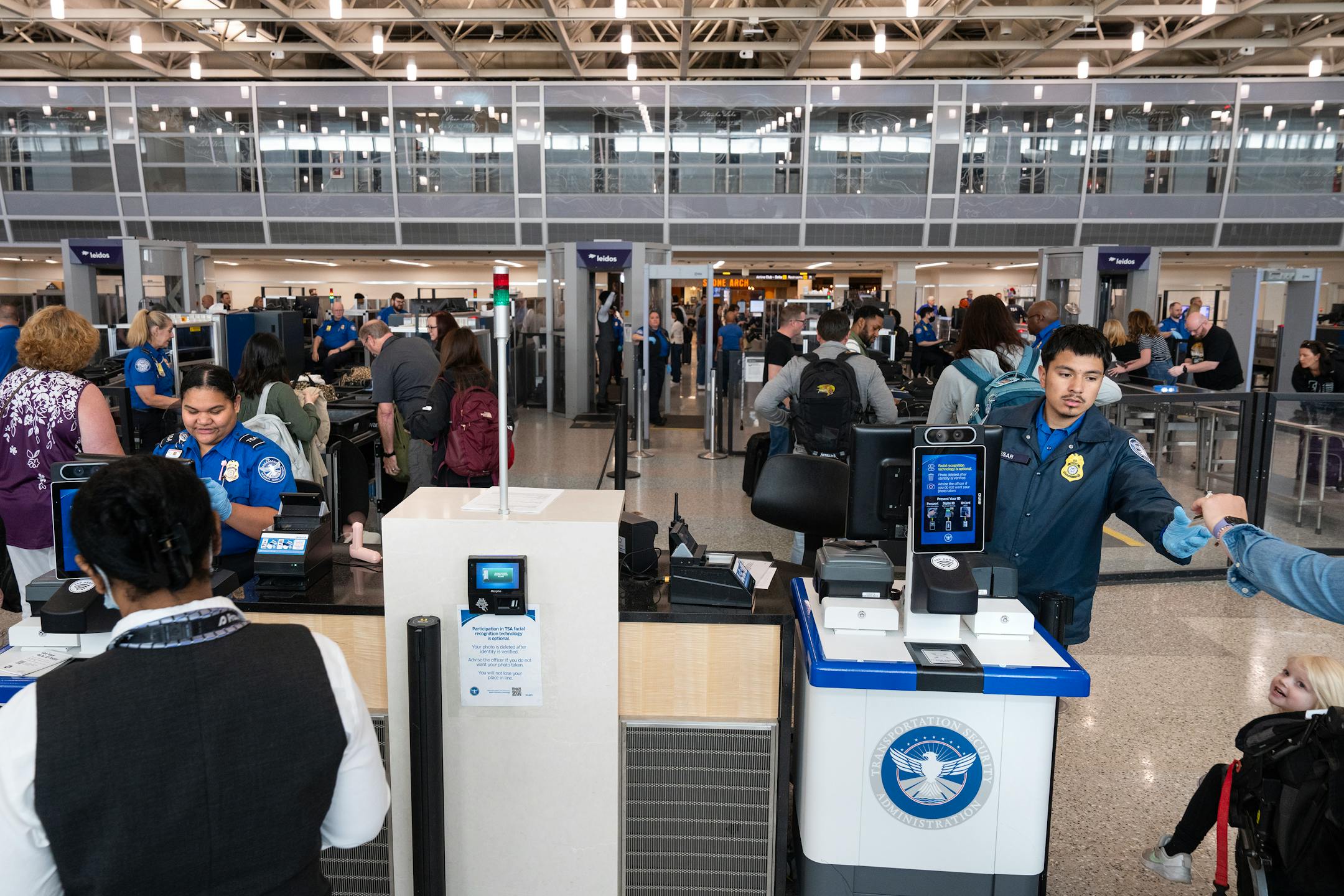
Air traffic controllers and TSA workers will be required to work but go without pay.

That said, during the partial 2018 to 2019 shutdown, the lapse in pay resulted in an increase in TSA agents calling in sick, causing delays at airports.

TSA agents check in passengers at the TSA security checkpoint inside Terminal 1 at Minneapolis - St. Paul International Airport on May 7. (Leila Navidi/The Minnesota Star Tribune)

What happens to national parks?

The New York Times reports there will still be access to some national parks during the shutdown. Voyagers National Park in northern Minnesota is the state’s only major national park. Public access to some wildlife refuges will cease.

Are the state and cities prepared for the shutdown?

City of Minneapolis spokesperson Allen Henry said officials are confident they have the cash flow to keep programs that rely on federal funds flowing temporarily, “but a prolonged shutdown will be harmful to our residents.”

In St. Paul, the city has been planning “for several different scenarios of federal funding disruptions” since January, city spokesperson Jennifer Lor said.

Lor said the city has “executed several key grant contracts in the last week” to ensure there are no gaps in funding.

Those grants include several that fund affordable housing development, homelessness programs and support the Right Track internship program.

Minnesota Management and Budget has activated a statewide team to track and manage possible impacts to state programs that receive federal funding, said spokesperson Patrick Hogan.

What are members of Minnesota’s delegation saying about the shutdown?

Democrats have criticized Republicans for not being willing to negotiate on the spending plan. They want to extend Affordable Care Act tax credits and reverse cuts to Medicaid.

Minnesota’s two Democratic members of the U.S. Senate voted against a Republican budget plan Tuesday evening that didn’t do those things.

“The president has, sadly, made his position clear: he would rather shutdown the government than work with congressional Democrats to address this skyrocketing healthcare cost crisis,” Minnesota Sen. Amy Klobuchar said on the Senate floor Tuesday.

Sen. Tina Smith said Tuesday that “federal workers have been through hell.”

“Even though we’re in a shutdown, there are all sorts of people who help make those [government] functions happen,” she said. “People are going to be working without getting paid. They’ll get their pay check when the shutdown is over, but that’s a real cash flow issue for people.”

Rep. Tom Emmer, the Republican House Majority Whip, posted on X later that night that, “Democrats in the Senate just voted to shut the government down.”

“The Democrat party has gone full far-left radical,” he wrote.

Minnesota Star Tribune reporters Christopher Vondracek, Christopher Magan and Dee DePass contributed to this story.

about the writer

about the writer

Sydney Kashiwagi

Washington Correspondent

Sydney Kashiwagi is a Washington Correspondent for the Star Tribune.

See Moreicon

More from Politics

See More
card image
Mark Schiefelbein/The Associated Press

A Navy admiral commanding the U.S. military strikes on an alleged drug boat in the Caribbean told lawmakers Thursday that there was no ''kill them all'' order from Defense Secretary Pete Hegseth, but a stark video of the attack left grave questions as Congress scrutinizes the campaign that killed two survivors.

card image