
Opinion | Americans are making fewer friends. What’s going on?

A ‘friendship recession’ is leading us to miss out on crucial connections.

August 12, 2025 at 8:29PM
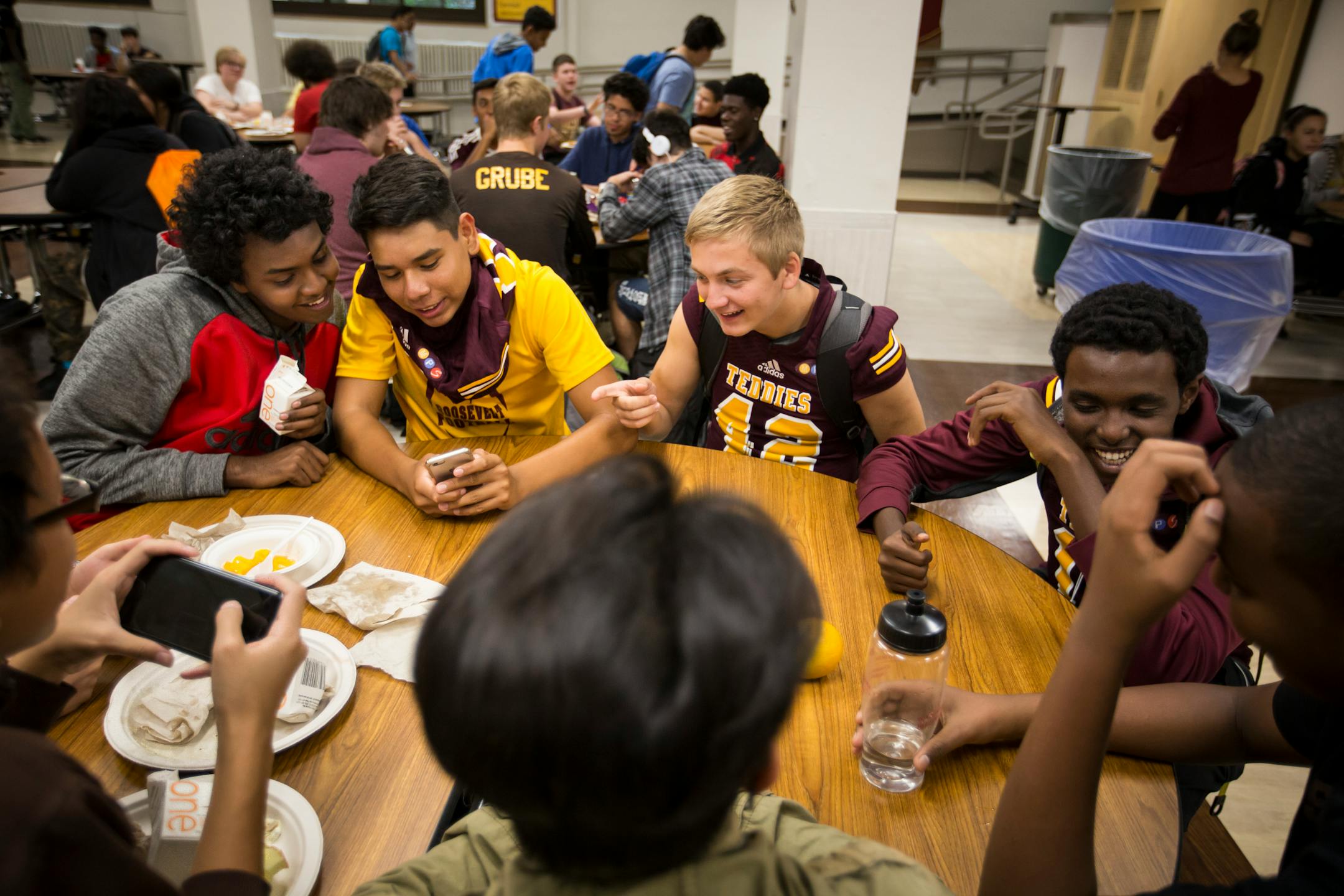
Students hang out in the cafeteria at Roosevelt High School in Minneapolis on Sept. 16, 2016.
Students hang out in the cafeteria at Roosevelt High School in Minneapolis on Sept. 16, 2016. (Renee Jones Schneider/The Minnesota Star Tribune)

Opinion editor’s note: Strib Voices publishes a mix of guest commentaries online and in print each day. To contribute, click here.

•••

Ah, the dog days of summer. These hot (smoke-filled) days are a great time to ponder the mysteries of life. For instance, “How come my spouse (let’s face it, usually the wife) cranks up the thermostat to 76 on cold winter days but complains that’s too warm on hot summer days?” or “Why is it that the more golf I play the worse I get?”

Never mind, those are imponderable. Perhaps easier, we could ponder this: What has happened to us? Oh no, not that, not the present sad situation with our government. No, let’s ponder this instead: A recent survey found that only 27% of American men reported having six or more close friends, compared to 55% in 1990. Women, especially younger women, also have fewer close friends too — although more than men. Experts call it the “friendship recession.”

Perhaps more interesting, from 2003 to 2022, American adults reduced their average hours of face-to-face socializing by about 30%. The decline was even bigger for unmarried Americans, more than 35%. And for teenagers, was more than 45%.

What can we make of this? Bear with me.

My mom and dad didn’t have much money but they had a lot of friends, and they did lots of things together. They played card games like rummy, whist and pinochle. Most were members of different clubs and fraternal organizations like the Lions, the Moose, the Elk, VFW, American Legion, etc. (Mom and Dad were Eagles.) And as you will see, much more.

I think that was true for many people of their generation — maybe even most. As important, their friends crossed social strata too. As a generation, they also managed to agree on the big things and generally work together to get things done. So, what is going on with us “younger” generations? I’m not sure, but, I‘ll admit, I am apparently part of the problem.

I’m on the backside of 70 and fortunate to have many more than six good friends, yet outside of lunch, cocktails or golf, I can’t claim the kind of relationships and activities like my parents. I also seem to be allergic to joining anything (if you don’t count 28 years in the Air Force). I have never even joined a golf league.

The next question is: Why have we changed? Allow me to segue to an explanation.

I have long kidded that I was raised in the gutter. No, seriously, I was. Mom and Dad were both bowlers — and I mean good bowlers. My earliest memories are riding in the car from the little burg of Osakis up to the big town of Alexandria where Mom and Dad were in a bowling league at least a couple nights per week. I would often fall asleep on benches and wake up in the back seat of the car. You know, just rolling around back there like a loose bowling ball. “So what?” you may ask.

In the mid-1990s, Professor Robert D. Putnam wrote an essay, later developed into a book, called “Bowling Alone” in which he called the close-knit social interaction of my parents’ generation “social capital.” He defined that as “the connections among individuals’ social networks and the norms of reciprocity and trustworthiness that arise from them.” In other words, it gave people a much better understanding of their friends and neighbors — both their virtues and vices; sort of like a civic lubricant. Which, seems to me, might be why Americans previously got along better, cooperated and got things done.

Putnam recognized that starting approximately in the 1970s, there was a significant drop in this social capital, so he did a study. In his research he came up with several possible reasons, among them: more women going into the workforce, people moving more, economic and time pressures, and suburbanization. It was probably some combination but, in the end, he thought that “the main cause was technology ‘individualizing’ people’s leisure time via television and the internet.” (As an early baby boomer some of my earliest memories are sitting in front of big, clunky black-and-white TV, so there is that.) He also suspected that “virtual reality helmets” would carry this further in the future.

I don’t know if Putnam’s causes or conclusion are totally correct, but clearly something has changed in the way we all relate to each other.

Separately, over 30 years ago, a late, great friend of mine suggested that we were turning into selfish little tribes, worried only about ourselves and our families. A different way to say the same thing, I guess. Very smart guy.

So here we are, the mid-2020s and another generation has apparently learned well from us. We’ve gone from friendship to a tribalism that has been weaponized by politics, the media and our own loss of faith in the country (deserved or not). We consist of the richest generations, living in the (formerly) greatest country in the history of the world ... and now we have armed, masked gestapo disappearing people in broad daylight. Perhaps even our friends or neighbors.

Seems that we have lost a lot more than our bowling partners.

D. Roger Pederson, of Minneapolis, is a retired military officer and health care analyst.

about the writer

about the writer

D Roger Pederson

More from Commentaries

See More
card image
Julia Demaree Nikhinson/The Associated Press

The greatness of a nation is not measured by whom it casts out, but by whom it gathers in.

card image
card image