CHICAGO – Leafy greens typically don't get kids excited. So Jake Counne knew he'd grown something special in his indoor vertical farm when his children, ages 5 and 7, were snacking on fresh spinach "like it was a bag of chips."
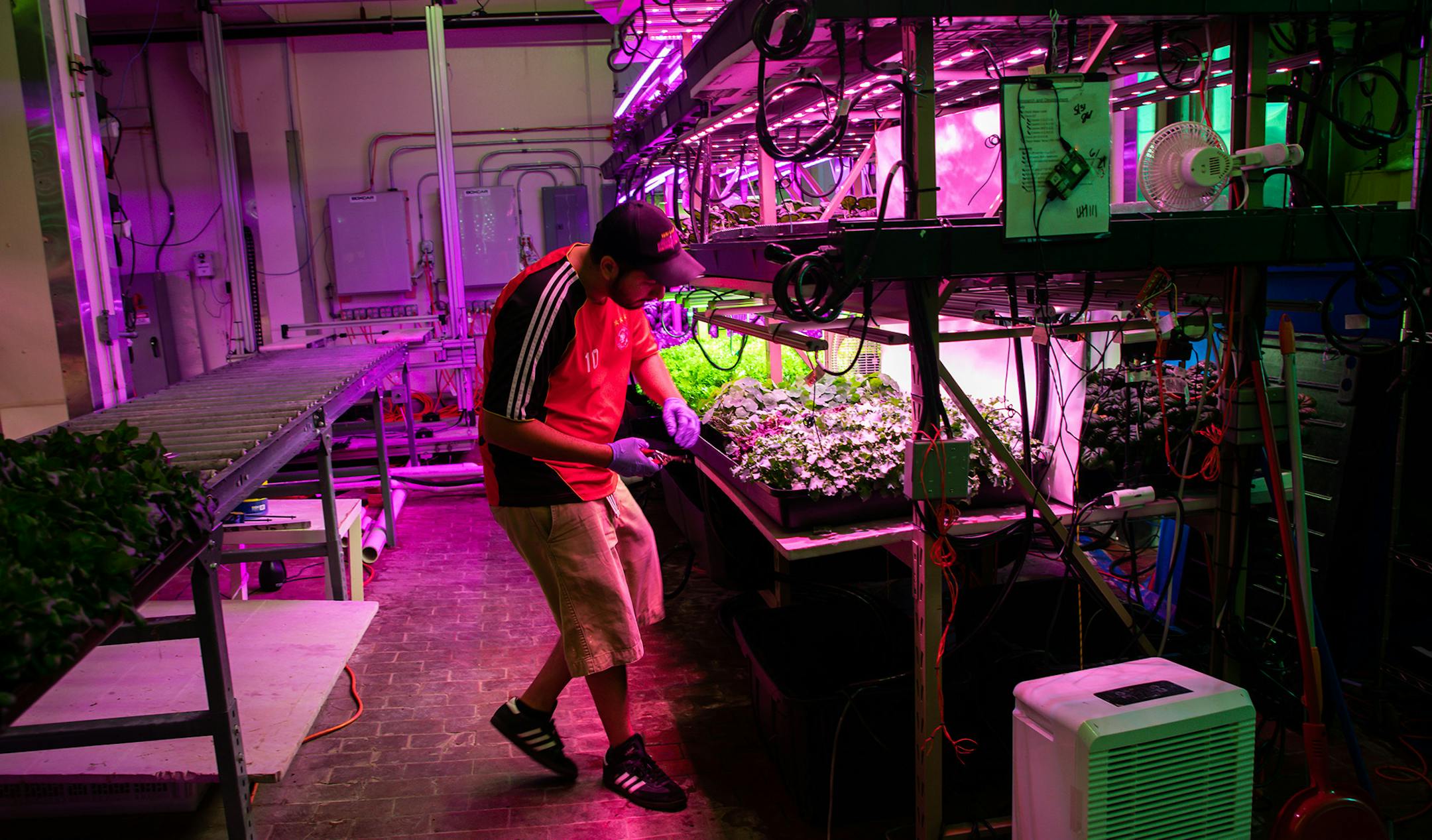
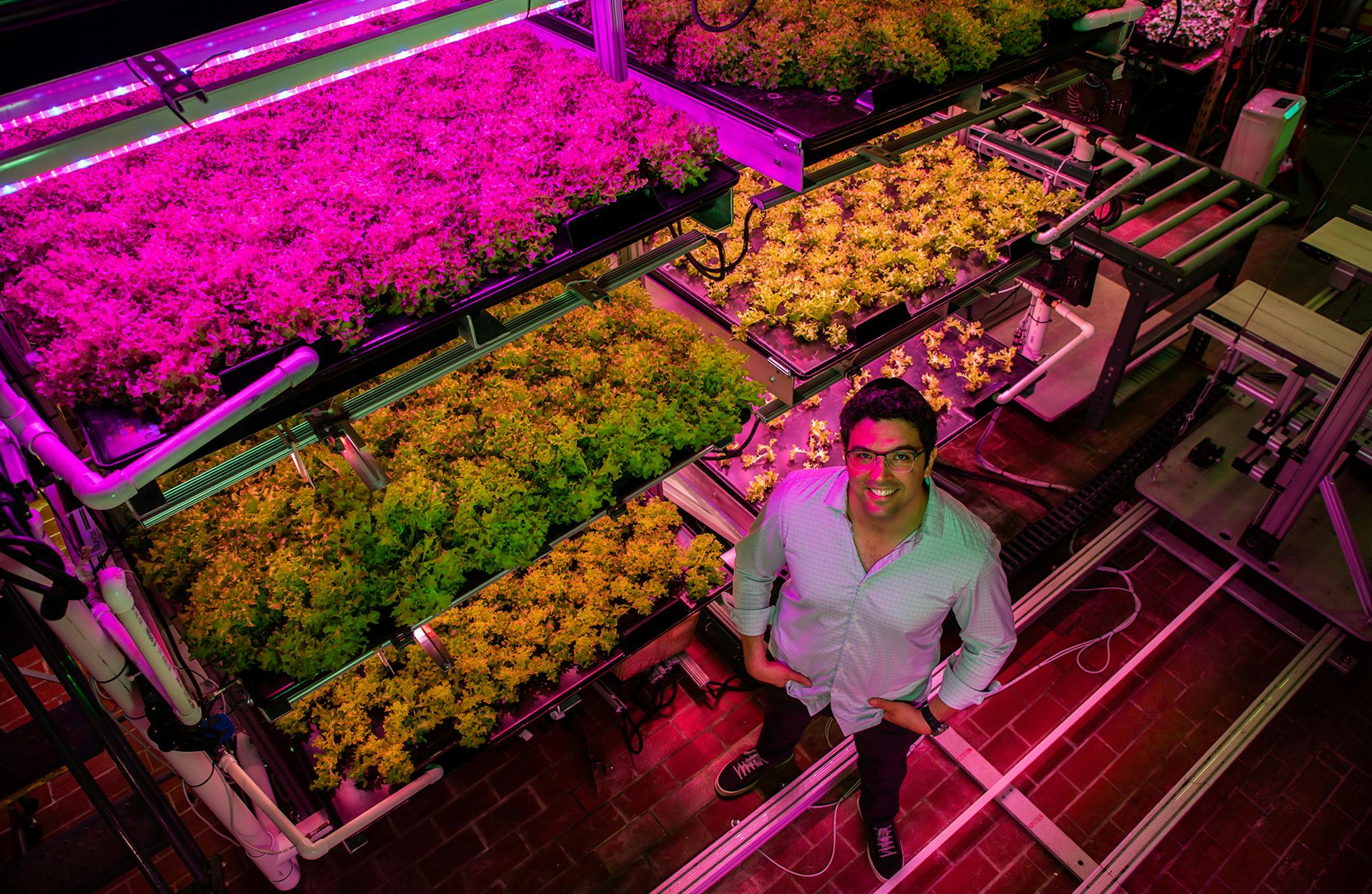
Other, more refined palates also have been impressed by Counne's spicy wasabi arugula, tart red sorrel and horseradish-tinged red mizuna — all grown under the purple glow of LED lights in a windowless office in Chicago's Back of the Yards neighborhood.
"The flavors coming out of these leaves were unbelievable," said Steve Lombardo III, chairman of Gibsons Restaurant Group, one of Counne's first customers. "We were talking about them like we were talking about fine wines."
Counne, a real estate investor before his interest turned to agriculture, is launching Backyard Fresh Farms during a period of heightened consumer and investor interest in produce grown locally in controlled environments that are less subject to contamination, waste and unpredictable weather.
High costs have killed similar ventures. But as he prepares for a significant expansion to bring his greens into stores, Counne said he believes his hydroponic farm has the technology to succeed where others have failed to make large-scale indoor vertical farming a profitable business.
"The key to what we've done here is being able to scale it to a point that not only can we grow it, we can grow it at an affordable price," said Counne, 31.
Counne operates a pilot farm in a 250-square-foot space at the Plant, a food business incubator housed in a former meatpacking factory in the shadow of the old Union Stockyards. There, he is testing cameras and artificial intelligence software to improve the quality and quantity of produce grown, as well as robotics to reduce the amount of time workers spend climbing ladders to tend to plants. For example, an automated lift collects trays of ready plants and brings them to an assembly line of workers for harvest.
The process has reduced labor costs by 80% compared with a first-generation vertical farm, Counne said. Combined with lower energy costs from other efficiencies, and a farm-to-retailer model that cuts out the distributor, he said he can price his product to compete with high-quality organic greens grown in the field — which are typically priced about $3 to $3.50 for a 5-ounce package of lettuce, he said.