
U Senate approves resolution to oppose Trump academic compact

Some faculty members said the compact would “endanger” the U’s “independence and integrity.”

The Minnesota Star Tribune
October 24, 2025 at 3:22PM
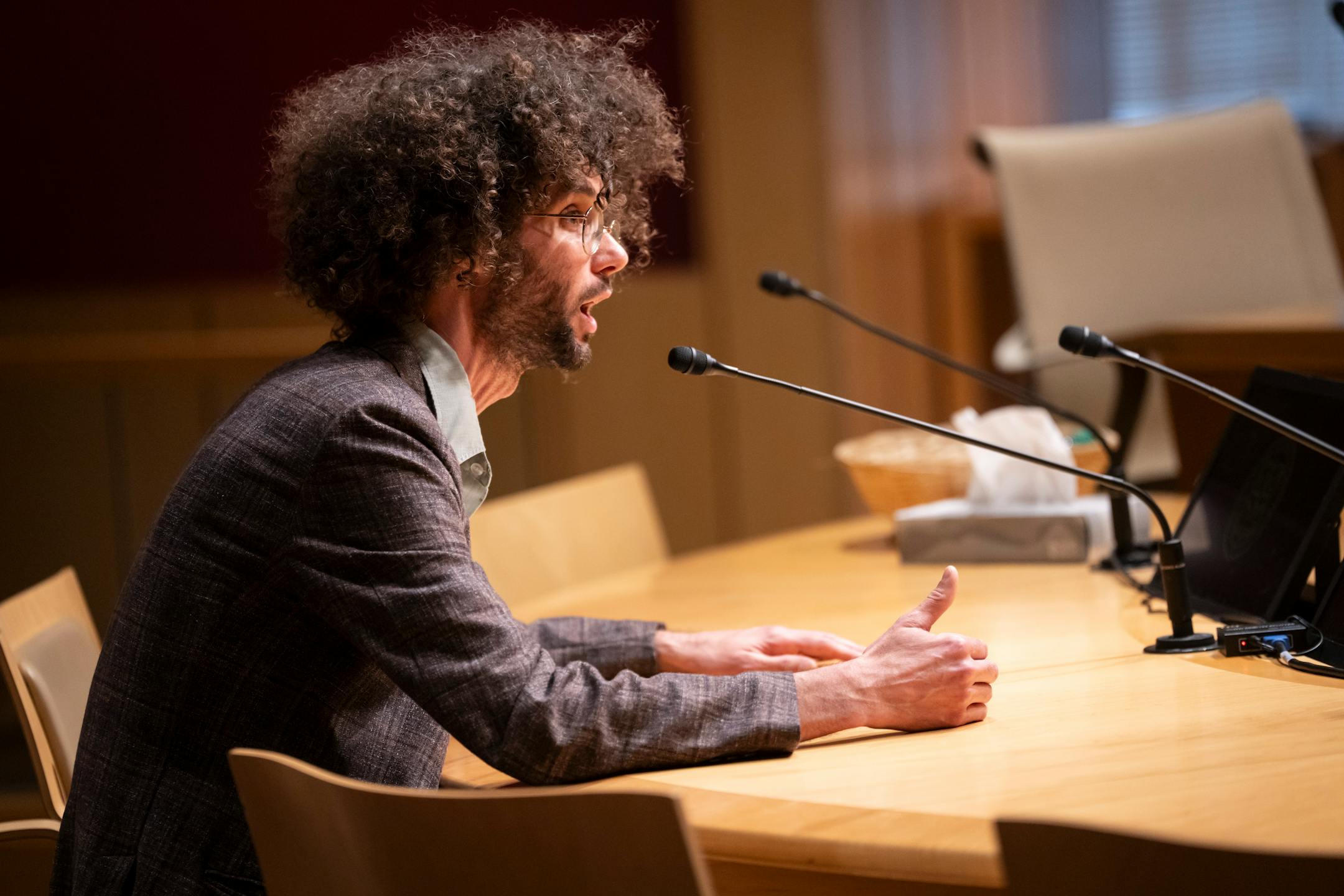
Michael Gallope, a cultural studies and comparative literature professor, addressed the University of Minnesota Board of Regents June 12 about budget cuts. Gallope also spoke at Thursday's University Senate meeting in support of a resolution opposing the Trump compact. (Renée Jones Schneider/The Minnesota Star Tribune)

A group of faculty members, staffers and students at the University of Minnesota approved a resolution Thursday rejecting the Trump administration’s compact giving universities priority access to federal funding if they agree to conservative policy commitments.

The University Senate passed a resolution opposing Trump’s “Compact for Academic Excellence in Higher Education,” saying the provisions are “antithetical” to the U’s mission, would “endanger” the school’s “independence and integrity,” and infringe on constitutional rights and academic freedom.

The resolution opposing the compact was approved 123 to 18, with about 100 people in Coffman Theater either voting on it or watching the meeting; more senators weighed in online.

“Is passing this urgent? Absolutely,” Michael Gallope, a cultural studies and comparative literature professor, told the other senators. He said that academic freedom and freedom of speech were on the line.

“With our shared voice, we can safeguard the principles of our freedom,” he said.

Kathy Quick, another faculty senator and a professor at the Humphrey School of Public Affairs, said signing the compact would set a precedent that future administrations could use to suppress any viewpoints they don’t like.

The University Senate’s resolution, co-signed by more than 60 faculty members at U campuses across the state, also urges President Rebecca Cunningham and the Board of Regents to reject the compact and any similar proposal.

Cunningham wasn’t at the Senate meeting, because she was attending a regents meeting held at the same time.

Earlier this month, the Trump administration offered the compact to a select group of universities. As of this week, seven of the nine universities offered the deal have publicly said no to the White House, according to the New York Times.

Trump has since given all American colleges and universities the chance to sign onto the compact, which asks them to pledge allegiance to conservative values. That would include defining gender based on “reproductive function and biological processes.”

It would also require universities to freeze tuition for five years, cap international enrollment and maintain “institutional neutrality,” adding that university employees couldn’t participate in or speak about political events.

Several senators, the majority who favored the resolution, shared their thoughts before the vote. Toni Abts, director of the Graduate Professional Policy Office and chair of the Senate of Academic Professionals and Administrators, said she supported the resolution but questioned “turning a spotlight on Minnesota sooner than we have to.”

Another faculty senator, economics professor Christopher Phelan, said he would sign Trump’s compact “if it was just him,” adding that he opposed passage of the resolution by the U Senate because he questioned what it would accomplish.

Phelan said the notion that the U can be at war with the federal government, which controls much of the funding for higher education, is untenable in the long run. The U could say yes to some of the things in the compact and suggest alternatives for other items, he said.

Similarly, Dominic Scavullo, Student Senate chair, was against the resolution because he thought the U should agree to aspects of the compact, such as giving free tuition to students who major in the hard sciences.

“There are parts where maybe it’s worth saying, if it was just this, it’s not so bad,” Scavullo said.

Colin Lang, who represents the U Law School on the Student Senate, liked the resolution. Pointing to the provision in the compact defining gender, he noted that the Senate had a chance to reject the administration’s “obsessive attacks” on transgender people.

In April, the University Senate approved a “mutual academic defense compact” to band together with other Big Ten schools in pooling legal and financial resources to help any of the schools under “political or legal infringement.” It was the most significant public response that the U faculty or leaders had taken to oppose Trump’s actions since he was inaugurated for a second term in January.

Correction: A previous version of this story misstated economics professor Christopher Phelan’s comments at Thursday's meeting. He said he would sign the Trump compact and opposed the University Senate’s resolution.
about the writer

about the writer

Erin Adler

Reporter

Erin Adler is a news reporter covering higher education in Minnesota. She previously covered south metro suburban news, K-12 education and Carver County for the Minnesota Star Tribune.

See Moreicon

More from Minneapolis

See More
card image
Richard Tsong-Taatarii/The Minnesota Star Tribune

The two sides reached a late-night agreement just three days before a planned strike on Tuesday.

card image