

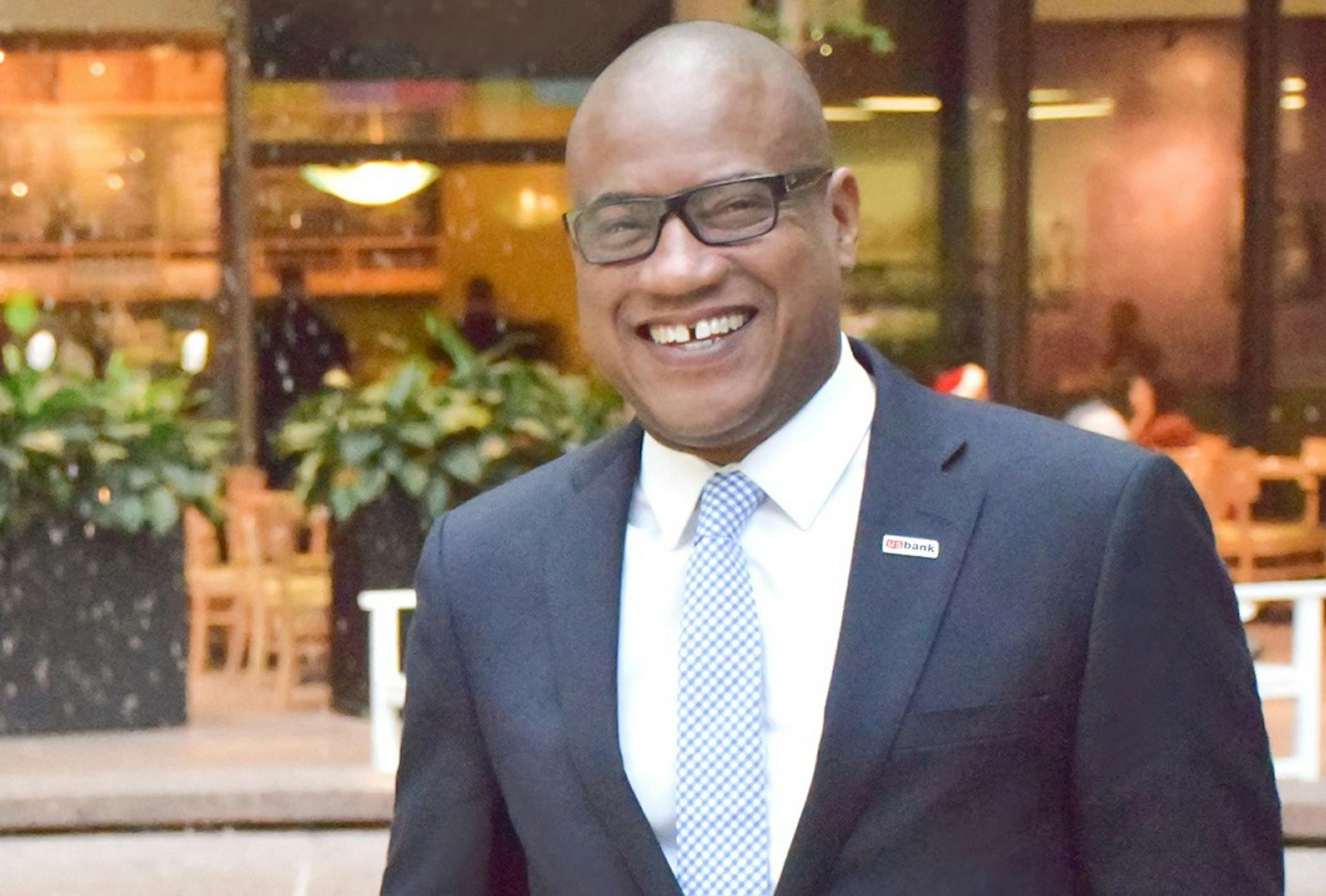
Greg Cunningham has always been a marketing guy. He spent 17 years at Target Corp., and came to U.S. Bank in 2015 in the same capacity. Shortly thereafter, he was asked to become the bank's first diversity and inclusion officer. Cunningham initially shrugged it off — hey, he's a marketing guy — but now describes it as the best job he's ever had. He helped launch the "Possibility Index," a national online consumer survey designed to help the bank assess Americans' views of their workplaces, homes and free time. It was an unusual approach to market research, based on bank leaders' notion that "every data point has a heartbeat." The index remains a work in progress, Cunningham says. But the attempt to quantify Americans' hopes, dreams and fears has yielded surprising results.
Q: What is the Possibility Index?
A: We talk a lot at U.S. Bank about possibilities. Our marketing campaign is about "the power of possibilities." As we were thinking about our brand, we wanted to know how people were doing and feeling about the three main areas of life — work, home and play — and how they talk about their lives online. We needed to know how people were feeling about those pillars. Do we have a sense about what they're concerned about? We created an interactive tool for consumers that could help them think about their financial goals. It's based on 19 quantitative data points, which gives us harder data and the ability to make comparisons across different regions of the country. We see the Possibility Index as a way to help us ask different questions about how we approach our work.
Q: What did you discover?
A: One of the interesting things was that people are much more optimistic in social media about what's happening in their lives. It's kind of a, "Duh," but the data supported it. We found that in the western region of the country, "play" was off the charts. The Northeast was the top-performing region in terms of work. In the northwest central region, which Minnesota is part of, home was No. 1. We were third in the country on work, but we had the most positive conversations around work than any other region of the country. People talk much less about hating their job in this region than in others. There's a sense of quality of life and enjoyment that's taking place in our region that we didn't see in other places.
Q: What was the thinking behind creating an index like this?
A: It started with a desire to continue to build trust with individuals and communities. Generally, people don't trust institutions, they trust other people. We've been doing a lot of work in my world of diversity and inclusion, and in the world of corporate responsibility, to make sure when we're interacting with communities we're telling better stories of how we're impacting both individuals and broader society. We wanted to find a way to engage in a way the felt really personal and engage in a way that communicates this notion of trust.
Q: What does the tool help people do?


