

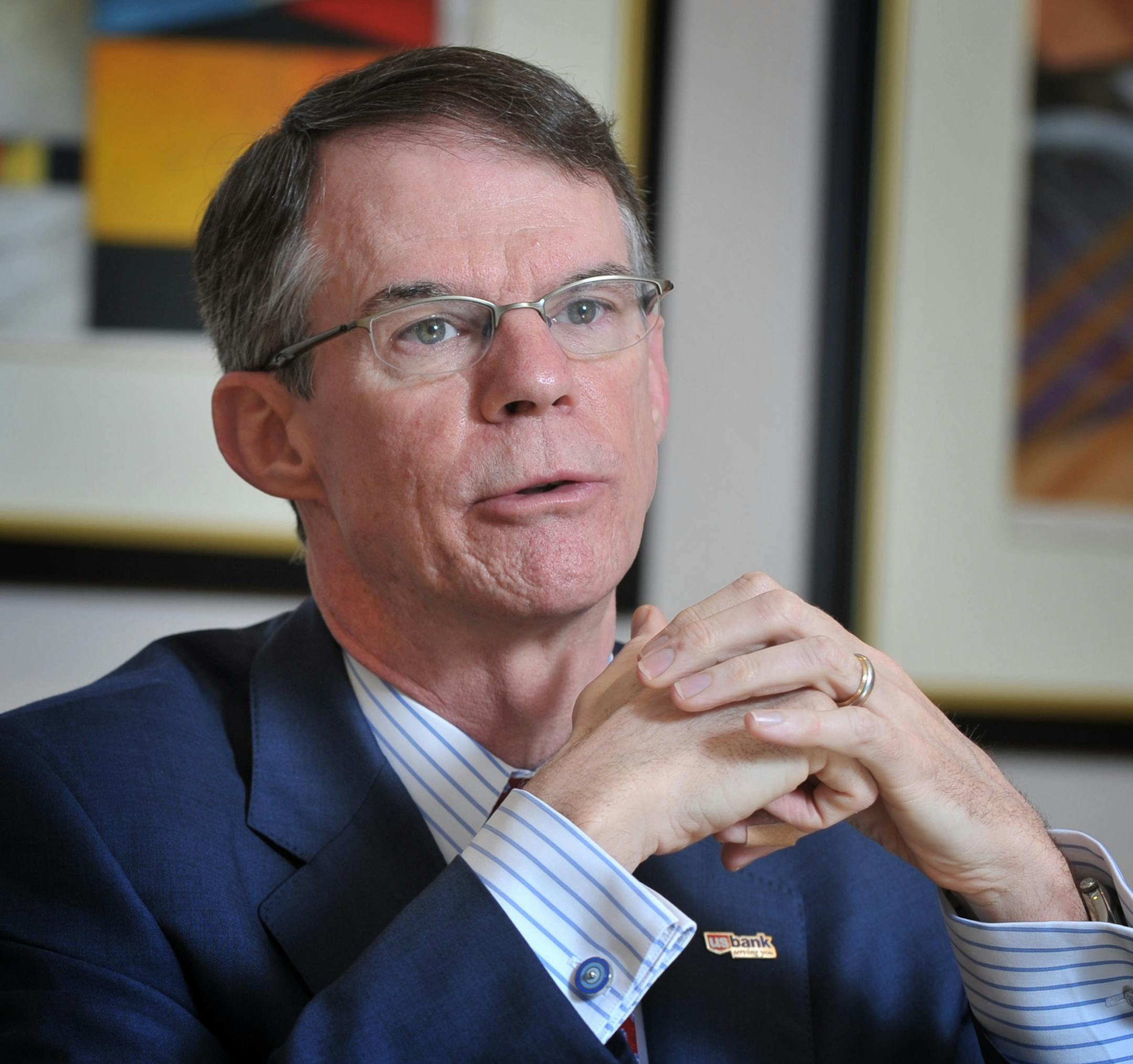
Richard Davis of U.S. Bancorp remembers a school fitness test that included hanging from a bar for 90 seconds.
The last 10 seconds counted the same as the first 10, even though they were a whole lot more difficult. It really helped to get a friend to shout out the last few seconds.
The 90-second bar hang is the way Davis explains his thinking about maintaining low interest rates, which continue to put pressure on bank earnings. He's eagerly awaiting the first rise in interest rates since the U.S. Federal Reserve drove short-term rates to near zero at the end of 2008. It seems just seconds away from finally happening.
Davis is hanging on so tenaciously because even a little bump in rates should mean U.S. Bank won't have to follow the lead of other banks and get earnings growth by cutting the jobs of hundreds if not thousands of employees.
With about 11,000 U.S. Bank employees in the Twin Cities — and because it's so clearly the right thing to do — it's easy to cheer for Davis to hang on a little longer.
Any cuts wouldn't be as the result of some crisis for the bank. The company can still make money with every employee it now has. The only thing that's really at risk for the bank is being able to report continued growth in earnings.
Delivering earnings growth is Job One for any CEO.
The investors looking closely at a bank's earnings potential all pay close attention to a measure called operating leverage, so Davis has to, too. Operating leverage is a really simple business concept: It just means that it should cost a little less to generate the next $100 in revenue than it did to generate the last $100. When that happens, of course, profits increase faster than revenue.


