

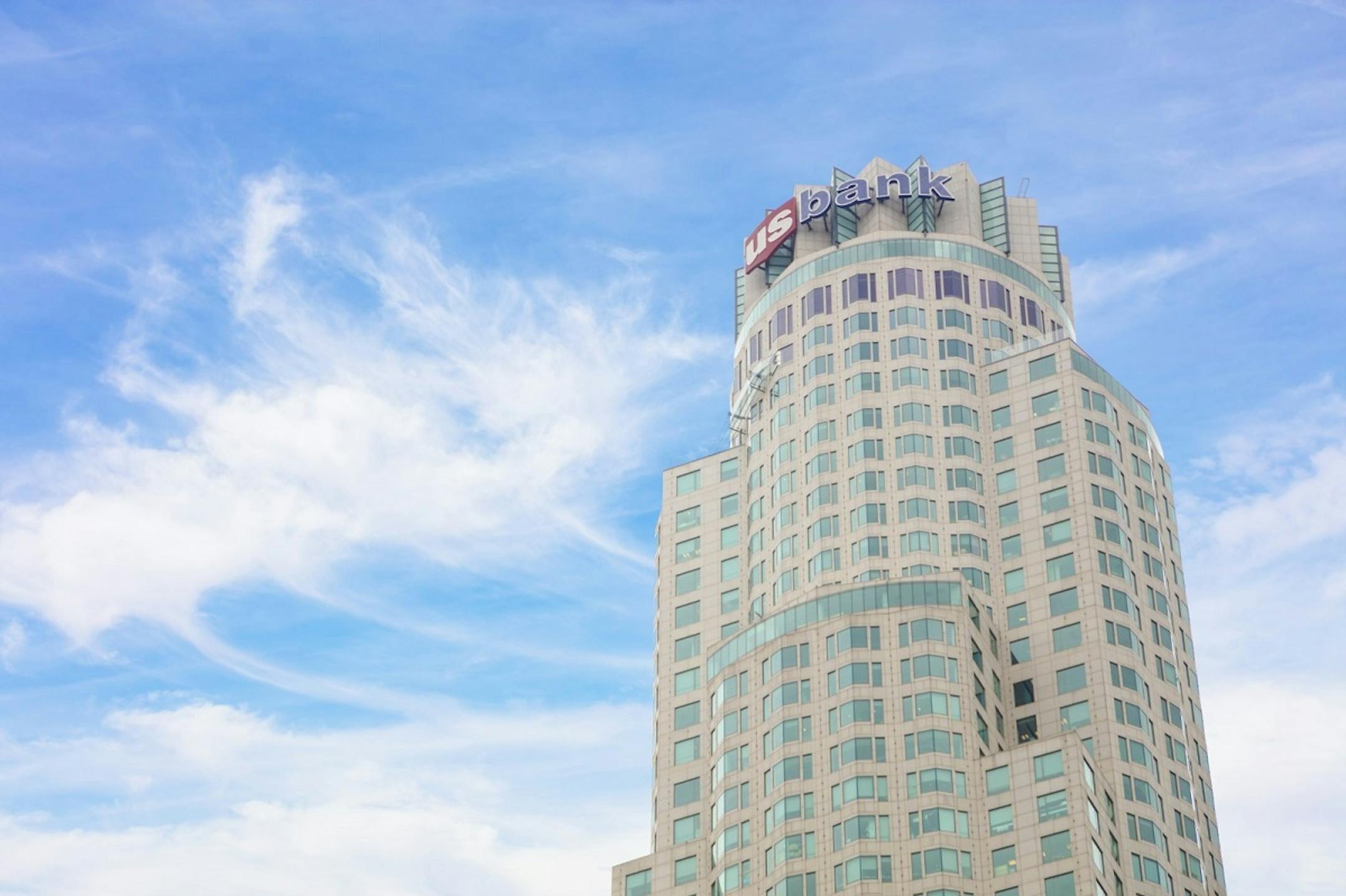
U.S. Bancorp, the Minneapolis-based operator of the nation's fifth-largest bank, raised its quarterly dividend by nearly 10% after clearing the Federal Reserve's latest stress test.
Most of the nation's other large bank companies announced similar moves after the central bank last week produced the results of its latest check of capital adequacy and lifted restrictions on dividends and share purchases.
When the coronavirus pandemic led to economic recession, the central bank last year conducted two stress tests and forced banks to stop share repurchases and dividend increases. But with the latest test, the Fed said all 23 of the nation's biggest banks were healthy enough to withstand a sudden economic catastrophe.
For U.S. Bank shareholders, the quarterly dividend payout will increase to 46 cents a share from 42 cents starting in October. In the first quarter, the company paid $637 million in dividends to common shareholders.
Until last year, U.S. Bank had raised its dividend every year since the last recession, and the value of its dividend has nearly quadrupled over the past decade.
Following the Fed's latest stress test, U.S. Bank will be required to maintain a capital buffer of 7% of its risk-weighted assets, down from 9.9% under a 2020 rule.
"The results of this year's stress test are a testament to our strong financial profile and well-established financial discipline which allowed us to maintain strong capital and liquidity positions throughout the recent adverse economic conditions," Andy Cecere, the company's chief executive, said in a statement.
Wells Fargo & Co. lifted its quarterly dividend to 20 cents a share from 10 cents. The company, which is based in San Francisco but has a sizable presence in the Twin Cities, also said it would spend $18 billion to repurchase shares over the next year, an amount that exceeds the $16 billion in profit analysts expect it to make this year.


