
Voters in Twin Cities suburbs pick new leaders to address development, affordability

Victors in several suburban races, from Bloomington to Lino Lakes, advanced different ideas for keeping life affordable beyond the Twin Cities.

The Minnesota Star Tribune
November 5, 2025 at 5:43AM
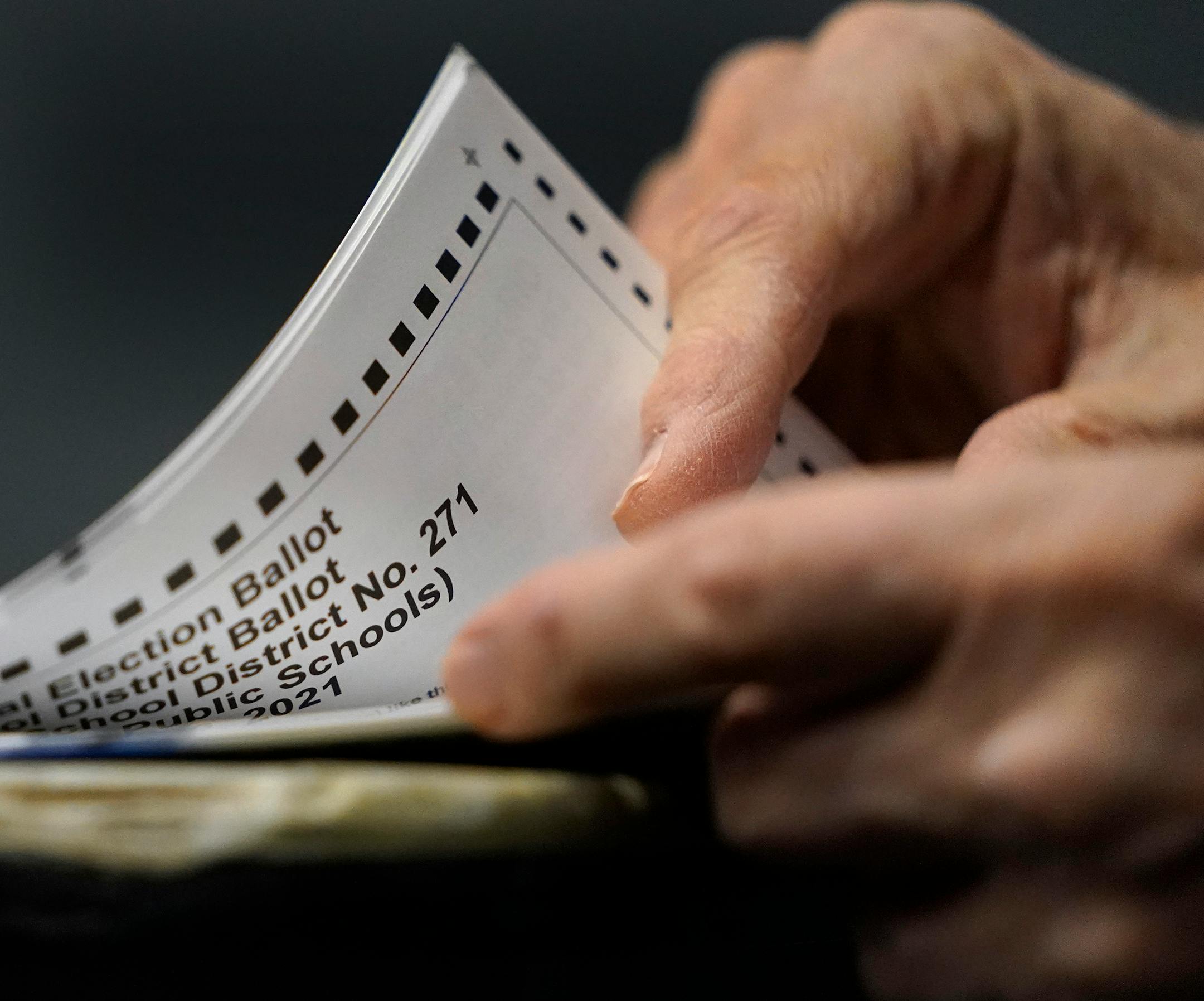
An election judge in Bloomington counts ballots cast in a City Council race in 2021. Candidates running for office this year in several Twin Cities suburbs have advanced different visions for addressing rising taxes and rapid development. (David Joles/The Minnesota Star Tribune)

Suburban residents on Tuesday brought their kitchen-table concerns to the polls, selecting new mayors and City Council members in several cities.

Anxiety about rising taxes and rapid development emerged as key issues in contests beyond the Twin Cities. Here are the results from key suburban races.

Bloomington

In Bloomington, which follows a ranked-choice voting system, Danielle Robertson won an at-large City Council seat with roughly 53% of the vote, defeating Jonathan Minks and Isaak Rooble.

A proposed 9.5% property tax hike emerged as a key issue in the local race, with the three candidates advancing different visions for addressing rising costs.

Robertson, a stay-at-home mom and licensed attorney, hesitated during the campaign to identify specific items in the budget to cut before seeing “what works and what doesn’t.” But she said the city needs to balance residents’ desire to keep taxes low with the need to provide high-quality services.

Voters also cast ballots in two other City Council races.

Incumbent Shawn Nelson held onto his seat in a western part of the city, earning about 67% of the vote and defeating Andrew Luckraft.

But a race to represent a southern portion of the city was still undecided after first-round votes were counted. Incumbent Dwayne A. Lowman earned 37% of the first-round votes, and challengers Jessica Keehan and Aaron C. Smith trailed with about 31% and 32% of the first-round votes, respectively. Since no candidate received a majority of the vote, the race will require further tabulation.
Minnetonka

A leadership change is coming to Minnetonka after voters selected Rebecca Schack as mayor — the first contest in nearly a decade without an incumbent on the ballot.

Schack, a City Council member who has focused on promoting affordable housing and environmental preservation since she was elected in 2018, earned 59% of the vote. She defeated four other candidates who jumped into the race for the city’s top position after two-term Mayor Brad Wiersum announced he was stepping down.

They included Ellen Cousins, a former Economic Development Authority commissioner who centered her campaign on fiscal restraint.

Jonathan Kent promoted mutual aid and anti-racism; Michael Briles, sounded alarms about an 8% property tax hike; and Jon Kayser urged the city to cut taxes and improve emergency response times.

Two at-large City Council seats were also on the ballot. Incumbent Deb Calvert retained her spot after running unopposed. Incumbent Kimberly Wilburn defeated Craig Alciati and David Biesboer for the other citywide position.

Lino Lakes

Mayor Rob Rafferty, who was first elected in 2019, retained his seat in Lino Lakes. The race largely revolved around how to best deal with booming development — an issue exemplified by a controversial housing and mosque project that thrust the northern suburb into the national spotlight.

During the campaign, Rafferty said he favored “quality over quantity” development and touted the city’s success in expanding the tax base by supporting commercial construction.

He defeated Catherine Decker, who runs a local mortgage business and previously ran for council. Decker spoke out against a possible 16% property tax jump, arguing the city should curtail spending.

A third candidate, Luke Walter, entered the race but threw his support behind Rafferty.

Randy Rennaker won one of two seats in a crowded City Council race that also largely hinged on angst over rapid growth. But the other race was too close to call with votes in all precincts counted as of Tuesday night: Julia Nelson had earned just 24 more votes than incumbent Dale Stoesz.

Rennaker, an Economic Development Committee member who emerged as an outspoken opponent of a major housing project, said during his campaign he believes the city should attract more businesses to ease the tax burden on residents.

Nelson is a member of the city Environmental Board who pushed to confine commercial development to business districts and increase walkability. Stoesz argued that new projects should reflect the desires of residents — not developers.

Also running was Tere O’Connell, who advocated maintaining wetlands and lakes, and Chris Stowe, who said during the campaign that Lino Lakes should rein in spending and growth. Stowe, a plumber, was implicated in 2018 in his son’s alleged school shooting threat, but prosecutors later dropped the charges.

White Bear Lake

Mary Nicklawske won the mayor’s race in White Bear Lake, where worries about creeping costs and well-staffed police and fire departments rose to the fore.

Nicklawske, who worked in human services before retiring, said during the campaign she wants to improve public safety in the city and ensure emergency responders receive proper training and mental health services. She also said she’s focused on fixing sidewalks and cracking down on speeding in residential areas.

She earned 64% of the vote, defeating business owner Stephen Laliberte, who argued the city should concentrate on providing essential services — such as sewer, water, parks and streets — while contracting out other work to ease the financial burden on residents.

On the City Council, incumbent Kevin Edberg and Ellen Gurrola scored seats after running unopposed.

Sarah Ritter, Sofia Barnett and Greta Kaul of the Minnesota Star Tribune contributed to this story.

about the writer

about the writer

Eva Herscowitz

Reporter

Eva Herscowitz covers Dakota and Scott counties for the Star Tribune.

See Moreicon

More from Twin Cities Suburbs

See More
card image
Renée Jones Schneider/The Minnesota Star Tribune

Hundreds of people have seen their immigration case dismissed, only to be arrested outside a Fort Snelling courtroom and placed in expedited removal.

card image
card image