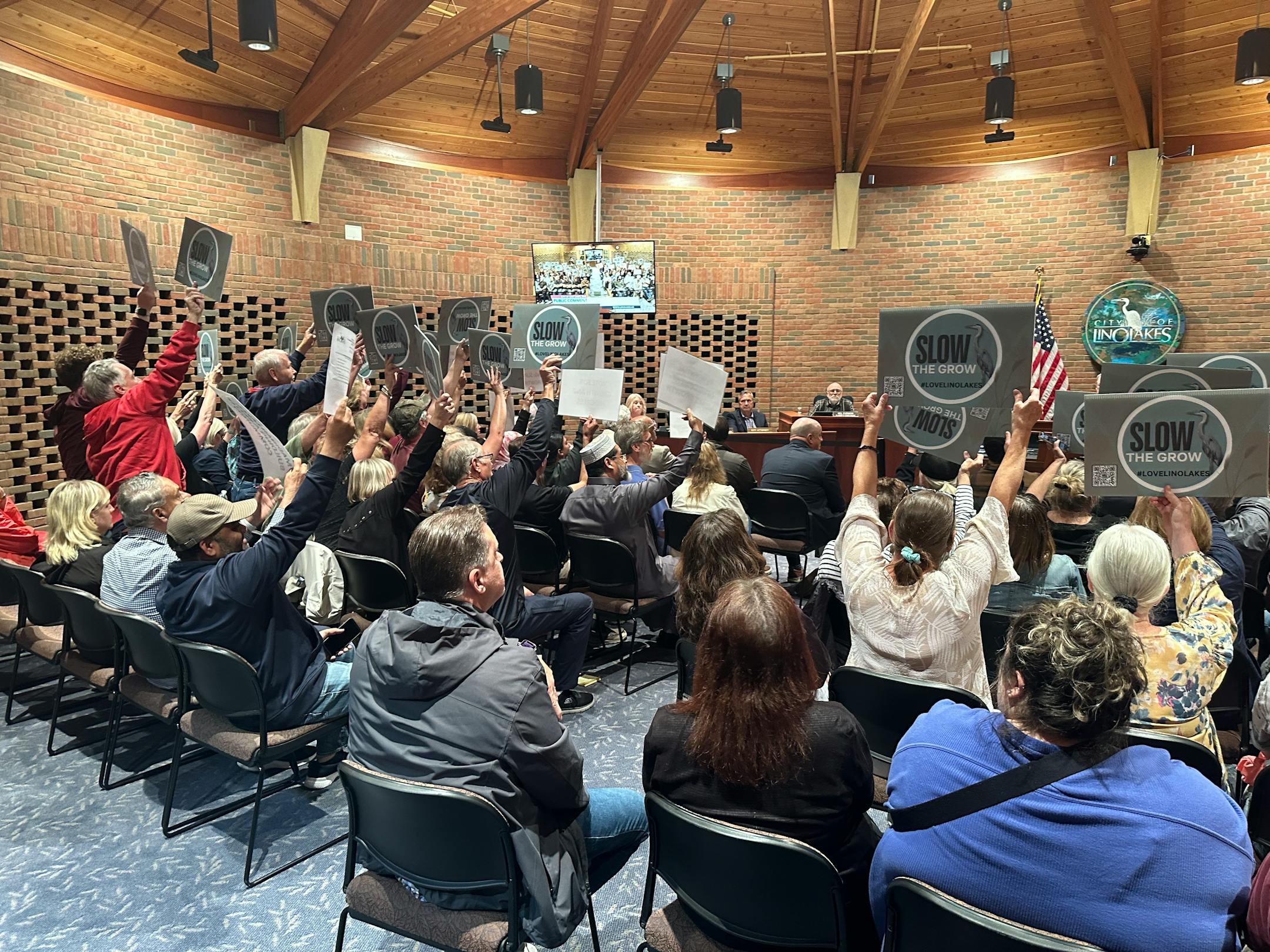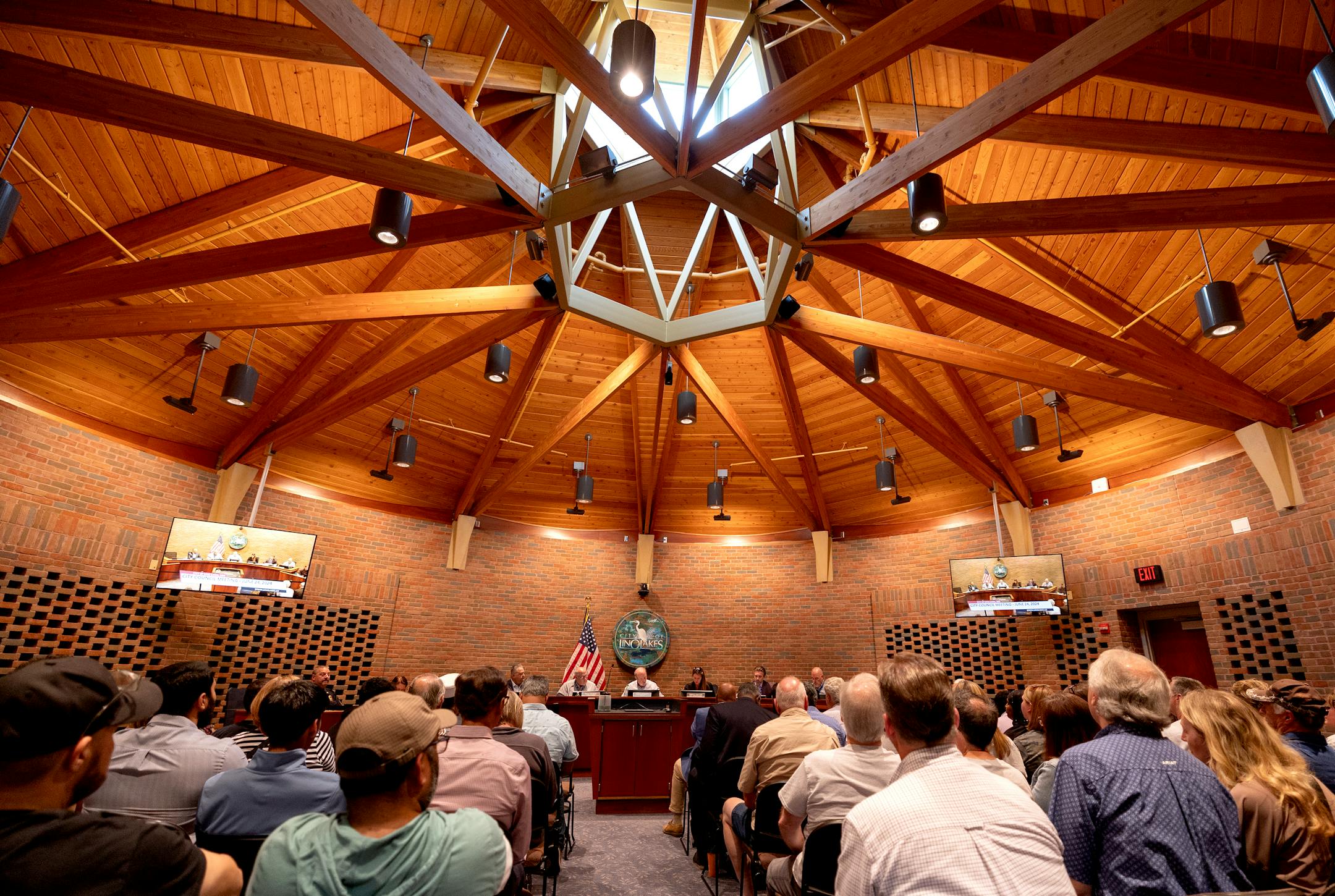
Lino Lakes is poised to approve new development guidelines that would complicate plans for a sprawling housing project with a mosque that has driven controversy in the suburban city.
Residents packed city meetings last year to debate the proposal that called for more than 400 homes, townhouses and apartments, a shopping area and a mosque on the site of an old sod farm in the northwestern corner of the city. The council enacted a yearlong moratorium halting residential development in the broader 960-acre area, and the developer is suing the city over the delay.
As the moratorium ends Friday, architect Dean Dovolis said it would cost “hundreds of thousands” of dollars to alter the project to fit the new master plan proposed for the area, which would shift where commercial space and denser housing could go.
“The changes would be major if we’d have to restart it all over again with the layout and organization of the site,” Dovolis said, depending on the city’s zoning decisions.
The Lino Lakes Planning and Zoning Board on Wednesday evening advanced the new master plan for the area officials call a key “gateway” along Main Street, between Sunset and 4th avenues.
Officials said the master plan, as well as an environmental assessment, were needed because of significant development interest in the area over the past couple of years. That included a proposal from PulteGroup for an active senior living community on about 240 acres north of Main Street. Then developer Faraaz Mohammed pitched the “Muslim-friendly” community on more than 150 acres.
Lino Lakes’ current long-term plan, which officials use to determine whether projects meet the city’s development goals, calls for higher-density housing and commercial space to be built toward the middle of the northwestern site, near Main Street and between Sunset and 4th avenues.
But Leila Bunge, a planner with the firm Kimley-Horn, said after hearing feedback from residents, they recommend changing the guidance so that higher-density housing and businesses would be located on the western edge of the site toward the border with Blaine. Lower-density housing would be allowed on the eastern side of the site, adjacent to existing single-family homes.