
Opinion | Federal cuts to the Legal Services Corporation would hurt Minnesotans

Here’s how the work benefits people.

August 8, 2025 at 8:59PM
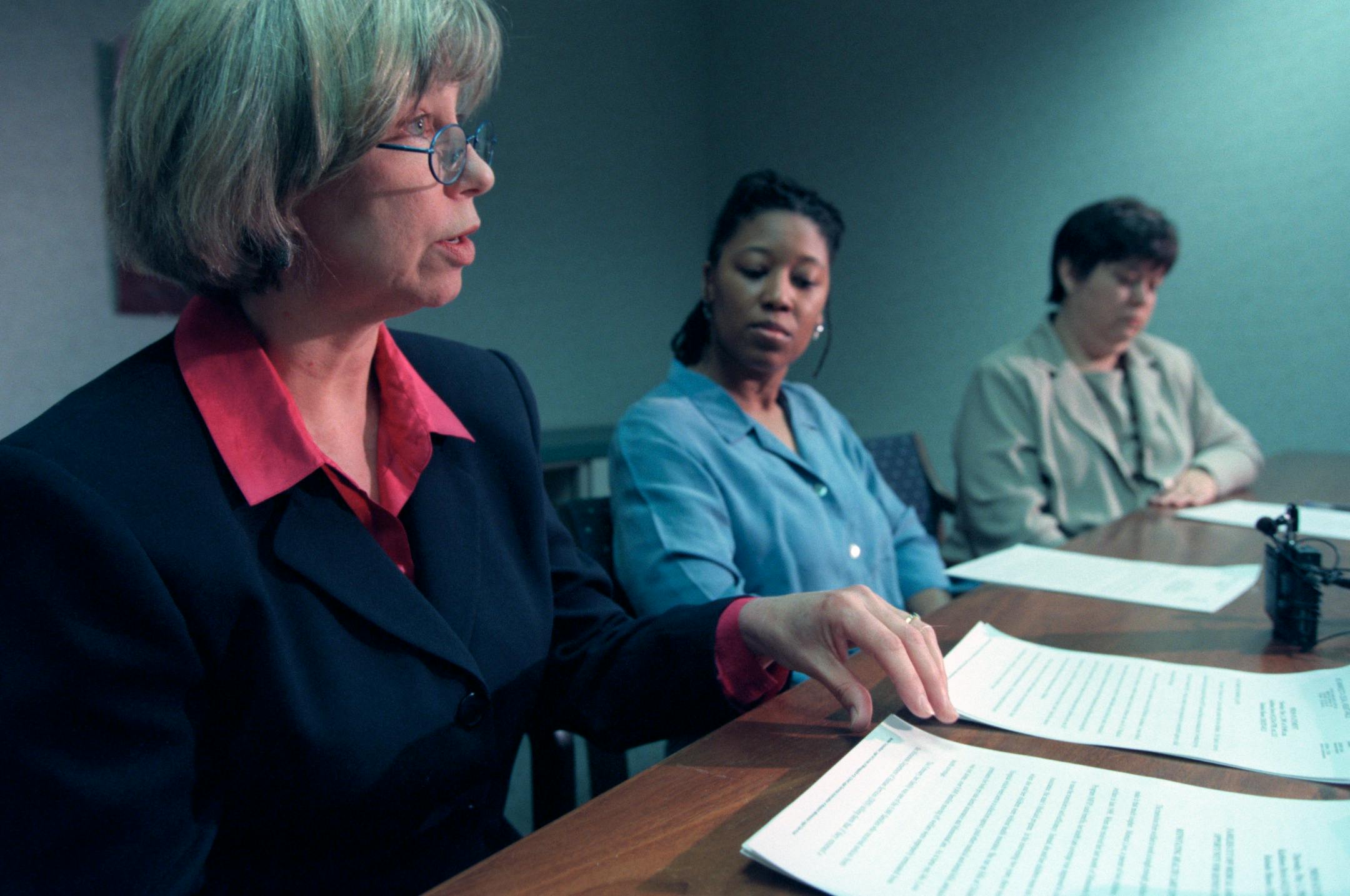
Kathleen Davis of Legal Aid Society of Minneapolis, left, and Ralonda Mason of Mid-Minnesota Legal Aid, far right, speak at a news conference May 3, 2001, concerning women who were incorrectly cut off medical assistance.
Kathleen Davis of Legal Aid Society of Minneapolis, left, and Ralonda Mason of Mid-Minnesota Legal Aid, far right, speak at a news conference May 3, 2001, concerning women who were incorrectly cut off medical assistance. (DUANE BRALEY/The Minnesota Star Tribune)

Opinion editor’s note: Strib Voices publishes a mix of guest commentaries online and in print each day. To contribute, click here.

•••

This commentary is signed by several people representing legal-services organizations across Minnesota. Their names are below.

•••

Unlike with criminal cases, Americans do not have the right to an attorney for most civil legal problems they face. It is estimated that if the 46% cut in the U.S. House budget bill became reality, over 38,000 fewer Minnesotans would receive help with their legal problems. This includes nearly 11,000 children, more than 3,000 people over 60, approximately 400 veterans and almost 3,000 survivors of domestic violence who would not be able to access free legal help due to reduced federal resources.

In May, the Trump administration proposed to eliminate the Legal Services Corporation. Now, Congress is crafting the federal budget for fiscal year 2026. If LSC funding is cut, Minnesotans will feel the effects because LSC grants support five of the local organizations that make up the Minnesota Legal Services Coalition (MLSC).

Composed of Anishinabe Legal Services, Central Minnesota Legal Services, Justice North, Legal Services of Northwest Minnesota, Mid-Minnesota Legal Aid and Southern Minnesota Regional Legal Services, MLSC members have been providing critical civil legal assistance to all 87 counties in Minnesota for over 50 years.

Last year, attorneys at MLSC programs assisted 31,615 clients with their legal problems, improving the lives of 75,741 household members.

For example, Legal Services of Northwest Minnesota recently helped a 75-year-old nursing home resident who uses a wheelchair. She received a discharge notice requiring her to move to her son’s apartment — an unsafe, inaccessible setting. A legal-aid attorney quickly filed an appeal challenging the discharge. Within two days, the nursing home rescinded the notice. This legal intervention gave her the time she needed to remain safely housed while securing a more appropriate assisted living facility that met her care needs.

LSC distributes federal funding to 130 civil legal-aid programs in every U.S. state, territory and the District of Columbia. LSC’s funding is essential because it provides flexible operating support — the kind of support that allows coalition programs to respond in real time to what our community is facing. Whether it’s a flood that displaces dozens of families or a sudden spike in veteran benefit denials, LSC funds help MLSC to meet local needs.

Minnesota’s civil legal services system is already underfunded despite recent increases in state funding. Around three of every five eligible clients are turned away due to a lack of available attorneys. State or local funding will not cover the loss of LSC. Legal aid programs have relied on federal support for half a century. Cutting LSC would destabilize a strong and vital network of legal services organizations dedicated to ensuring justice is accessible for those who cannot afford an attorney.

If LSC funds are cut, MSLC programs will lose staff and be forced to shrink their caseloads. They may not be available to help clients in urgent need of legal help — like the Minnesota woman who came to an LSC funded program for an order for protection. She had been trapped overnight and subjected to physical, emotional and sexual abuse. Afraid for her life, a friend helped her call the police and go to the hospital. She reached out to an MSLC program for representation, which helped her navigate the court process, secured restitution and the removal of a firearm used in the domestic abuse incident. Without representation, she was worried the order would not stand and that her abuser would return, endangering her life.

Fortunately, the U.S. Senate’s funding bill also rejected the administration’s proposal to eliminate LSC. In fact, the Senate voted to slightly increase LSC’s funding. We are encouraged that bipartisan members of Congress see the value of continuing to fund legal services. It shows that legislators know how vital civil legal assistance is for their communities.

Federal budget decisions are made in Washington, but their effects are felt here by our community, by the seniors and domestic violence survivors that we proudly serve each day.

The authors are Anne Hoefgen of Legal Services of Northwest Minnesota, Daniel Morris of Central Minnesota Legal Services, Milo Mumgaard of Mid-Minnesota Legal Aid, Cody Nelson of Anishinabe Legal Services, Jessie Nicholson of Southern Minnesota Regional Legal Services, Dori Rapaport of Justice North, and the president of the Legal Services Corporation, Ron Flagg.

about the writer

about the writer

multiple authors

More from Commentaries

See More
card image
Julia Demaree Nikhinson/The Associated Press

The greatness of a nation is not measured by whom it casts out, but by whom it gathers in.

card image
card image