

Opinion editor’s note: Strib Voices publishes a mix of guest commentaries online and in print each day. To contribute, click here.
•••
When Erik the Red, the father of Leif Erikson, was banished from Iceland in 982, it’s said he called the island Greenland in an attempt to lure more settlers. More arrived, but the lack of wood, limited arable land and harsh conditions led to the mysterious disappearance of the settlements about 400 years later. Meanwhile, Inuit communities, well adapted to Arctic conditions, endured. A Norwegian Lutheran missionary tried again in the early 1720s, establishing a settlement at the current capital of Nuuk.
For many Minnesotans, Greenland’s history is close to home. At the Treaty of Kiel in January 1814, the Danes ceded Norway to Sweden and maintained control of the Atlantic Islands: Greenland, Iceland and the Faroe Islands. That tumultuous year, which also saw Norway declare a brief independence from Sweden and adopt its constitution on May 17, a date well-known here as Syttende Mai.
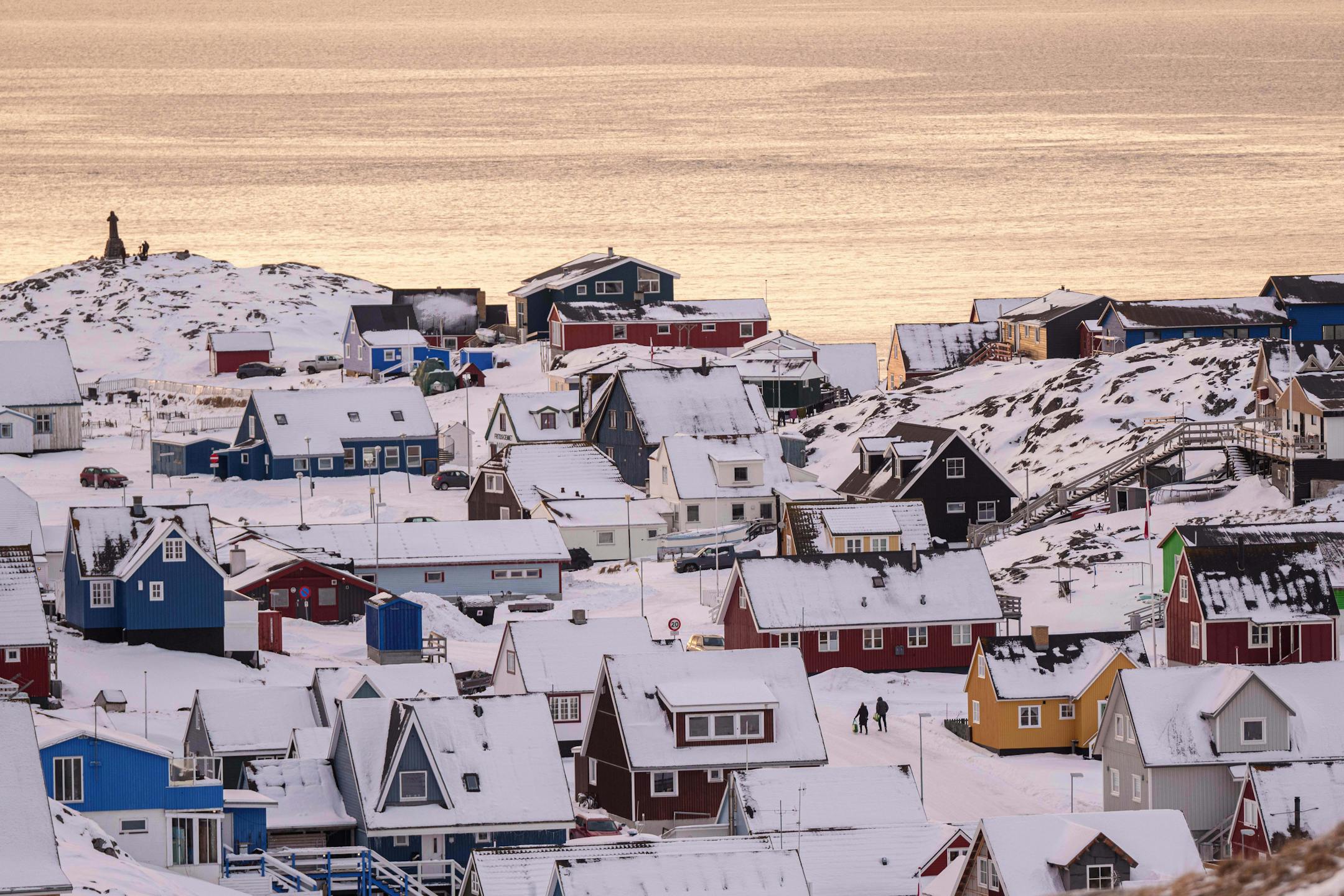
Despite appearing larger than Africa on many world maps, Greenland is actually just slightly larger than the Midwest region. With about 80% of the island covered in ice averaging a mile thick, Greenland’s population of 56,000, roughly the same as Apple Valley, is located primarily along its rocky southwest coast. Yet, this small population sits on a strategic gold mine.
The American interest in Greenland isn’t new. It is rooted in the explorations of Robert Peary. In the 1890s he explored and mapped northern Greenland, planting the American flag on the rocky northern coast. During World War I, the risk of German occupation of neutral Denmark raised the potential of submarine bases in the Caribbean threatening Panama Canal shipping. This prompted the U.S. to negotiate the purchase of the Danish West Indies and relinquish any diplomatic claim to “Peary Land” in northern Greenland. While there may be historical precedent with the Louisiana Purchase, Alaska and the Danish West Indies (the Virgin Islands now), those lands were bought from mostly willing sellers. This is not the case with the government in Greenland, where over 85% of the citizens in a recent poll opposed becoming part of the United States.
What drives the national security interest? It is a combination of natural resources, such as rare earth metals, uranium and oil, and its geographic location. Chinese investments in mining exploration in Greenland have recently stalled; there is concern that Chinese influence will continue and the U.S. will miss out on extraction opportunities. Greenland’s eastern coast also sits astride the transit route for Russia’s Northern Fleet submarines traveling from the Kola Peninsula to the Atlantic. This is a strategic concern that includes NATO’s operation of the Greenland-Iceland-United Kingdom (GIUK Gap) monitoring system using sea and air assets. Today, the island also plays a vital role in the “Golden Dome” for America initiative, with Pituffik Space Base (formerly Thule) serving as a primary node in the nation’s layered missile defense and space surveillance architecture.
With the largest cargo fleet in the world, China is eyeing the future. It has worked to protect access to major shipping routes with investment in port facilities at the Panama Canal and a naval base in Djibouti, in eastern Africa near the Suez Canal. Some climate models show Arctic shipping routes as free of ice year-round by 2040. These northern routes China is actively pursuing with research vessels, new icebreakers (some nuclear-powered) and claiming status as a Near Arctic nation.


