


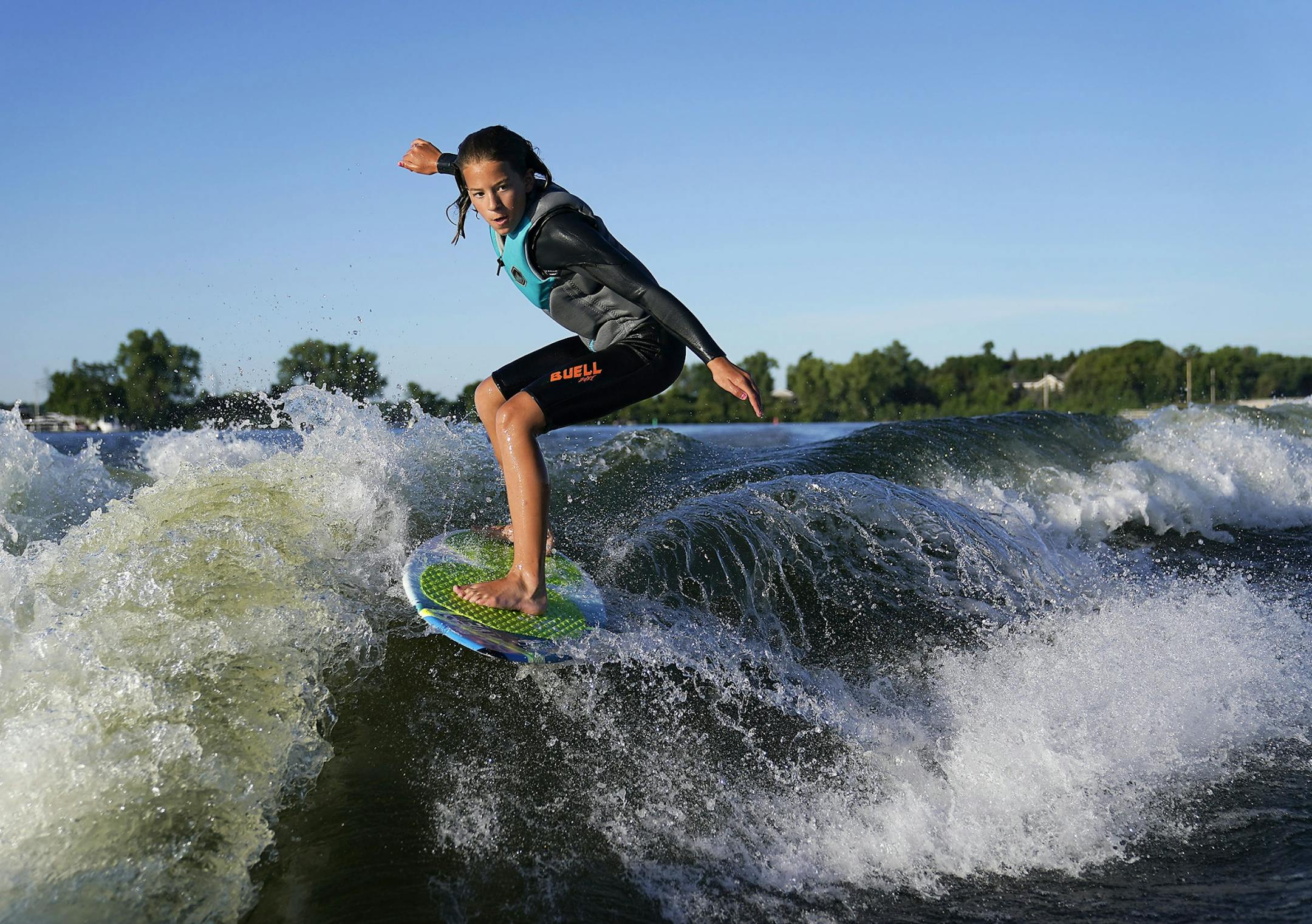
It doesn’t take much imagination to realize how fun wakeboats must be.
You bomb along on a sunny day, favorite tunes blasting, friends and family piled in the boat with a pal or a granddaughter surfing your wake, maybe not exactly how it’s done in California, but still amazingly cool for a landlocked state like Minnesota.
Unlike a faster, riskier sport like water skiing, wakesurfing is a relatively gentle lake activity. If you fall, you’re not likely to tear a muscle. You just sink gently into the water.
What is not so easy to imagine is those hidden worlds beneath the wakeboat. After wakeboats pass, the water closes back up, so the revelers have no idea about the destruction they cause below.
Until this week, the rest of us didn’t know, either.
Now we do. The University of Minnesota filmed it and, on Tuesday, released videos that every wakeboat owner, dealer, manufacturer, operator, and lake association should watch. They also released a study that recommends that wakeboats should not go at “semi-displacement mode” (the speed at which they churn the largest wakes) in less than 20 feet of water. That’s the minimum recommended depth. In places where plants grow along the lake bed, they should be 20 feet above the plants.
Researchers filmed lake beds to see what happens when wakeboats pass at depths of 9 feet and 14 feet of water at the speed that creates the most wake.
It’s not pretty.


 6:05
6:05


![BRIAN PETERSON • brianp@startribune.com INTERNATIONAL FALLS, MN - January 31-Feb. 2nd ] The Arrowhead 135 Ultra Marathon, from International Falls to Tower Minnesota, follows the scenic and rugged Arrowhead State Snowmobile Trail and attracts some of the best ultra-athletes in the world. Competitiers can Bike, run or ski the 135 mile race that challenges the body and the mind and presents participants with some of the coldest conditions in ultra marathon racing. (IN THIS PHOTO) Being alone and c](https://arc.stimg.co/startribunemedia/TQBYYJEXPK7GJUOKY5IXJWD6I4.jpg?&w=252&ar=3:2&fit=crop)