
Advertisement

To combat monopolies, deregulate them

It won't work for everything, but it should be part of the political agenda.

Bloomberg Opinion
May 21, 2023 at 11:00PM
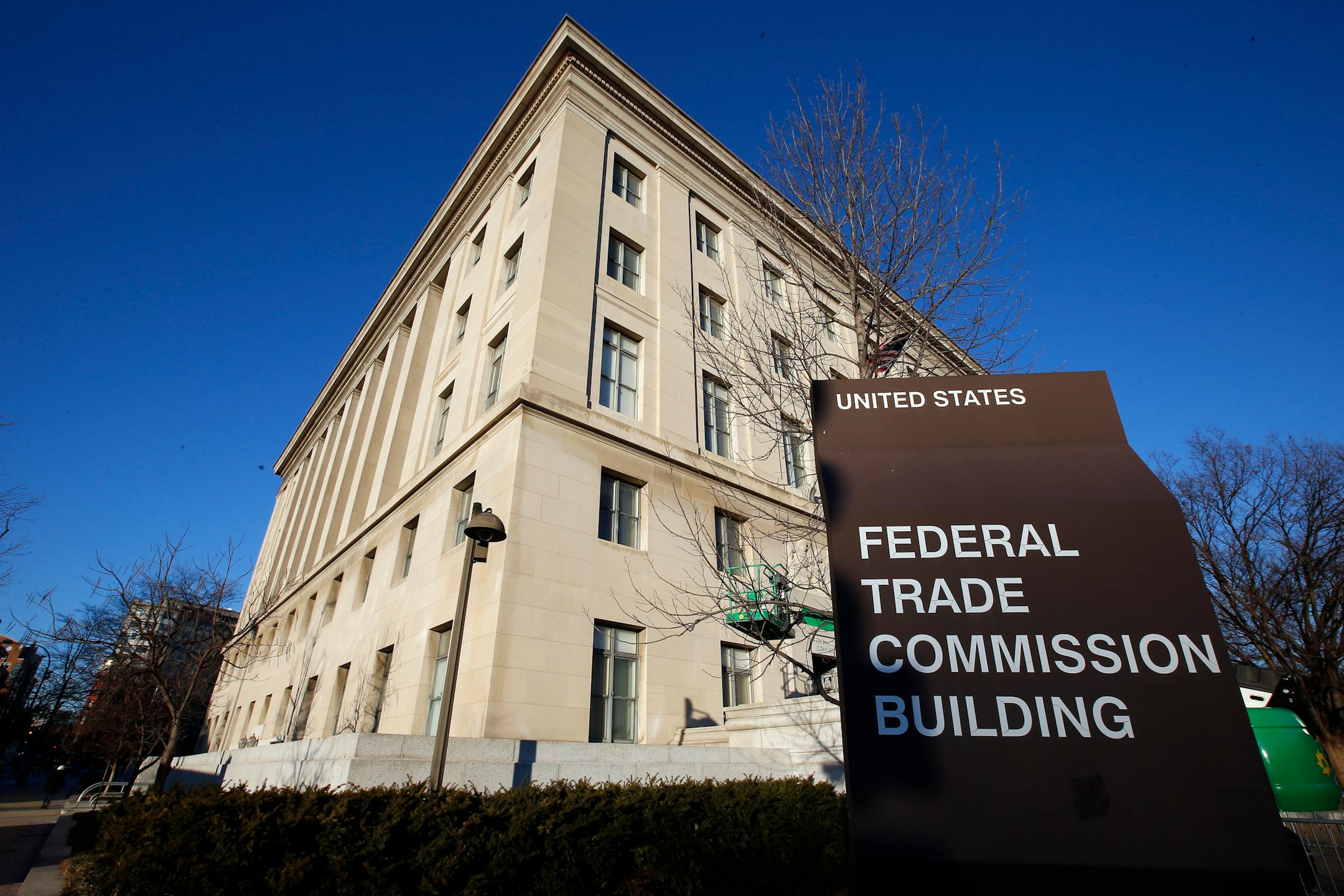
\The Federal Trade Commission building in Washington is pictured on Jan. 28, 2015. (Alex Brandon, Associated Press/The Minnesota Star Tribune)
Advertisement

Opinion editor's note: Star Tribune Opinion publishes a mix of national and local commentaries online and in print each day. To contribute, click here.

•••

Worries about monopoly and market power have become more common over the last few years, and there is even some evidence — admittedly contested — that market power has increased in the U.S. economy over the last several decades. One popular remedy is antitrust law, such as the Federal Trade Commission's suit this week to block Amgen's $27.8 billion deal for Horizon Therapeutics. But enforcement is imperfect and time-consuming. Thankfully, there is an alternative approach: deregulation.

Start with a simple example. Many U.S. cities, sometimes even particular airports, have had taxi monopolies due to municipal regulations. That means higher prices for consumers and sometimes a shortage of available rides. If services such as Uber and Lyft are available, however, the transportation landscape is transformed. It is easier to catch a ride from the airport, ride-sharing prices often are lower, and at the very least they provide a competitive check on the taxi prices.

One recent study shows just how important regulation is in contributing to monopoly. Since 1970, increased regulation can explain 31% to 37% of the subsequent increase in market power.

Upon reflection, it is obvious that larger firms are better able to deal with regulatory burdens. They have more employees, bigger legal departments and are better suited to deal with governments. Startups are generally leaner and more nimble, but these aren't necessarily advantages in dealing with Washington or state and local agencies. As regulatory costs rise, the comparative advantage shifts to the larger firms — exacerbating market power problems.

Once you become aware of this tendency, you start seeing it everywhere. Does your local electric power utility have too strong a monopoly, due to its legally favored advantage in supplying your house or business with electricity? Well, permitting reform would ease the path for constructing solar, wind and perhaps someday nuclear and geothermal alternatives. Fortunately, permitting reform is currently an issue before Congress, though it remains to be seen what will happen.

Do you think your hair stylist or athletic trainer is charging too much? Well, relaxing or eliminating occupational licensure in those areas is a policy recommended by most economists, on a bipartisan basis, and it would increase competition and reduce prices. Once again, deregulation would limit market power.

Advertisement

Sam Altman, the founder of OpenAI, testified before Congress this week, and all the headlines cited his support of regulation. But note this part of his testimony: "It's important that any new approach, any new law does not stop the innovation from happening with smaller companies."

In that respect, a recent draft of proposed E.U. regulations is concerning. It would severely limit the open-source AI innovations coming from many smaller companies, most of all from the U.S. The major market players, such as Google and Microsoft, might have the capacity to deal with these requirements. But the smaller firms likely do not. The E.U.'s policies thus would boost concentration in the area of large language models, even though the sector is quite new and appears to be highly contestable.

As you might expect, this logic is no mystery to the larger firms, which are typically politically well-connected. The result is that they push for more government regulations as a kind of entry barrier. According to researcher Shikhar Singla, regulation costs an average of $9,093 per employee for a typical small firm, compared to $5,246 for a large firm. It is no surprise that, according to the data, smaller firms invest relatively less in more highly regulated areas.

Based on a study of regulatory comments, Singla also found that large firms oppose regulation in general, but push for regulation when such rules and laws damage the interests of smaller firms. Singla also finds that regulatory costs have increased significantly since the late 1990s.

Protectionism and tariffs are other examples of how market barriers can increase market concentration by limiting competition and privileging domestic producers. From this perspective, it is unfortunate that both of major political parties in the U.S. have moved toward mercantilist ideas and trade restrictions.

Not everything can or should be deregulated, of course. Carbon emissions and bank risk-taking are two areas where current regulations might be improved rather than eliminated. But if the concern is market power, and diminished living standards for the working class, then deregulation should be near the top of the political agenda.

Advertisement

Tyler Cowen is a professor of economics at George Mason University and writes for the blog Marginal Revolution. He is co-author of "Talent: How to Identify Energizers, Creatives, and Winners Around the World."

about the writer

about the writer

Tyler Cowen

More from Commentaries

See More
card image
The Bettman Archive

The premise that Jewish refugees and today’s undocumented immigrants share a common experience collapses under the most basic scrutiny.

card image
card image
Advertisement