Theodore Roosevelt library set to open in N.D. on July 4, 2026: ‘His spirit is in the Badlands’

The $450 million museum blends into the Badlands landscape and portrays the life and lifestyle of the colorful president.

The Minnesota Star Tribune
October 30, 2025 at 11:00AM
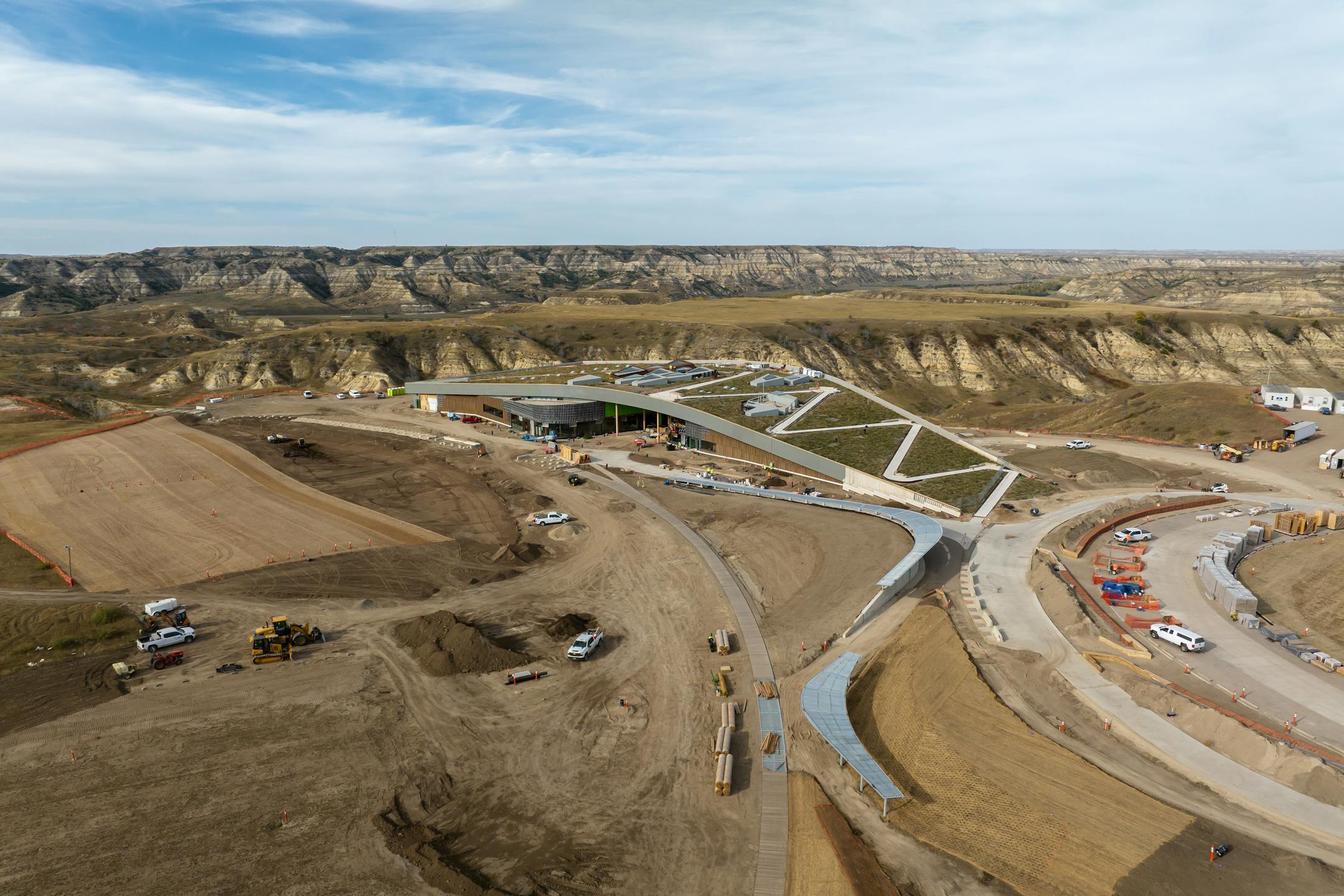
The Theodore Roosevelt Presidential Library, with its low-slung earthen roof, is under construction in the Badlands outside Medora, N.D. (Chad Ziemendorf/Theodore Roosevelt Presidential Library)

Theodore Roosevelt said he never would have been president but for his experiences in North Dakota. Now, more than 100 years after his death, he’s returning the favor: North Dakota wouldn’t be opening a presidential library were it not for Theodore Roosevelt.

Just in time for the nation’s 250th birthday, the Theodore Roosevelt Presidential Library is set to open July 4 atop a butte overlooking the historic cattle town of Medora, nestled in the North Dakota Badlands and just outside the national park that bears the 26th president’s name.

The exterior of the sprawling, low-slung building, designed by the Oslo-based architecture firm Snøhetta to blend with the region’s jagged terrain, is mostly complete. Work is proceeding on the vaulted rooms, featuring rammed earth walls and timbered ceilings.

It won’t be much like the 13 modern presidential libraries affiliated with the National Archives, dating back to Herbert Hoover. In fact, it won’t be a library at all; most of TR’s papers will remain out East.

Instead, this library will feature dioramas and exhibits that take the visitor through Roosevelt’s hyperkinetic life: narrative galleries that tell the story of his youth in New York City, studies at Harvard and family life, on to his meteoric rise from state legislator to president; and adventure galleries on his ranching days in Dakota, his Rough Rider exploits in Cuba, his yearlong African hunting safari and a Brazilian expedition to an uncharted jungle river that nearly killed him.
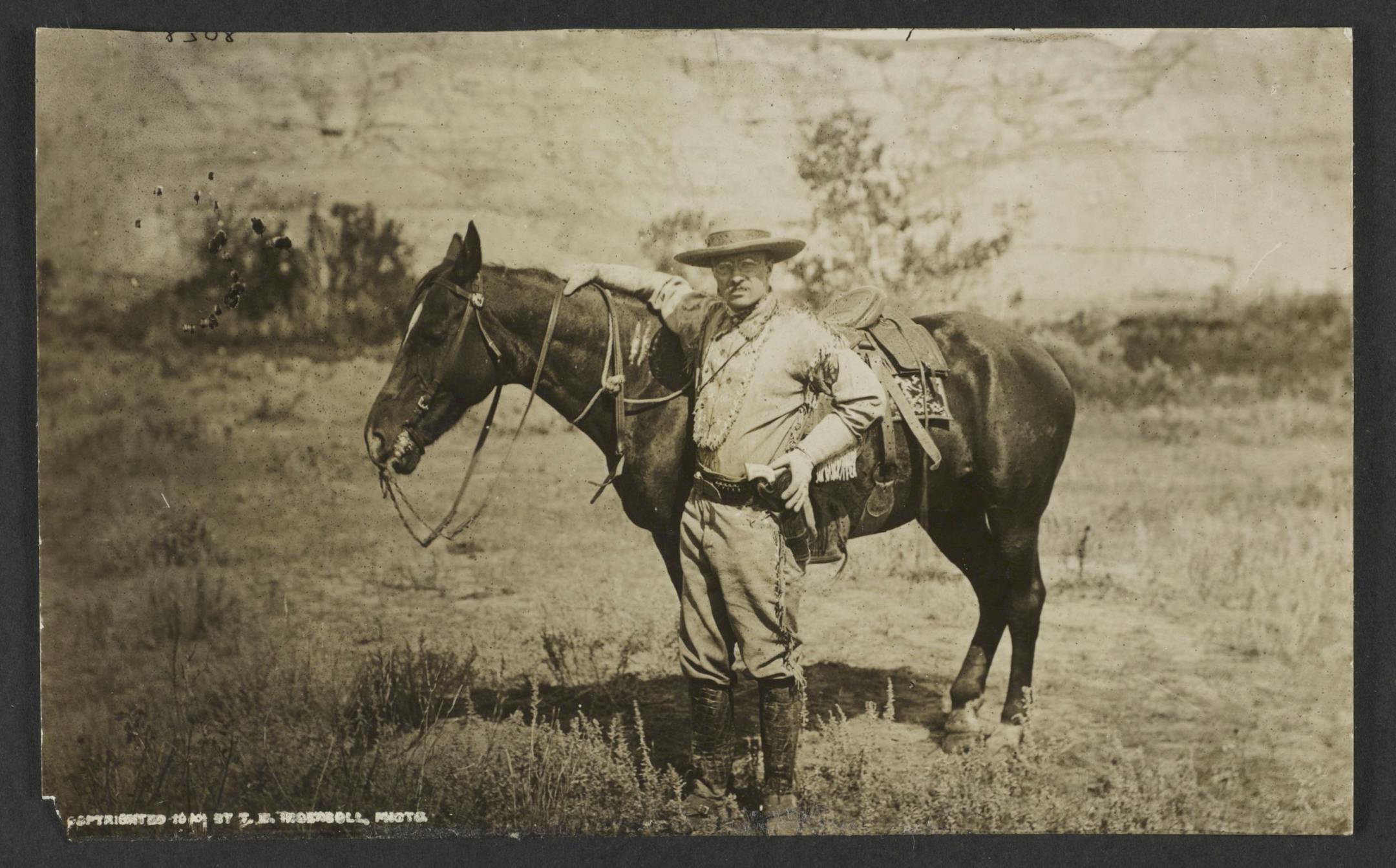
Theodore Roosevelt next to his horse, Manitou, in the Badlands, ca. 1884. (Library of Congress/The Crowley Company)

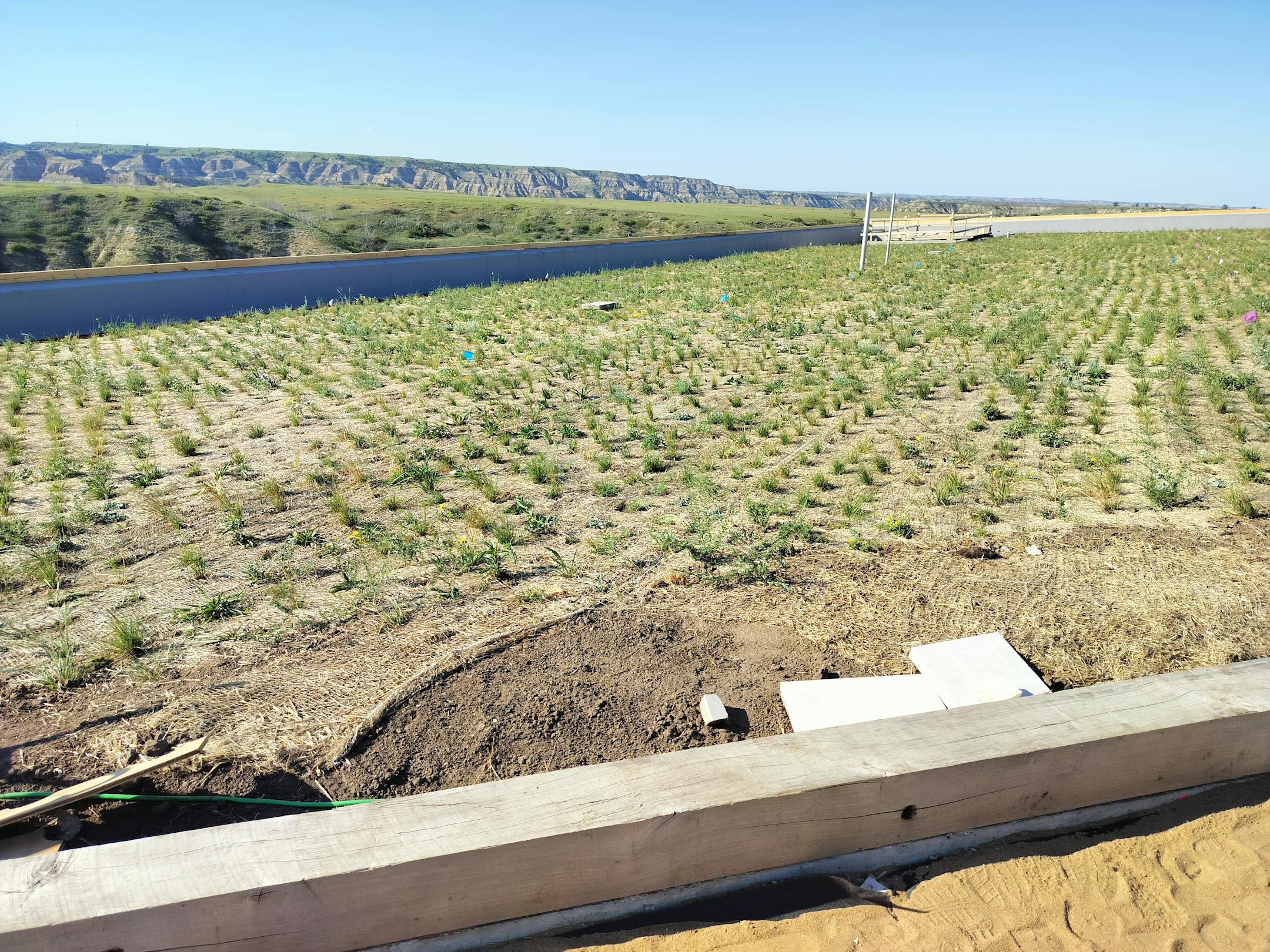
But half the fun will be outside its doors, where you can approach the library on foot, bike or horseback. The site is designed to encourage the vigorous outdoor life that brought Roosevelt to the Badlands and today draws up to 800,000 visitors annually to Theodore Roosevelt National Park. The library’s earthen roof, dotted with 140,000 plugs of native plants, is walkable, and a boardwalk will encircle an area where cattle can graze.

Robbie Lauf, the library’s executive director, says there won’t be a better place to learn about Roosevelt than here, amid the bluffs and canyons to which he fled as a young man after the deaths of his wife and mother on the same day in 1884. He lived in the Badlands, on and off, over a four-year period in the 1880s and returned sporadically.

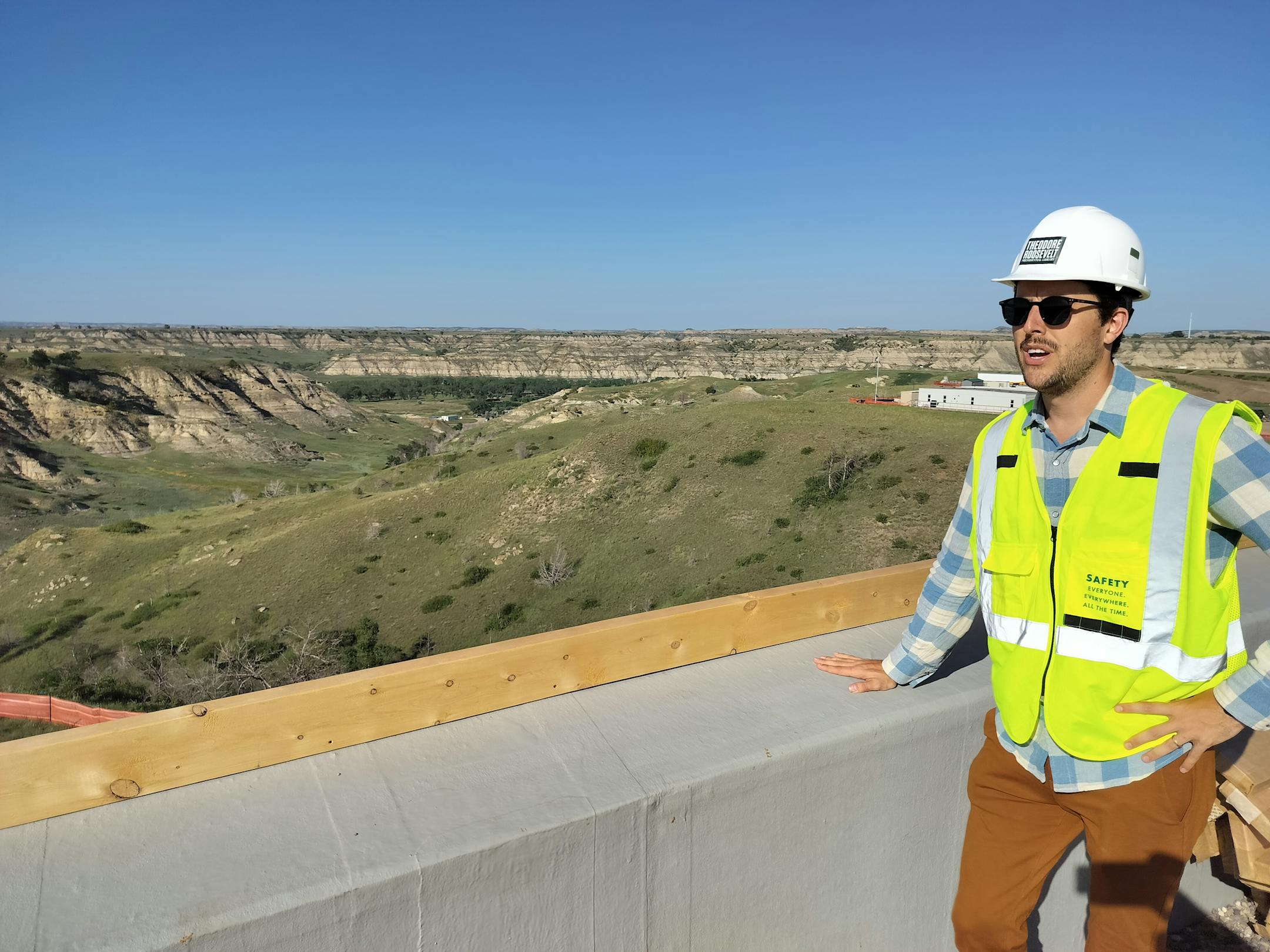
“His ghost is in New York, but his spirit is in the Badlands,” Lauf said on a recent tour of the construction site. “This is the place where you can feel his living ethos.”
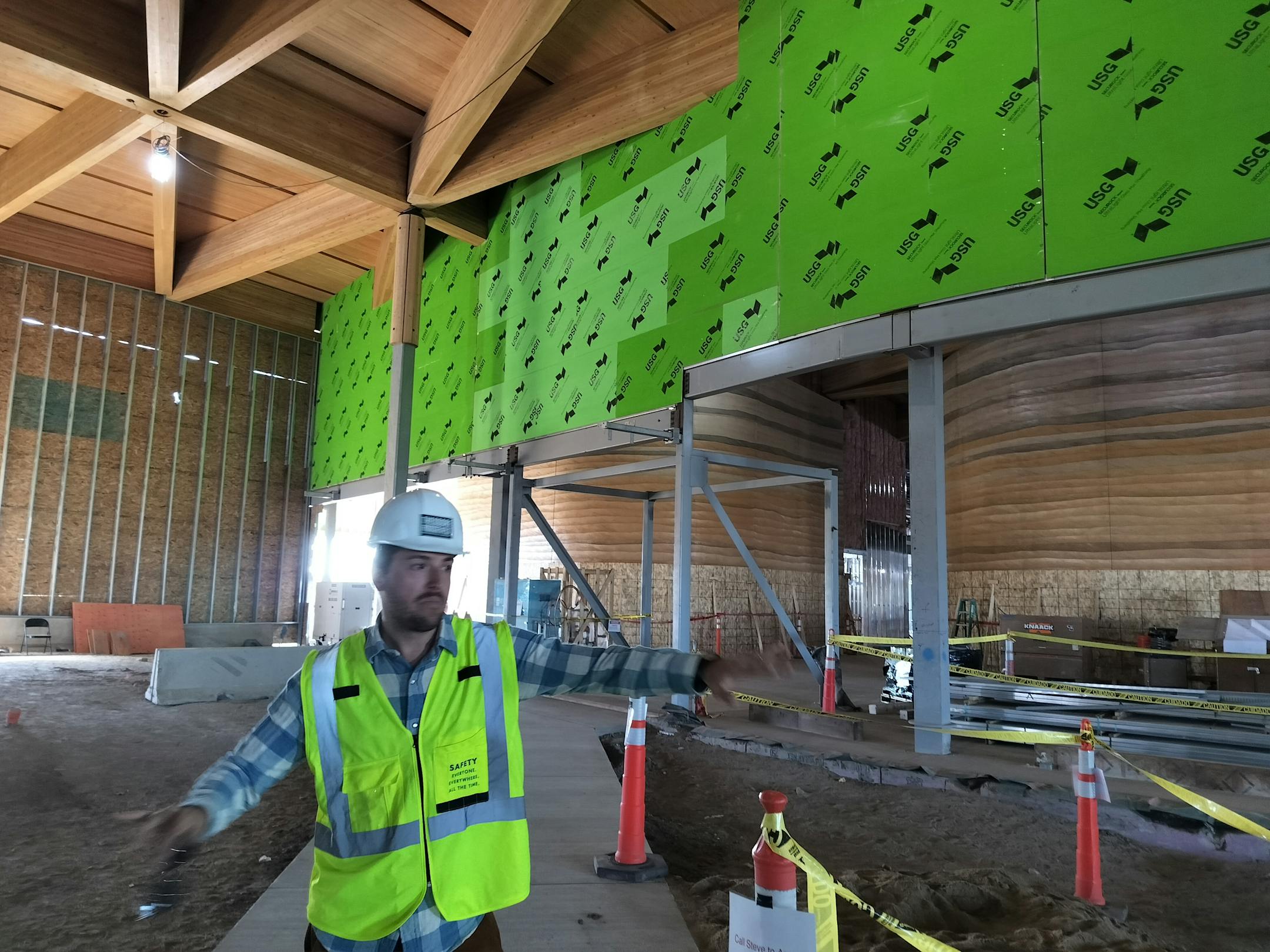
Robbie Lauf, the library's executive director, points out the structure's rammed earth walls and timbered ceiling. (Kevin Duchschere/The Minnesota Star Tribune)

‘Global institution’

The library was first proposed more than a decade ago as a partner to the Theodore Roosevelt Center at nearby Dickinson State University, but the plan stalled. Lauf, then a policy aide to Gov. Doug Burgum, instead suggested a $50 million facility in Medora. Burgum jumped on the idea and set the price at $500 million, with the goal of making it “a global institution,” Lauf said. The project cost is now $450 million, with most of the money from private donors.

Roosevelt descendants kicked in $81,000 to buy U.S. Forest Service land for the 93-acre site, near the outdoor amphitheater where the popular Medora Musical is staged each summer.

The new library will feature a walkable earthen roof, with 140,000 plugs of native prairie plants installed by North Dakota State University. (Kevin Duchschere/The Minnesota Star Tribune)

Libraries have been built for other presidents who came before the National Archives system, though for most of them the term “library” is a brand; they’re basically museums designed for public appeal. The best-known example is the Abraham Lincoln Presidential Library in Springfield, Ill.; the least-known is likely a dive bar in Cleveland named for Millard Fillmore.

There were no presidential libraries as we know them when Roosevelt died in 1919 of a coronary embolism. By then, he had turned over his presidential papers to the Library of Congress. The other major collection of TR documents is at Harvard University, where he graduated in 1880 only a few years before he first traveled to the Badlands to shoot a bison.

Complex legacy

Roosevelt today is considered arguably the most colorful of all American presidents, with his larger-than-life personality and big-stick dynamism. He broke up monopolies, built the Panama Canal, mediated peace between Russia and Japan, spearheaded government reforms and set aside more than 200 million acres as national parklands, forests and wildlife refuges.

The library will celebrate those achievements, Lauf said, but it won’t soft-pedal TR’s early racist views on Native Americans. Library CEO Edward O’Keefe has said the library aims “to humanize rather than lionize” Roosevelt, and it will also acknowledge that the Badlands once were home and hunting ground to tribes including the Mandan, Hidatsa and Oglala Sioux. Representatives of North Dakota’s five tribes were invited by library officials to bury tobacco on the site as part of a healing ceremony.

It’s not clear how the library might use a controversial statue of Roosevelt on horseback that was removed from outside the American Museum of Natural History in New York City in 2022 and shipped to Medora. The statue has Roosevelt riding high above an African on one side and a Native American on the other. Lauf said no decision has been made about the statue or whether it will even be displayed.

“What we know is that there needs to be a very rigorous and thoughtful dialogue about it,” he said.

Robbie Lauf, the library’s executive director, stands on the library roof, overlooking the Badlands and Theodore Roosevelt National Park. (Kevin Duchschere/The Minnesota Star Tribune)

Still, Roosevelt remains the favorite president of countless politicians, whether Republican (as TR was) or Democratic. “Teddy Roosevelt is a cool character. In fact, he may be the guy who would be the most fun to hang out with,” Barack Obama once told Jerry Seinfeld.

That’s why North Dakotans believe the library will be a hit. Medora typically sees 285,000 visitors a year; during the summer it can be hard to book one of the town’s 700 motel rooms. Officials estimate the library will draw 180,000 visitors in its first year, and Lauf has hopes of Medora becoming part of a “great American road trip” that includes Mount Rushmore and Yellowstone.

How it may affect the Old West charm of Medora is unclear; Lauf acknowledged that more lodging is needed. Officials estimate the library may generate $30 million to $50 million in annual economic activity for the area.

Lauf said the library can serve as a setting for constructive discussions about citizenship and conservation. Its 300-seat auditorium will be equipped to hold big events such as presidential debates. It’s another way to make the life and service of Theodore Roosevelt relevant to 21st-century Americans, he said.

“You can feel the spirit that made him larger than life ... and the strenuous life he chose and embraced that went on to create one of the most formative leaders in American history,” Lauf said. “This is the place that tells that story best.”

about the writer

about the writer

Kevin Duchschere

Team Leader

Kevin Duchschere, a metro team editor, has worked in the newsroom since 1986 as a general assignment reporter and has covered St. Paul City Hall, the Minnesota Legislature and Hennepin, Ramsey, Washington and Dakota counties. He was St. Paul bureau chief in 2005-07 and Suburbs team leader in 2015-20.

See Moreicon

More from Midwest Travel

See More
card image
Alex Kormann/The Minnesota Star Tribune

Memorials to the ill-fated freighter and historic sites are scattered across the Lake Superior region.

card image
card image