
Taylor Schlitz: The voices that stuck with me after the St. Paul ICE raid

A daughter’s frantic call to her mother. A father who promised to tell his children about what happened.

Columnist Icon
The Minnesota Star Tribune
December 2, 2025 at 9:23PM
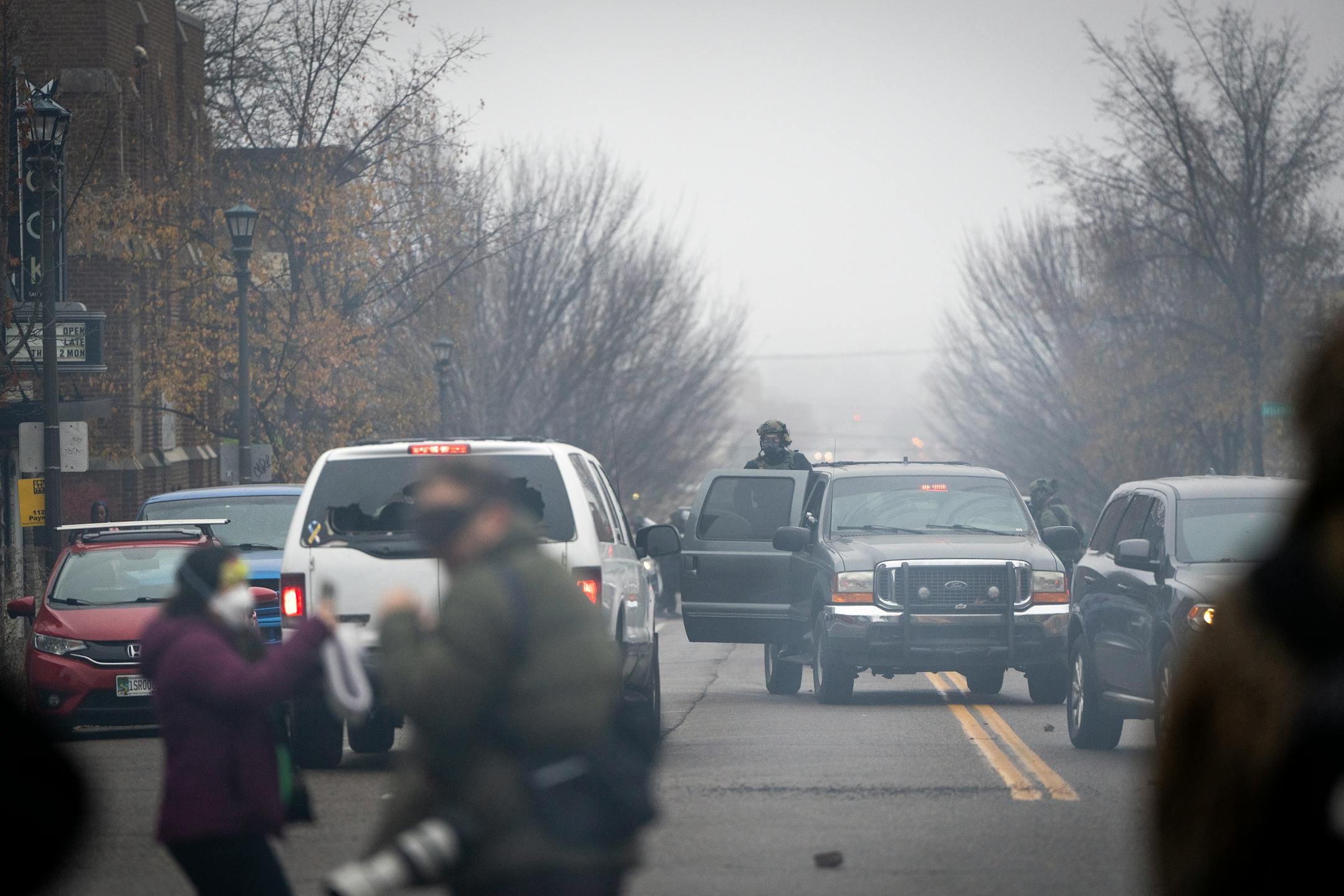
Law enforcement retreat south on Payne Avenue in a cloud of chemical irritants after an apparent federal raid at a home in St. Paul on Nov. 25. (Leila Navidi/The Minnesota Star Tribune)

Opinion editor’s note: Strib Voices publishes a mix of material from 8 contributing columnists, along with other commentary online and in print each day. To contribute, click here.

•••

When the world cracks open, my generation does not wait for a podium and a seal. We reach for our phones. We scroll through shaky videos and raw voices, trying to understand what is happening before anyone steps up to a microphone.

That is how the ICE raid last week in St. Paul arrived in my life.

On my screen was a young woman looking straight into her camera. She said she does not usually post herself speaking. She had just called her mother and told her to come straight home from work. Her feed, she explained, is always full of clips about immigration raids in other places. Chicago. Other states. Then she said, through tears and anger, that this one was “in my city, in my hometown, in St. Paul.”

What stayed with me is the way her fear and her love sat in the same breath. She cursed ICE, but her whole voice shifted when she talked about her mom and what she just told her. You could feel that earlier moment, off camera, when she decided, I have to call her. When danger moves from the screen to your own city, the first instinct is not to debate. It is to protect the person who spent years protecting you.

Later, another video from the same day came across my screen. This one was after Rose Avenue, a usually quiet block, had been filled with chemical spray. A man stood in the street facing a line of officers and agents. His voice was hoarse, but steady.

“We all are here because we love our neighbor,” he said. “We are not getting paid to be here. But guess what? When we talk to our kids tonight, what is the highlight of our day? We got tear gassed for justice. We got tear gassed for doing what was right. We got tear gassed for standing up for our neighbors.”

Those two TikToks feel like bookends of the same story. A daughter calling her mother to get home safe, then telling us why. A neighbor already thinking about what he will say to his children at the dinner table. Fear for someone you love. Courage for someone you may not even know. Both are about what we do as neighbors and family when we are afraid.

What I cannot let go of from that day is not a list of facts. It is these ordinary people who never planned to become witnesses. A young woman who hates posting her own voice, suddenly shaking on camera. A man with burning lungs insisting that, whatever else happened, his children will know he tried to stand on the side of what is right.

Before I started practicing law, I spent two years teaching U.S. history to fifth-graders. Every year we talked about the Holocaust and about Anne Frank. When I was a child, my family took me to the Anne Frank House in Amsterdam. I still remember the narrow stairs, the small rooms, the window that once had to stay covered. I remember pressing my hand against the glass and trying to imagine what it meant to be trapped inside while danger gathered in the street below.

Years later, in my classroom in Texas, I watched my students take in that same story. They did not get stuck on dates and names. They went straight to the questions adults too often avoid:

Who knew?

Who helped?

Who stayed away?

Who tried to tell the truth afterward?

Hearing those questions from 10-year-olds made me think about how I understand history. It reminded me that history is really a record of whether human beings allow themselves to be responsible for one another.

Those same questions are now hanging over us again.

Who knew what was unfolding on that block?

Who tried to help — by showing up, by filming, by checking on traumatized families afterward?

Who stayed away, even as videos spread across our feeds?

Who will try to tell the truth, especially when that truth is uncomfortable?

We live in a time when there are more witnesses than ever. Professional photojournalists with “Press” across their vests. Community reporters. Neighbors holding phones with shaky hands. Young people recording TikToks with tears in their eyes. Body cameras capturing what used to be invisible.

Our problem is not a lack of evidence. Our problem is whether we will let what we are seeing change us.

Just days ago, families across Minnesota gathered around tables and passed plates and stories. At some of those tables, gratitude sounded simple: We made it home safe. At others, there was an empty chair and a story that hurt to tell. Some people could honestly say, “We stood up for our neighbors.” Others, if they are honest, had to sit with the quieter truth: They looked away.

This raid happened in a city named for a man whose letters in the Christian scriptures are full of uneasy reminders about love and accountability. Saint Paul wrote about not growing tired of doing good, even when it is costly. He wrote that each of us would one day have to give an account for our actions.

In the city of St. Paul, that account is already being written.

It will not live only in internal reviews. It will live in the clips our kids saved on their phones. It will live in the way families describe this week when a child asks, “Why were there so many police on our street?” or “Why did that man say he got tear gassed for justice?”

Gen Z is watching all of this. We are watching what people in power do, and what ordinary people do. We are noticing whose pain is believed, and whose is brushed aside. We are learning, in real time, what Minnesotans really mean when we talk about community and loving your neighbor.

I keep returning to that young woman who pressed record after she called her mom, and to that man who stood in the street and decided his children needed to know he tried. I think about the pregnant woman and children in that house that was raided who will always remember what it felt like when strangers with power surrounded their home.

One day, some future fifth-grader in Minnesota will open a book or a page on the internet and learn about this decade. I hope that when they do, they see more than images of gas drifting down a block. I hope they see that in Minnesota, people chose to love their neighbors not only in private, but also out in public. That we listened to the fear in a daughter’s voice and the courage in a father’s, and let those truths shape what kind of community we became.

about the writer

about the writer

Haley Taylor Schlitz

Contributing Columnist

Haley Taylor Schlitz is a contributing columnist for the Minnesota Star Tribune focusing on Gen Z issues and perspectives. She is an attorney and writer based in St. Paul.

See Moreicon

More from Contributing Columnists

See More
card image
card image