Review: Books show how far back struggles go in India and Pakistan

Fiction: Reissued novels reveal how the Partition of India’s violence and politics shattered ordinary families, leaving a lasting toll.

For the Minnesota Star Tribune
July 24, 2025 at 3:00PM
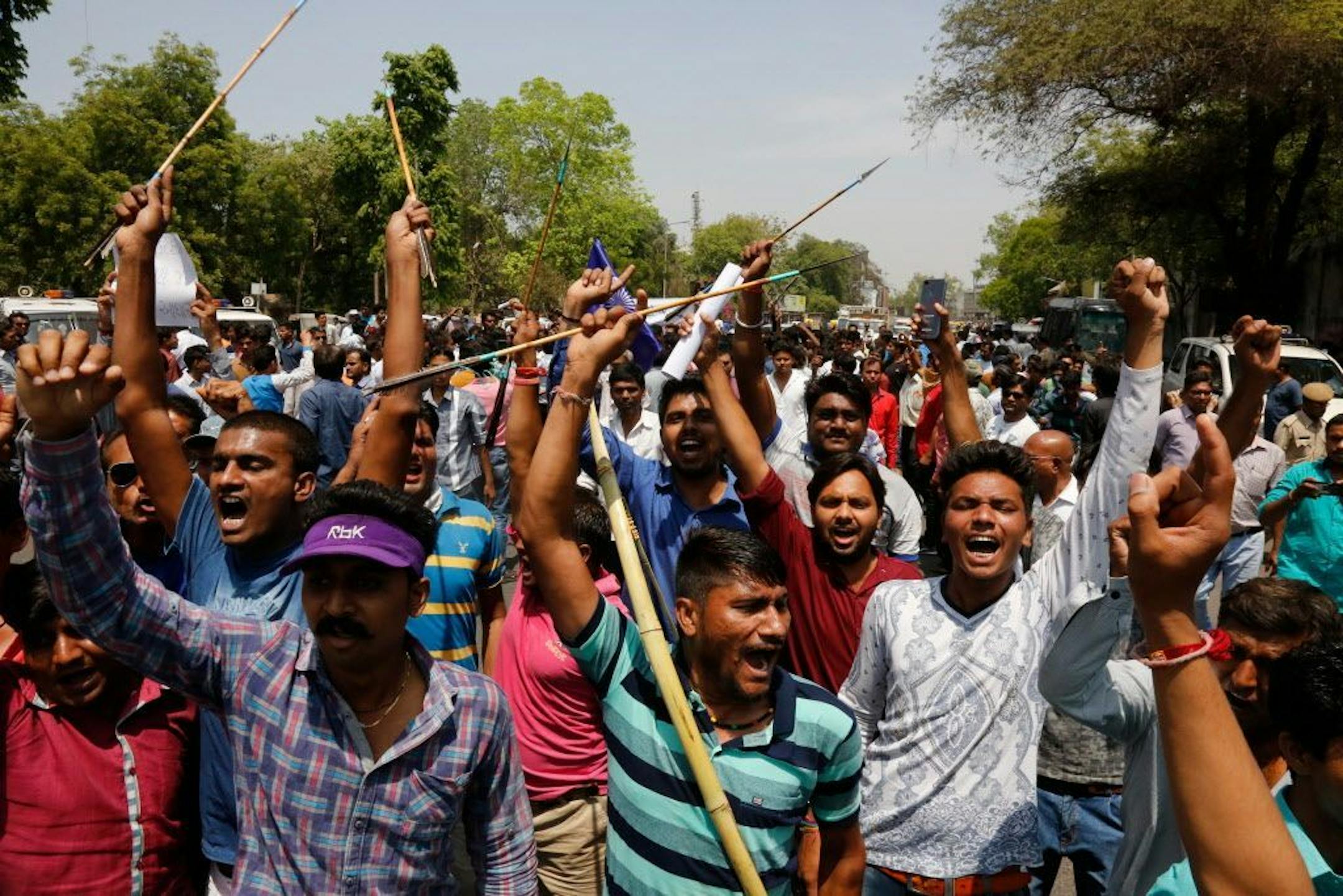
India's lower caste Dalits hold bow and arrows and shout slogans during a nationwide strike in Ahmadabad, India, Monday, April 2, 2018. Violence has erupted in several parts of north and central India as thousands of dalits, members of Hinduism's lowest caste, protest an order from the country's top court that they say dilutes legal safeguards put in place for their marginalized community.
Protests, such as this one in India in 2018, continue in the aftermath of the Partition of India, as reflected in two reissued novels. (Associated Press/The Minnesota Star Tribune)

In light of recent tensions between India and Pakistan, two newly reissued novels from the subcontinent chillingly resonate, decades after their original publication.

Taking distinct narrative approaches, “Tamas” (1973) by Bhisham Sahni and “The Women’s Courtyard” (1962) by Khadija Mastur revisit the messy emergence of the two countries from the Partition of India in 1947 and the lasting wounds it created.

“Tamas” (meaning “Darkness”) is a harrowing anatomy of a sectarian riot that tears through more than 100 villages and leaves thousands dead in the lead-up to Partition. Set in the Punjab province of what is now Pakistan and based in part on the author’s experiences during the 1947 Rawalpindi riots, the novel begins with a tanner struggling to secretly slaughter a pig at his employer’s request.

When the carcass is later found on the steps of the local mosque in a village where Muslims, Hindus and Sikhs tenuously co-exist, the deliberate blasphemy catalyzes simmering tensions into incendiary violence.

Throughout the novel, Sahni’s narrative perspective jumps among groups, and he deftly shifts from political satire to real tragedy. Rumors of butchered cows, stabbed people and raped women escalate, instigating actual violence that disregards whatever relationships people may have had the day before.
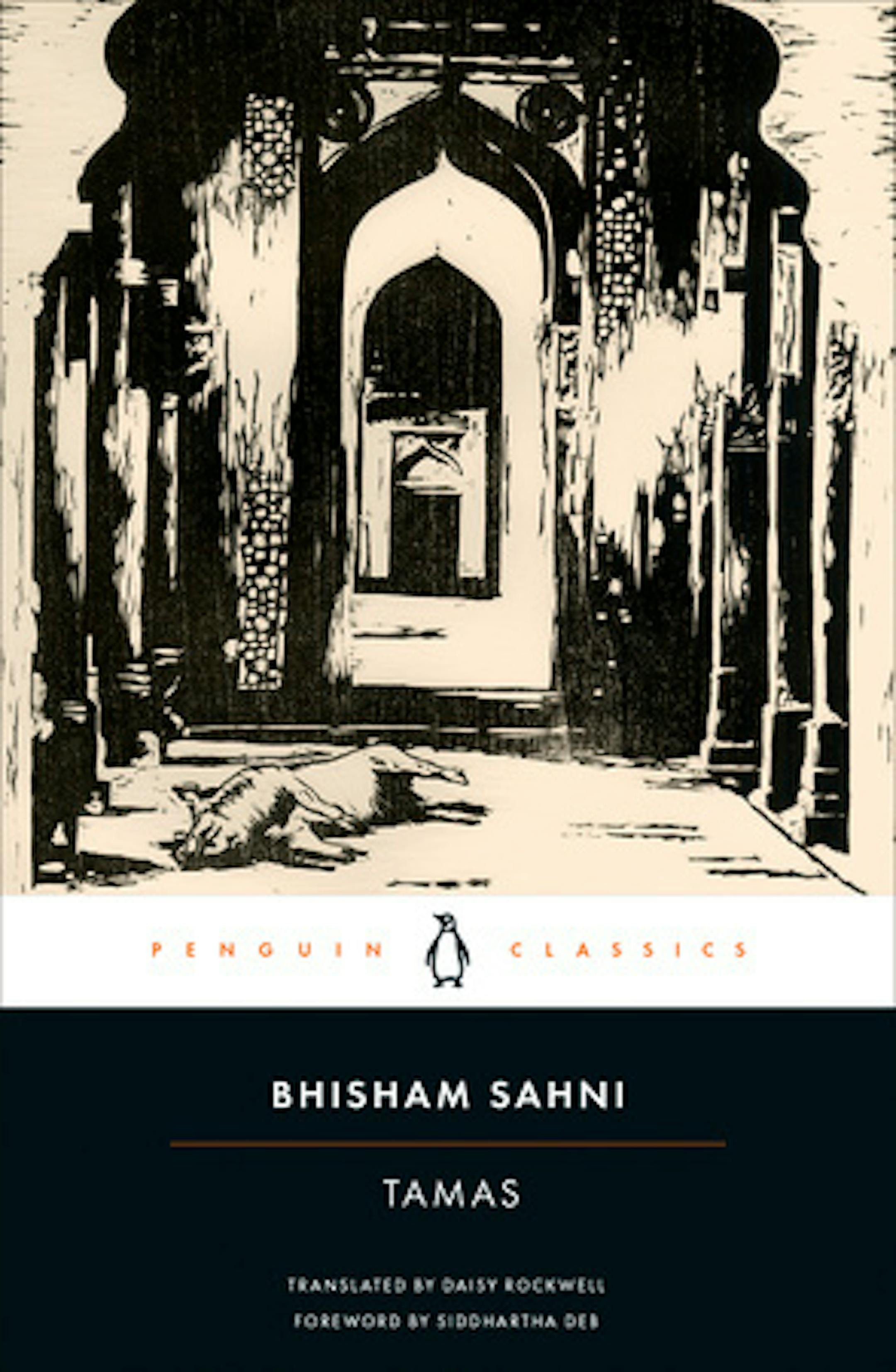
cover of Tamas is a drawing of an incident from the book -- a pig, left slaughtered on the steps of a Muslim gathering place
Tamas (Penguin Classics)

At the novel’s gut-wrenching peak, Sahni depicts the siege of a gurdwara, a place of learning and worship where a community of Sikhs desperately defend themselves until certain defeat results in the women making excruciating choices.

“Tamas” can be brutal, especially because the violence is all a means to no real end. At its conclusion, there’s no redemption or clarity on how to keep the tragedy from repeating. There’s just the sense that, in the political fights driving all this anger, “human costs had no actual importance.”

While “Tamas” zooms in on one riot and, mostly, on the men involved, “The Women’s Courtyard” is a feminist classic that offers a longer view, capturing how the politics of Partition play out over years in the lives of women whose agency is already severely limited by their culture.

Set in the years before and after Partition, the novel follows Aliya, a young woman who recognizes how much forces outside her control shape her life and how the politics of India’s independence only serve to make conditions worse.

When her father is arrested and imprisoned for seven years, Aliya and her family must move in with her uncle. There, she spends her days studying for school and reading revolutionary literature from her uncle’s library.

She sympathizes with the stories of freedom fighters, but remains staunchly unconvinced of their heroism, recognizing the burdens those revolutionaries place on everyone around them. She believes that “such people loved no one: they got married, had children, then destroyed their families. Their own homes had no part in the world.”

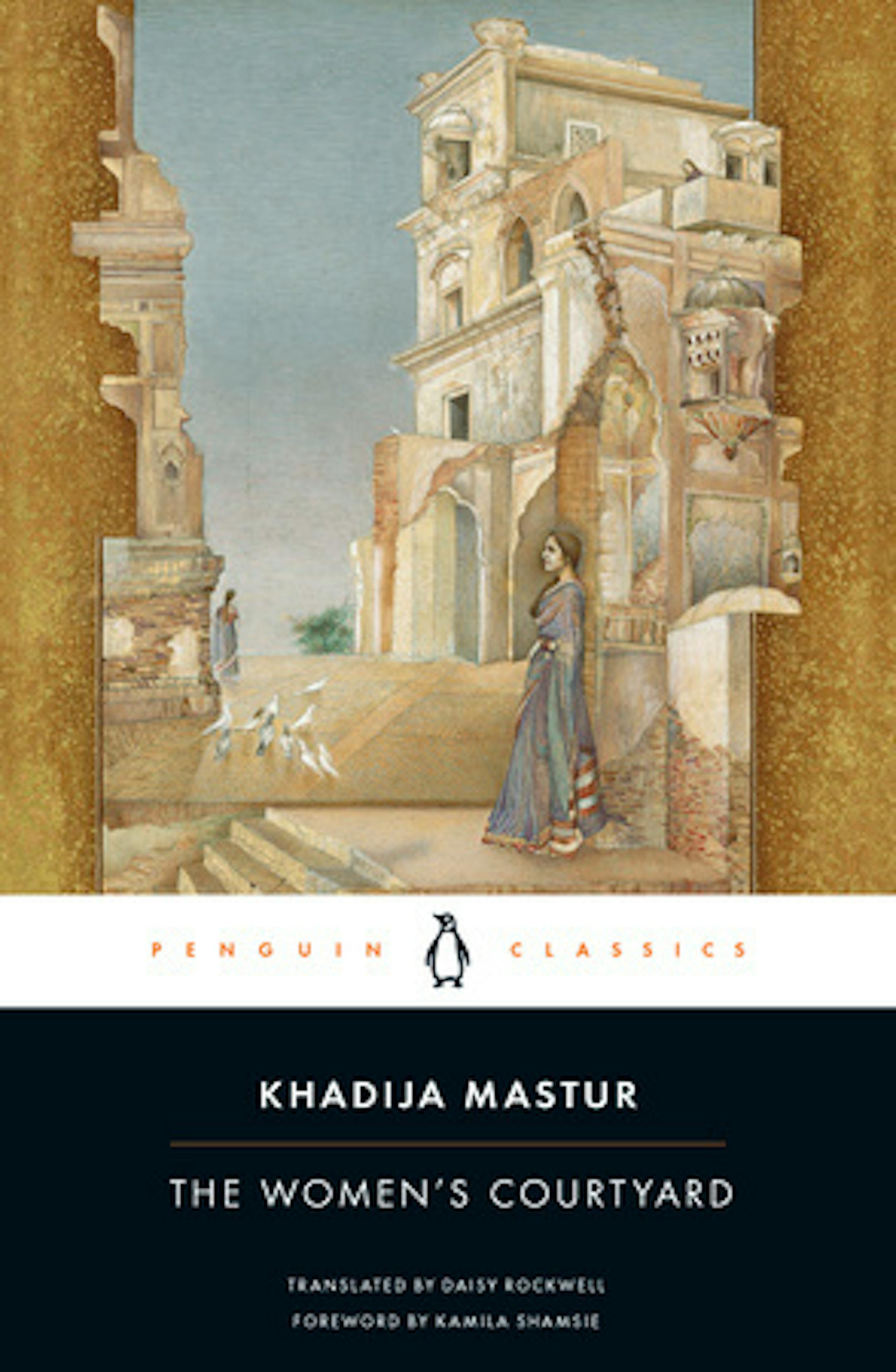
cover of The Women's Courtyard is a painting of a woman, standing in an ancient courtyard
The Women's Courtyard (Penguin Classics)

While men protest and debate ideology, to Aliya, those fights and the worry and sorrow they produce “snatched away her childhood.” She witnesses the many ways her mother, sister and neighbor all are trapped by men in their lives, and resolves to never let herself be suffocated in the same way.

Together, Sahni’s and Mastur’s complementary portraits of Partition illustrate how, when political tensions are weaponized, ordinary lives are crushed by the machinery of power. Those who survive must contend with the devastation that remains, long after the noise abates.

Vikas Turakhia is an English teacher in Ohio.

Tamas

By: Bhisham Sahni, translated by Daisy Rockwell.

Publisher: Penguin, 304 pages.

The Women’s Courtyard

By: Khadija Mastur, translated by Daisy Rockwell.

Publisher: Penguin, 320 pages.

about the writer

about the writer

Vikas Turakhia

See Moreicon

More from Books

See More
photo of author Tilar Mazzeo
card image