

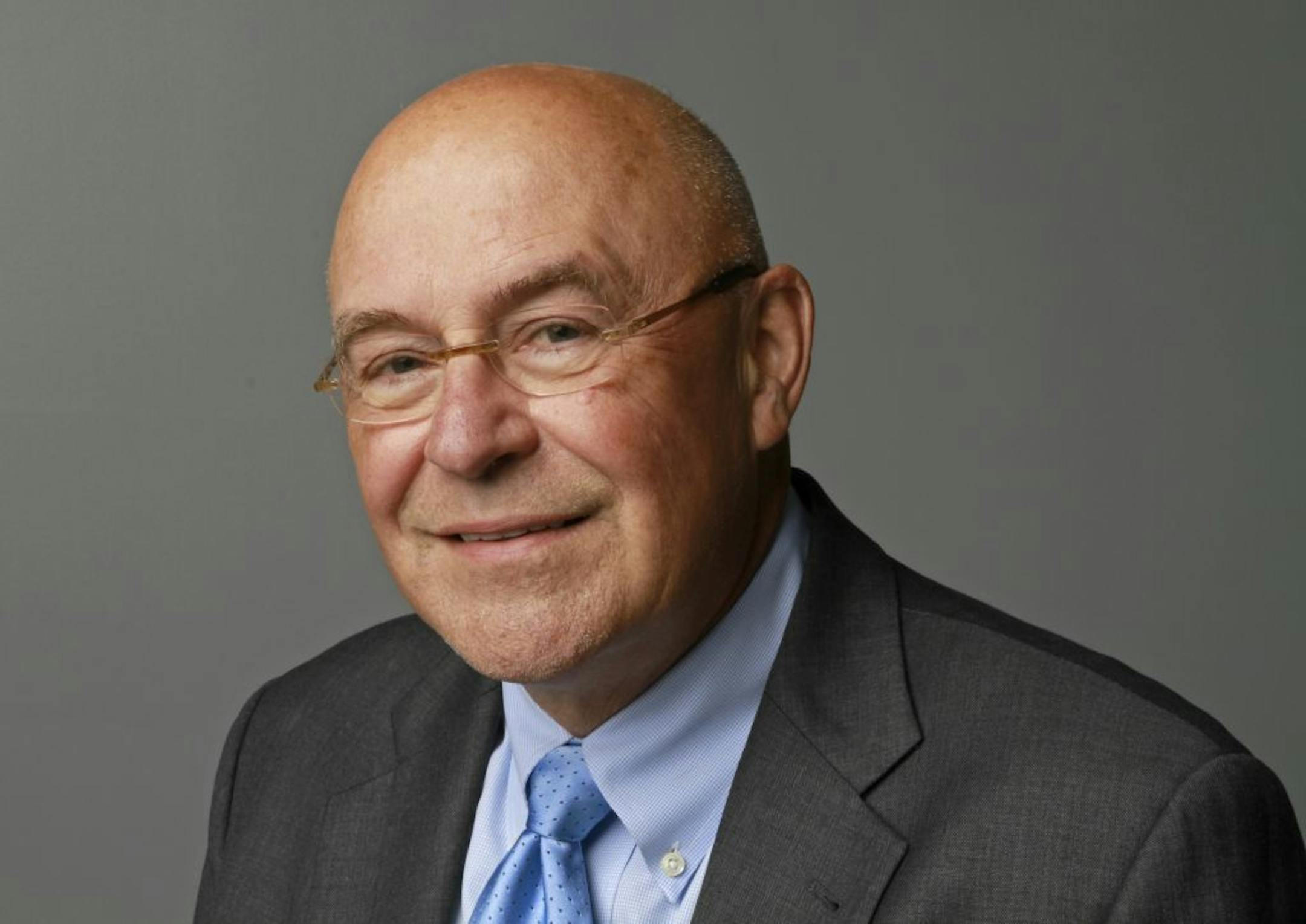
Robert Fraley, executive vice president and chief technology officer at Monsanto, is considered the father of agricultural biotechnology. Fraley has received numerous awards, including the World Food Prize Laureate in 2013 and the National Medal of Technology and Innovation in 1998 from President Clinton. He has worked for Monsanto for more than 30 years and has authored more than 100 publications and patent applications since the early 1980s. Fraley oversees Monsanto's global technology division, which includes plant breeding, plant biotechnology, agriculture biologicals and microbials, precision agriculture and crop protection. Fraley delivered this year's Norman Borlaug Memorial Lecture at the University of Minnesota, which commemorates the contributions Borlaug made to fighting world hunger. Fraley stopped by the Star Tribune to discuss the changing technology of agriculture, and the challenge of doubling food production by 2050 to feed the world's growing population. He also addressed consumer concerns about biotechnology and the company's financial situation. His comments have been edited for space and clarity.
Q: Tell me about Monsanto's financial position, since the company announced last month the elimination of 2,600 jobs and a 26 percent drop in share prices this year.
A: We had a tough year for largely the same reasons that farmers had a tough year. Grain prices have fallen, and on top of that we've seen a bit of a contraction in planted acres, both in the U.S. and around the world. Plus the U.S. dollar has been very strong. Like all good companies in the middle of times like this, we're resetting our cost structure so that as we move forward, we can make the right investment decisions and be in a position where we've got momentum once the ag cycle turns.
Q: Next year will mark the 20th anniversary of Monsanto putting Roundup Ready seeds on the market, yet genetically modified organisms (GMOs) continue to raise consumer concerns about health and environmental effects. How do you evaluate the pluses and minuses of the technology?
A: When we first developed the methods to put new genes into crops in the 1980s, I could have never envisioned the success that the technology would have. Today, GMO crops are grown in just about 30 countries on about 25 percent of the world's farmland. They've been the fastest adopted tool in the history of agriculture. Here in the U.S., probably 95 percent of the corn, soybean, cotton and sugar beet farmers use biotechnology because it helps them grow better crops and reduce their inputs. In the 20 years these products have been used commercially, there has not been a single food or feed safety problem associated with them. On the other hand, I wouldn't have believed in 1980 that we'd still be talking about GMO crops and still having some of the controversies that we face today. That's one reason why we have really changed our communications approach to reach out to the consumer to explain the importance of innovation in agriculture and the food supply, and to build understanding and trust.
Q: What about the fact that certain weeds have become resistant to products like Roundup and its active ingredient, glyphosate?
A: Roundup was discovered in the 1970s, and today in this country there's probably less than a dozen weeds that have become resistant. As far as the resistant weeds, science has enabled us to develop better management practices for farmers. We're giving them specific recommendations on which products to use, and how to use them in combinations, and we're discovering new products.
Q: What do you make of the fact that earlier this year the International Agency for Research on Cancer, part of the World Health Organization (WHO), declared glyphosate a probable human carcinogen?


