
Opinion | The importance of being earnest — about water safety

If you live in the state of 10,000 lakes and don’t know how to swim, it’s time to learn.

The Minnesota Star Tribune
August 11, 2025 at 8:29PM
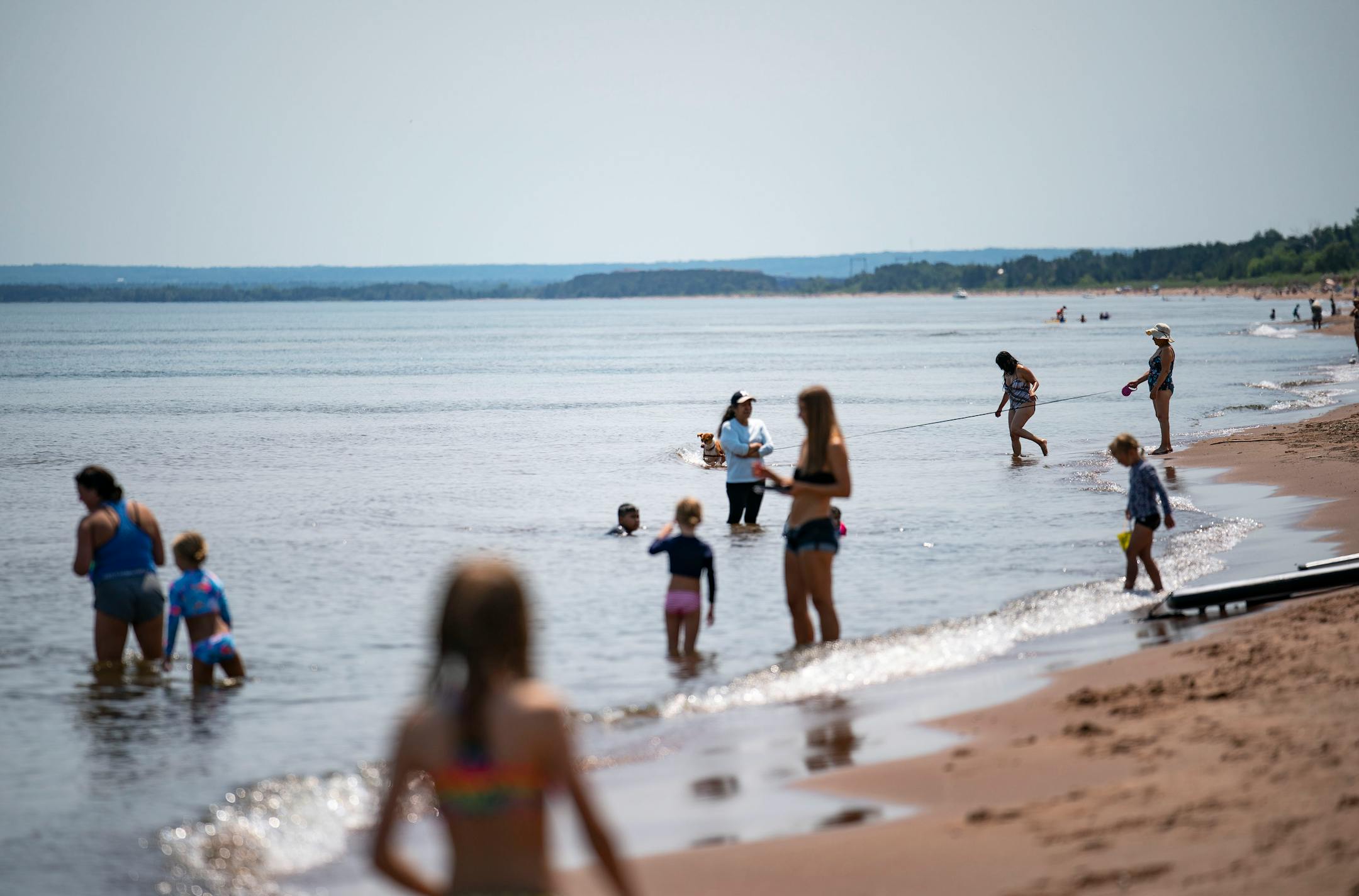
Swimmers on the shores of Lake Superior along Park Point in Duluth
"Even if you don’t hail from the land of 10,000 lakes or are not an Olympic swimmer, swimming is a critical life skill that you can suddenly — and surprisingly — end up using," Caroline Siebels-Lindquist writes. Above, swimmers in Lake Superior along Park Point in Duluth. (Alex Kormann/The Minnesota Star Tribune)

Opinion editor’s note: Strib Voices publishes a mix of commentary online and in print each day. To contribute, click here.

•••

In light of Peter Joice’s no-nonsense rescue after falling off a boat and swimming two miles in frigid Lake Superior to the nearest shoreline, the Minnesota Star Tribune recently reported that Joice credits his mother for prioritizing childhood swimming lessons.

The success story got me thinking about my own childhood journey through swimming lessons at Great River Water Park in St. Paul, and how lucky I am that my parents prioritized water safety.

David Golden, co-founder and owner of Wilderness Water Safety, a wilderness risk management and rescue response organization, has dedicated his life preaching water safety to the high heavens.

“You’re basically at the mercy of the water, if you can’t swim at all,” said Golden.

Even if you don’t hail from the Land of 10,000 Lakes or are not an Olympic swimmer, swimming is a critical life skill that you can suddenly — and surprisingly — end up using.

“From boating, to canoeing, to kayaking, to stand-up paddle boarding, to scuba diving, to sailing, to think of all fun things that happen on the water,” said Golden. “If [you] can swim, [you] can do so much of that stuff so much more safely.

“You can do a lot on the prevention side, but adding that ability to swim in there is just so fantastic in terms of how much more you’re able to relax.”

At the very least you should be wearing life jackets, otherwise known as PFDs (personal flotation devices) to Golden and his crew. He equates them to the seat belts of the water, and drownings to traffic deaths.

After being asked how many drowning-related deaths are preventable, Golden’s answer rings clear: “Almost all of them.”

Rick Slatten, captain of the St. Louis County Rescue Squad, said on the podcast “Paddle and Portage”: “In the history of the rescue squad we’re up to 513 water fatalities. And 499 of them were not wearing life jackets.

“We think there’s a connection … [wearing a life jacket] is the one single act that can turn a tragedy into a campfire story.”

It’s not often at the forefront of our minds just how dangerously a lighthearted trip to the beach, your local pool or a round boat trip on Lake Superior can potentially end.

“I’m so thankful in so many ways to see that story and to see that [Peter Joice] survived,” said Golden. “Because (1) no PFD, (2) cold water — it was probably between 50 and 60 degrees in Lake Superior — and (3) being out in the water for what had to be several hours. To be able to survive that is truly remarkable.”

Peter Joice’s ordeal did not end in tragedy, but it could have easily ended worse. His swimming abilities, developed as a child, definitely worked to his advantage and were crucial to his rescue and recovery.

However, nothing is ever as simple as I’d like it to be, and there are bigger barriers to developing early swimming skills. Factors such as cost and location to community pools have made swimming into a privilege instead of a necessity. After segregation was prohibited in the 1960s, some community pools, rather than force integration, simply let community pools go defunct, which led to a rise in private backyard pools for families who could afford them. These racial and economic disparities have crossed multiple generations and resulted in a vast shortage in swimming capabilities for people of color.

It doesn’t have to stay that way. There are organizations that can help you keep you and your family as safe as possible. The YMCA and Foss Swim School offer affordable lessons with many locations around Minnesota, cultivating lifelong swimming skills in even the most nervous of water visitors.

Swimming skills, or even PFDs, don’t exempt you from disaster when it strikes, but they do prevent very preventable tragedies from occurring.

So, if you haven’t already, throw your kids into swimming lessons! Cultivate a critical life skill that will almost inevitably come in handy one day. If you’re an adult nonswimmer, it’s never too late to learn, so hop (swim) to it!

Swimming skills are a saving grace, and in addition to that, don’t forget to put on your seat belts (life jackets). Even the most competent of swimmers can be swept off their feet.

Caroline Siebels-Lindquist, who’ll be a senior this fall at Drake University, is a summer intern for Minnesota Star Tribune Opinion.

about the writer

about the writer

Caroline Siebels-Lindquist

Intern

Caroline Siebels-Lindquist is the intern in the Opinion-Editorial department for the Minnesota Star Tribune.

See Moreicon

More from Columnists

See More
card image
Joel Koyama/The Minnesota Star Tribune

Plus: Minneapolis Chamber embezzlement case, rescuing food waste, SilverSneakers fitness program cuts and more.