
Opinion | Drowning in inequity: How Minnesota programs are working to fix swimming skill disparities

History has inspired efforts in the state to counter racial gaps in swimming ability.

The Minnesota Star Tribune
August 23, 2025 at 12:59PM
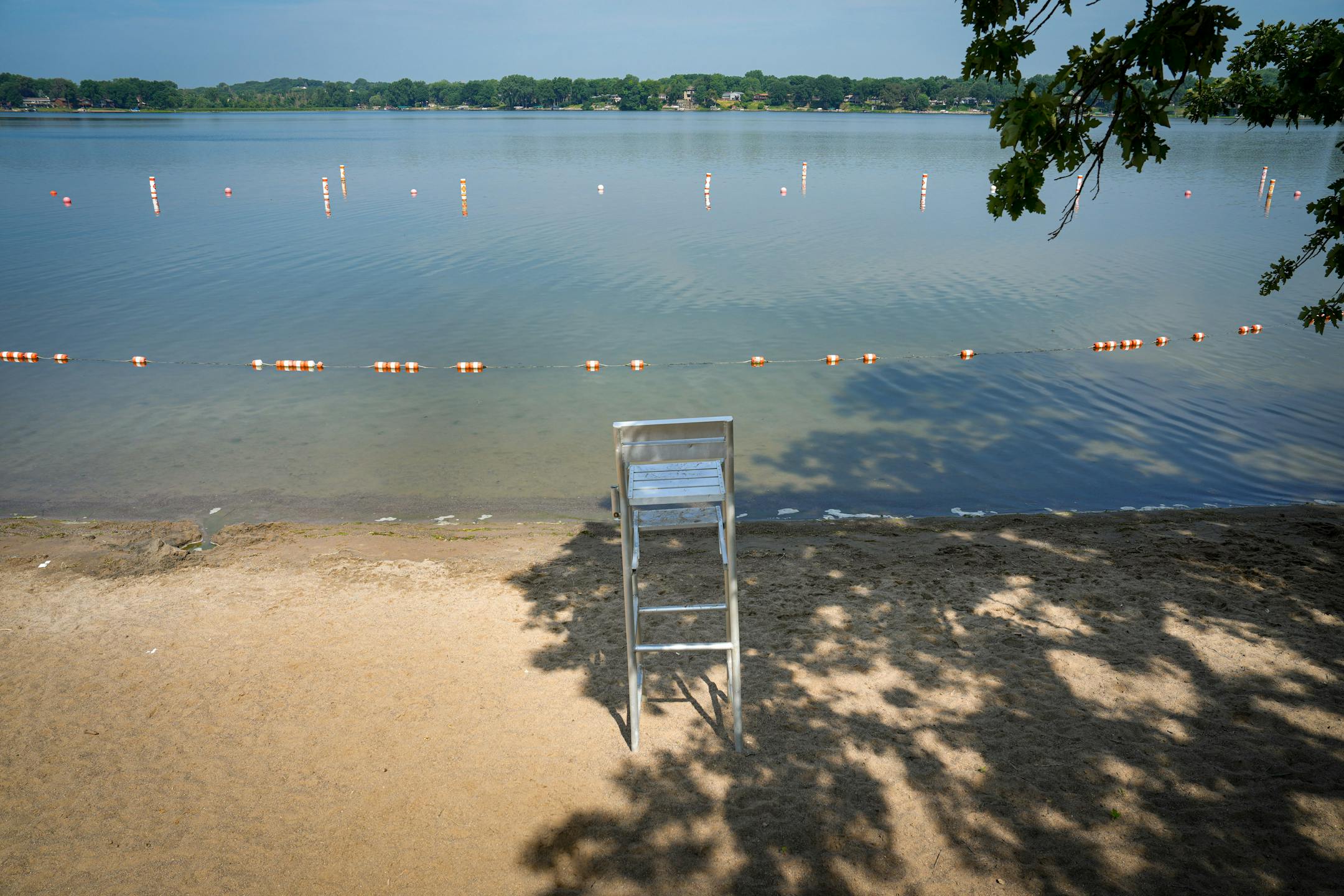
Kids swam at at Weaver Lake Beach. Lifeguards are in short supply and chairs were empty on a Thursday morning  Thursday, June 29, 2023  Maple Grove, Minn.
"Currently, research from the USA Swimming Foundation says 64% of Black children have little to no swimming ability. Compare that with 45% for Hispanic and 40% for white children," Caroline Siebels-Lindquist writes. (Glen Stubbe/The Minnesota Star Tribune)

Opinion editor’s note: Strib Voices publishes a mix of commentary online and in print each day. To contribute, click here.

•••

For many Minnesotans, a favorite lake or swimming pool is a wonderfully fun place to spend a summer day. But for generations of people of color, that activity can be seen as a danger — and not just because of a risk of drowning.

Malik Rucker, executive director at V3 Sports in north Minneapolis, tells me as much.

“When pools were integrated and Black families would go to the pool they would be heckled, acid [and nails] thrown in the water. They wouldn’t have lifeguards show up for them,” said Rucker. “So, it became a space where if I [went] down there, I may be attacked, I may be harmed, and it had nothing to do with the water.”

And sometimes, pools were made inaccessible for everyone.

Community pools in parts of the American South shut down operations rather than follow desegregation orders in the 1960s. Around this time, the number of private pools in backyards — mostly owned by white, upper-middle-class families — skyrocketed, leading to vast generational inequities in swimming skills for people of color.

Currently, research from the USA Swimming Foundation says 64% of Black children have little to no swimming ability. Compare that with 45% for Hispanic and 40% for white children.

White children historically and currently have had the opportunity and financial capability to cultivate swimming skills. Therefore, their risk of drowning is lower than that of Black and Hispanic children. Children who didn’t have access to community pools, or were on the receiving end of intimidation tactics, found fewer opportunities to swim, became fearful, weren’t likely to swim and were likely to continue to prioritize that fear of the water in their own children.

“The conversations of ‘the pool isn’t safe’ insinuated that the water wasn’t safe for generations after that,” said Rucker. “If a parent doesn’t know how to swim, the child only has a 19% chance of learning to swim. … It just continues through generations.”

V3 Sports has built its swimming curriculum around the history of swimming inequities, prioritizing African American swimming culture and anxiety-sensitive programming.

Diversity among staff and as part of the experience of visiting is a major priority for V3 in its quest to quell generational water anxiety.

“When you come into V3 center, you hear music that you can relate to, you see art that you relate to,” said Rucker. “You’re welcomed by maybe your neighbor. Once you’re on the pool deck, you continue that feeling of ‘the lifeguard [and the swim instructor] look like me,’ which I think creates a sense of belonging, community and [comfort].”

Other swimming programs have prioritized swimming skills for underserved communities. The British Swim School, through its partner nonprofit Hope Floats, gives scholarships to economically disadvantaged students and has a growing number of Latino and Somali students attending swimming lessons.

In addition, last year the city of St. Paul began offering swimming lessons to residents under 18 at no cost. Clare Cloyd, a public service manager for St. Paul, estimates more than 40% of the enrolled swimmers since the program launched come from marginalized communities, according to their targeted equity recruitment initiative.

Rucker says the city of Minneapolis should consider similar investments, which would allow organizations like his to expand their reach to more students.

Not just the Twin Cities but all of Minnesota would benefit if the same swimming priorities were enacted statewide. Minnesota boasts a wealth of shoreline, despite being tucked away in the Midwest.

Adults outside of the Twin Cities would also benefit from free swimming lessons. It’s not as if people are incapable of learning new skills when their clock strikes 18 years old. The owner of the British Swim School, David Huskisson, says 40% of the school’s students are adults. At V3, program manager Molly Belk says adults make up roughly 20-30% of its classes.

“Of course, I’m happy about the young people, but I’m also really happy for our elders in our community, who have overcome their fear of water that stems from their childhood, of water and pools not being a safe space for them,” said Rucker.

Drowning prevention starts with young people, but it also starts with addressing the traumatic layers that have propped up swimming skill disparities. History plays a bigger role than you might expect.

So, next time you hop in your selected body of water, think about generational fears and historical injustices that might be keeping someone else on the sidelines.

Caroline Siebels-Lindquist, who’ll be a senior this fall at Drake University, is a summer intern for Minnesota Star Tribune Opinion.

about the writer

about the writer

Caroline Siebels-Lindquist

Intern

Caroline Siebels-Lindquist is the intern in the Opinion-Editorial department for the Minnesota Star Tribune.

See Moreicon

More from Columnists

See More
card image
Joel Koyama/The Minnesota Star Tribune

Plus: Minneapolis Chamber embezzlement case, rescuing food waste, SilverSneakers fitness program cuts and more.