

A Jeep Cherokee left the Henry Bishop Whipple Building near Fort Snelling on a January afternoon. As it drove away, protesters quickly captured its Minnesota license plate to share with others tracking immigration agents.
But the plates didn’t belong to the Cherokee. They were last registered in 2014 to a Porsche 911 Turbo.
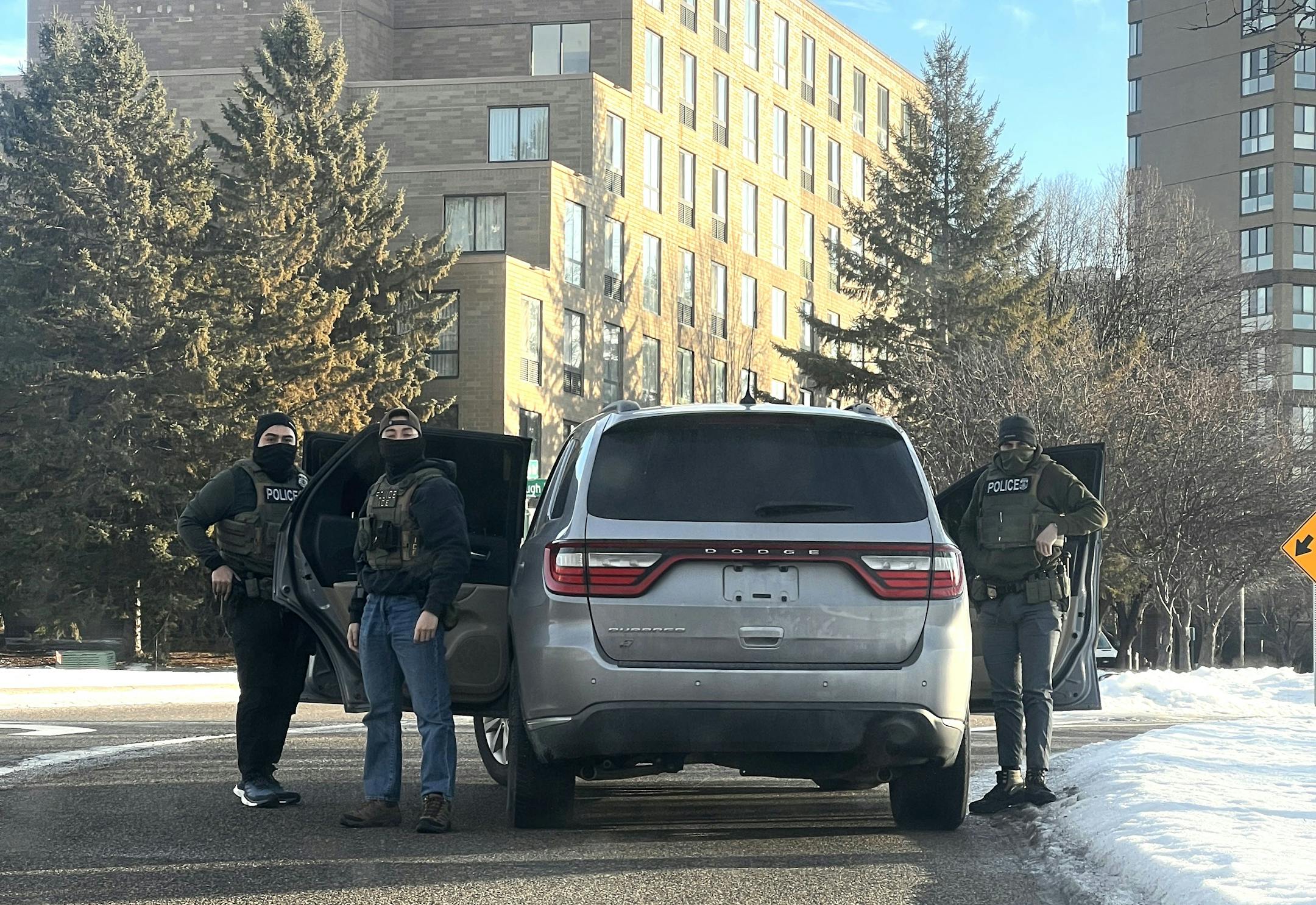
It wasn’t the only suspicious plate activity involving federal vehicles. There was a Chevy Tahoe with no plates. A Jeep was registered to a Ferrari with 2019 tabs. One plate was seen on four different vehicles. An observer even photographed two cars with the same plates, one driving a few feet in front of the other.
A Minnesota Star Tribune review of more than 100 Minnesota license plates attached to immigration enforcement vehicles in recent weeks shows that nearly 60% were not registered with the state of Minnesota, including the Chevy Tahoe that federal agent Jonathan Ross traveled in the day he fatally shot Renee Good in south Minneapolis.
Another 11% of the plates reviewed by the Star Tribune had some kind of irregularity, including expired tabs from different vehicles or plates registered to a nonexistent business. A quarter of the vehicles were rentals.
The Star Tribune used the state’s Driver and Vehicle Services database to review license plates captured through its reporting, by scanning social media and reviewing images shared by protest groups.
The state has an undercover vehicle registration program for law enforcement activities, but state and federal officials would not answer whether or to what extent the Department of Homeland Security (DHS) may be using it. The state has threatened to remove those privileges for the federal government.
The plate swapping has become fodder for protesters who monitor the agents across the Twin Cities. They accuse the Trump administration of hiding identities and evading public oversight.


