

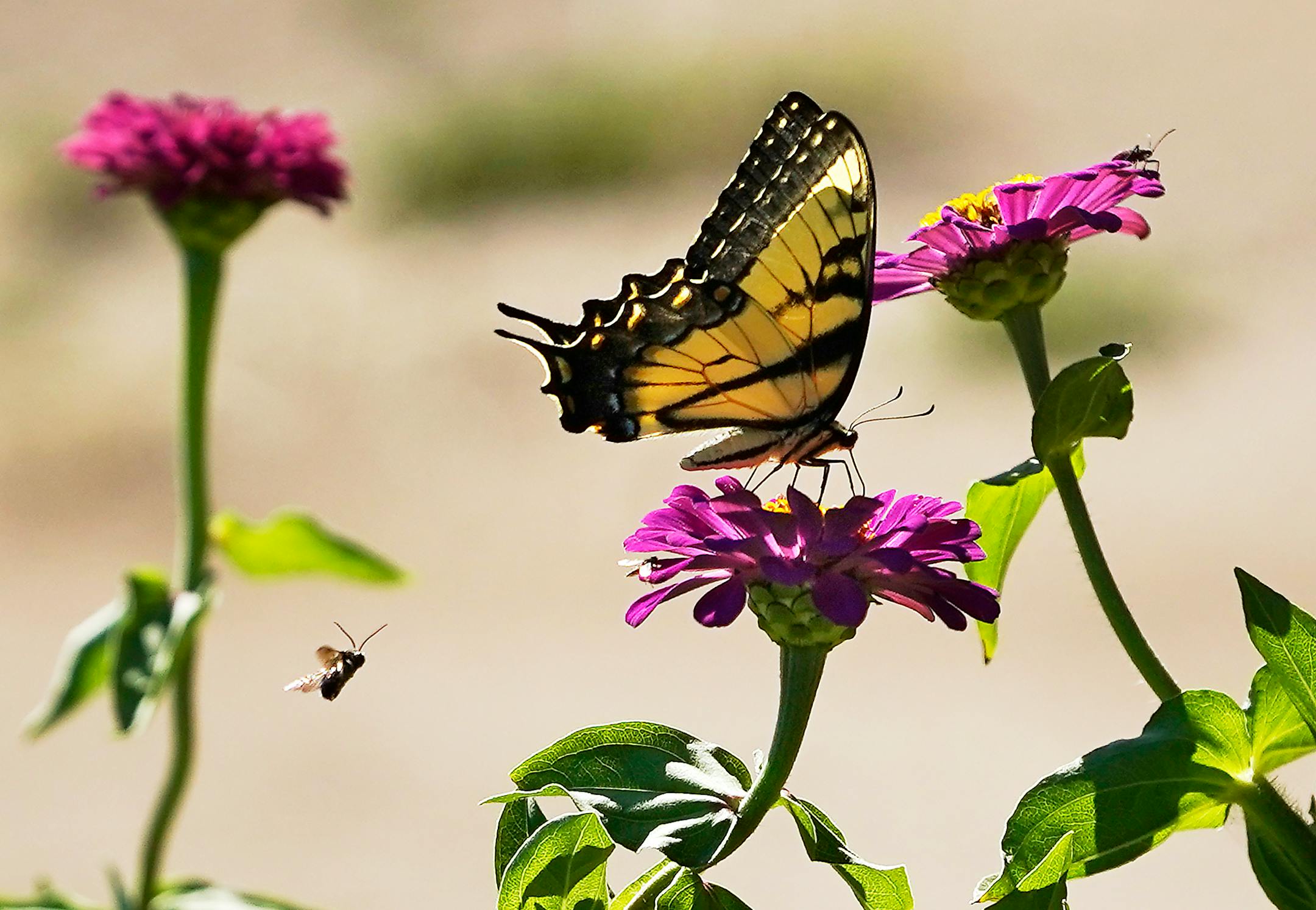
With blazing stars, goldenrod, echinacea and asters in full glory — as well as gardens filled with annuals — keep an eye out for swallowtails fluttering between blooms in search of nectar. Similar in size to well-known monarchs, they rank among the most frequently spotted butterflies this time of year.
Tiger swallowtail
Male eastern tiger swallowtails get their name from the black “tiger stripes” on lemon-yellow wings. Females feature a similar striped pattern with an additional band of vibrant blue and a few orange spots on their hindwings.
Here’s the plot twist: Females can also have black wings with orange and blue spots and no tiger stripes. This versatility in appearance makes the females dimorphic. There are some theories that the black wings are a defensive strategy, mimicking another species that predators avoid because it tastes bad.
The females lay small, green eggs on host plants, which can include wild cherry, ash, poplar, cottonwood, lilac and willow trees. Caterpillars hatch within three to five days and can resemble bird droppings in the early stages to discourage getting eaten. As they grow, the green caterpillars sport two large eyespots on their heads.
Black swallowtail
Black swallowtails feature black wings with two lines of yellow spots and markings. The female has an additional blue band of color and some orange. Their abdomens also are spotted.
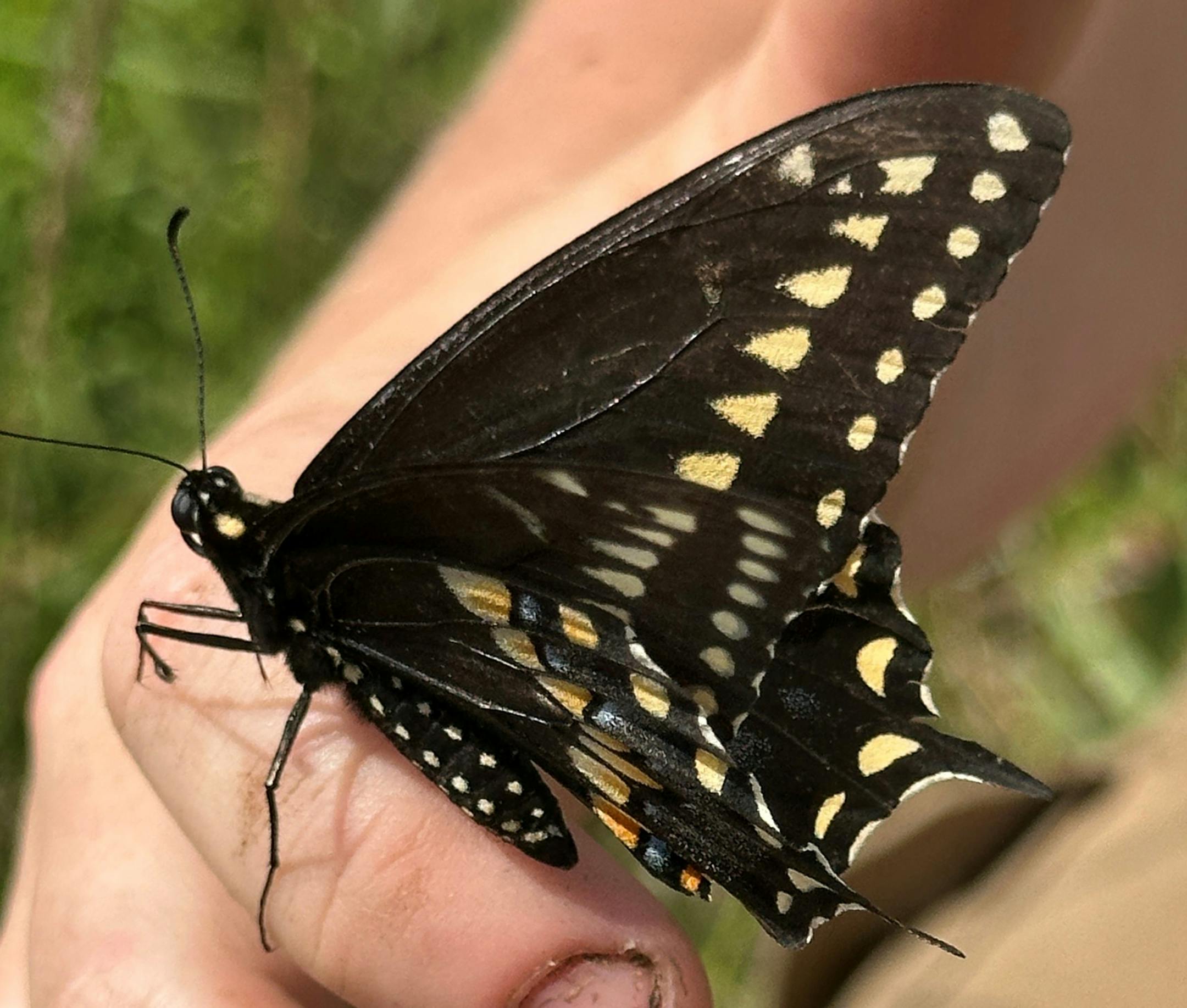
These butterflies feed on the parsley family, including parsley, dill and wild carrots, and their caterpillars are green with black bands and rows of orange dots.
Giant swallowtail
The largest butterfly species in the United States has wings spanning five to six inches. Their color is black with bold lines of yellow spots and a blue and orange dot. The underside of those wings is mostly yellow with black outlines and blue and orange accents on the hind wing.
When threatened, swallowtail caterpillars extend a small organ called an osmeterium from their heads and emit a foul odor. Minnesota swallowtails hatch two generations a summer (versus three in warmer states). Caterpillars overwinter in a camouflaged chrysalis and emerge in the spring to begin the cycle again.


