

Tasha Leverette was in the mood for her favorite drink from Starbucks, an iced peach-green-tea lemonade.
When she went through the drive-through of her usual Starbucks in Atlanta three weeks ago, though, she was told they couldn't make the drink because they had no peach-flavored juice. Shrugging it off, she drove to another store. And another. And another.
Each stop brought disappointment. None of the locations had the integral ingredient.
"I said to them, 'This is the Peach State, right?' " said Leverette, 33, who owns a public relations firm. "It's surprising because Starbucks always seems like it has anything and everything you need."
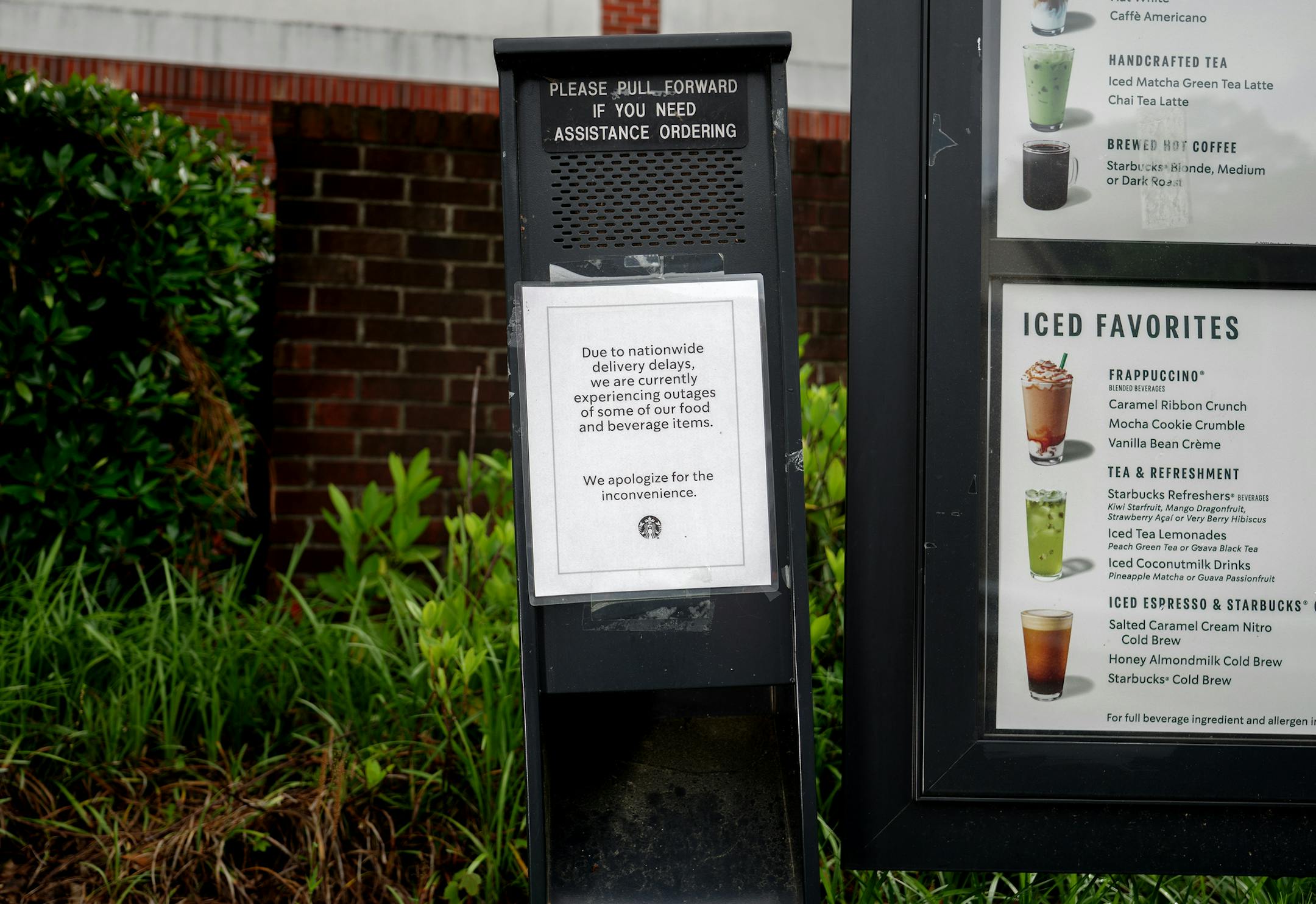
Across the country, customers and baristas are taking to social media to bemoan shortages not only of key ingredients for popular Starbucks drinks such as peach and guava juices but also a lack of iced and cold-brew coffee, breakfast foods and cake pops, and even cups, lids and straws.
A video on TikTok this week featured what appeared to be a group of employees screaming in frustration over a list of ingredients the shop had run out of — including sweet cream, white mocha, mango dragon fruit and "every food item." The caption also said that they were low on cold brew and the "will to live."
Starbucks is hardly the only company struggling with supply issues. Earlier this spring, ketchup packets became hotter than GameStop stock. Automakers have slowed production because there are too few computer chips for their vehicles. And homeowners are waiting weeks, if not months, for major kitchen appliances.
But Starbucks is running out of ingredients for Very Berry Hibiscus Refreshers and almond croissants after being one of the clear winners of the pandemic economy. During lockdowns, the coffee chain quickly shifted from its position as a "third place," where people could linger to work or meet up for long chats, to focusing on frictionless transactions with customers ordering through mobile apps and drive-throughs. Earlier this year, company executives said Starbucks had seen a "full recovery" in U.S. sales, back to prepandemic levels.


