
St. Louis County leaders blasted for signing data center-related NDAs

Three commissioners signed nondisclosure agreements related to the proposed Hermantown data center.

The Minnesota Star Tribune
October 15, 2025 at 9:32PM
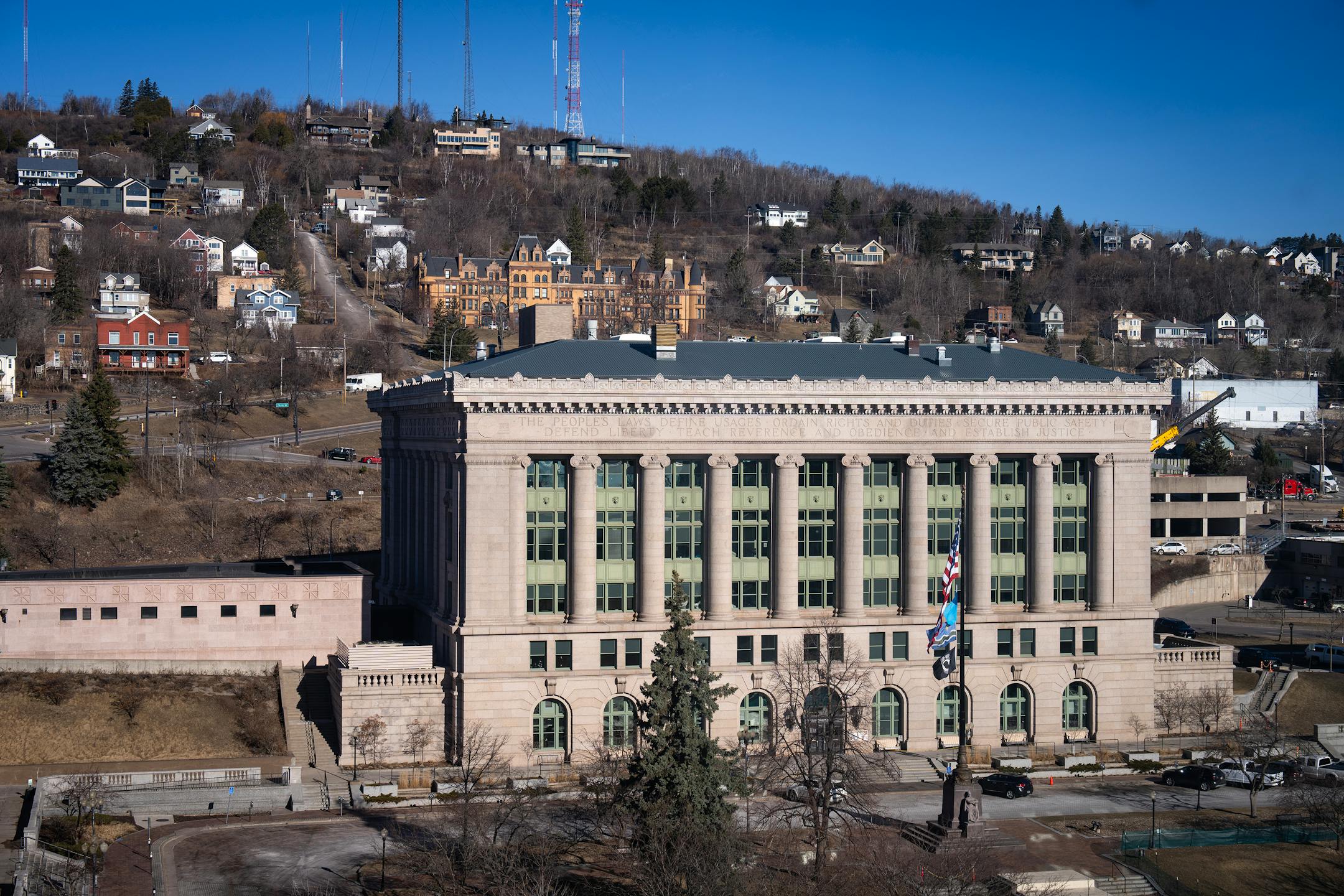
The St. Louis County Courthouse in Duluth. (Leila Navidi/The Minnesota Star Tribune)

DULUTH – Several St. Louis County commissioners are under fire from constituents for signing nondisclosure agreements (NDAs) related to a massive Hermantown data center proposed by an unknown company.

Commissioner Ashley Grimm attempted to raise the issue at Tuesday’s board meeting but couldn’t get a second motion to bring it to discussion and to vote on a proposed ban on signing such agreements.

Board Chair Annie Harala and commissioners Keith Musolf and Keith Nelson all signed NDAs with Mortenson, the construction and engineering company exploring development of a 1.8 million-square-foot data center, the county said. Hermantown city officials for months had declined to say what the project was, having also signed NDAs. That it would be a proposed data center was first reported in September by the Minnesota Star Tribune after obtaining public records it requested last spring.

Signing NDAs isn’t transparent, Grimm said, noting she was “ashamed of what just happened here.”

The proposed ban would have “stopped politicians, elected officials, from being able to start building political will months or years before the public has any chance to give any input, for the billionaire class, no less,” she said.

Several people spoke at the meeting in support of the ban.

Hermantown resident Bob Kohlmeier said he was “losing faith and trust in government over these NDAs.”

His property borders the site of the proposed data center, and Mortenson offered to buy it, he said.

But when he asked the company what the project would be, the company wouldn’t tell him.

“I put 50 years into this” property, Kohlmeier said. “We planted 10,000 pine trees on our property, and we’re investing in the land, and now no one will talk to us? I feel betrayed by these NDAs.”

Musolf, who represents Hermantown, said he doesn’t know any more about the project than what’s been publicly released, despite signing the agreement.

But, he said, “if actions are made to stop some of these things, we might as well hang a sign in St. Louis County that says we’re not here for business. Your taxes will continue to go up.”

Harala, who wasn’t at the meeting because of a family obligation, said in a statement that she signed the agreement “because of the county’s role in growing the economic viability of our region.

“Entities that are interested in our region often reach out to the county to get a lay of the land,” she wrote. “As board chair, I am privy to those inquiries.”

Sometimes that happens before a company has decided to build in the region and before the public governance process begins, she said.

City officials elsewhere in Minnesota have signed NDAs related to data centers.

A data center researcher told the Star Tribune earlier this year that NDAs are typical when it comes to such projects.

“Sometimes the NDA is to minimize the information the community knows, so that the activists can be slowed down,” said Steven Gonzalez Monserrate, a postdoctoral researcher at Goethe University in Germany who researched the ecological impacts of data centers while earning his PhD at the Massachusetts Institute of Technology.

But sometimes, cities and developers come to these agreements to safeguard data centers from security breaches and conceal plans from competitors, he said.

Eva Herscowitz of the Minnesota Star Tribune contributed to this report.

about the writer

about the writer

Jana Hollingsworth

Duluth Reporter

Jana Hollingsworth is a reporter covering a range of topics in Duluth and northeastern Minnesota for the Star Tribune. Sign up to receive the new North Report newsletter.

See Moreicon

More from Duluth

See More
card image
Rising above the treeline (Top of this photo), on the shore of Birch Lake, the Twin Metals Copper Nickel Mine Plant site and Tailings Management site is part of the proposed plan. ] In theory, the copper-nickel mine Twin Metals wants to build in the headwaters of the Boundary Waters Canoe Area Wilderness is a zero-discharge mine — a closed loop that will endlessly recycle millions of gallons of water, including rainwater and the polluted process water it uses to extract ore and