
Some U.S. oil hubs ready for real estate slowdown

Property developers and managers watch to see how decline affects market

Bloomberg News
December 29, 2014 at 12:25AM
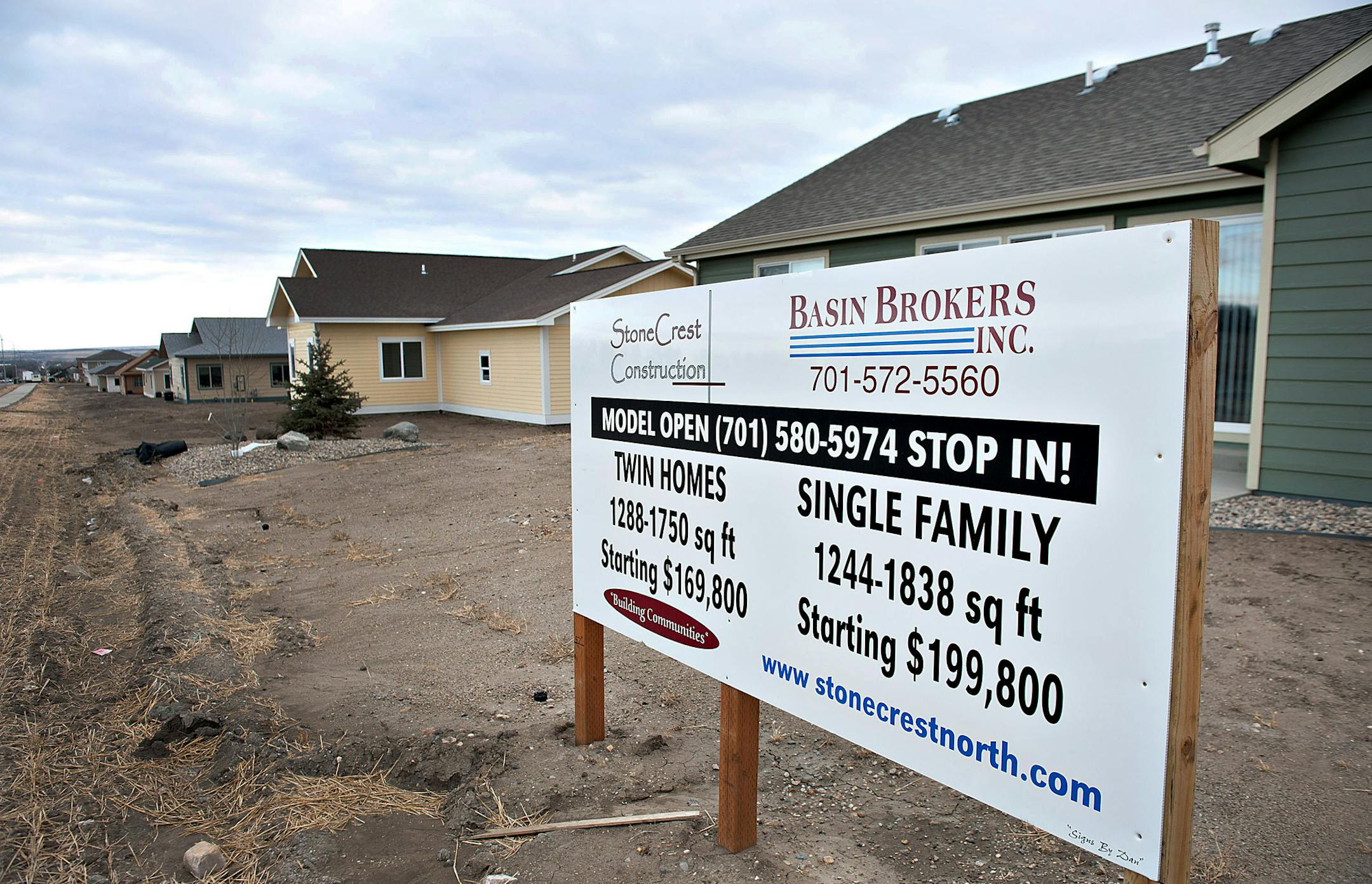
Single-family homes stand in a new housing development in Williston, North Dakota, U.S., on Monday, Feb. 13, 2012. The oil boom fueling the nation's lowest unemployment rate has put pressure on North Dakota's tight housing market. Officials expect some 1,200 apartments and single-family homes to be completed in Williston by summer. North Dakota will hold its Republican presidential caucus on March 6. Photographer: Daniel Acker/Bloomberg ORG XMIT: 140227233
Williston, N.D., has added about 1,000 hotel rooms since 2010 and doubled its housing stock as its population tripled. This photo was taken in 2012. (The Minnesota Star Tribune)

The drop in oil prices to five-year lows is sparking concern that leasing and construction demand will be hurt in some of North America's best-performing markets for commercial real estate.

Such energy-driven markets as Houston, Calgary and Williston, N.D., which have benefited from a surge in property values, may be poised for a slowdown after the 45 percent plunge in oil prices since June.

Shares of real estate investment trusts with heavy concentrations of property in energy-related areas, such as office landlord Cousins Properties Inc. and apartment owner Camden Property Trust, are underperforming.

"Hiring definitely will be slowing down, particularly in Houston, where a lot of engineering jobs are sourced from," said Sara Rutledge, director of Texas research and analysis for CBRE Group Inc., the largest commercial real estate ­services firm. That would cut demand for office space. "It does take some time" for the impact to materialize, Rutledge added.

Companies including Houston-based ConocoPhillips and ­Marathon Oil Co. said this month they plan to cut capital spending by about 20 percent next year in response to the plunge in oil prices, which accelerated when OPEC refused to cut production. The energy industry accounted for 64 percent of the office square footage leased in Houston last year, according to CBRE.

Energy and technology have been the main drivers of demand for U.S. office space in the four cities with the highest rent growth for the year ended Sept. 30 — San Jose, Calif.; Dallas; San Francisco and Houston — according to property research company Reis Inc. Office rents in Houston, the fourth-largest U.S. city, rose 4 percent in the third quarter from a year earlier, compared with a 0.4 percent increase for the U.S. as a whole.

Both office and apartment construction have been booming in Houston, as have residential and commercial developments in such cities as Williston. Some apartment rents in Williston on a per-square-foot basis have rivaled cities like New York as companies rushed to put up temporary housing, hotels and apartments to meet demand from the influx of workers.

KKR & Co., Related Cos., Westport Capital Partners and Oaktree Capital Management are among the firms that have invested in housing in the Williston area. Related, based in New York, also paid about $300 million for 3,000 apartment units in Midland and Odessa, Texas, and is raising a fund to invest in multifamily housing in energy markets.
Williston was the fastest-growing "micropolitan" area, defined as those with 10,000 to 49,999 residents, in the U.S. for a third consecutive year. The city has added about 1,000 hotel rooms since 2010 and doubled its housing stock as its population roughly tripled.

"Our biggest challenge with the slowdown is the infrastructure development, and that's everything from roads to a new airport relocation to a new wastewater treatment facility," said Shawn Wenko, executive director of the group Williston Economic Development. "Over the next six years, we need $1 billion of infrastructure development to get us caught up. Those are big-dollar projects and probably stand the most risk of not being done."

The city has estimated it will need about 3,000 new homes a year for the next five years to catch up with demand. New apartments are being built at the rate of about 1,200 units a year, and single-family construction has picked up since about midyear.

"The mood is actually very positive throughout the community, even with the talk of where oil prices are going," Wenko said. The prevailing view among community members is that oil prices will rebound, he said.

In Houston, Crescent Real Estate Holdings last year sold the 10-building Greenway Plaza office complex for about $1 billion. Oil was more than $100 a barrel at the time and the venture had completed renovations and leased up the multibuilding campus. The buyer was Cousins Properties, which has been investing in Texas in a bet on growth in the state.

"In the near term, lenders and investors will factor in the possibility of prolonged depressed prices into their decisionmaking," said John Goff, chairman and chief executive of Goff Capital Partners, a Fort Worth real estate private-equity firm that co-owns Crescent Real Estate. The Houston property market "is still quite vibrant," he added. "I am not seeing any meaningful impact yet on demand."

Based on conversations with oil and gas company executives, Goff said he views the recent price drop as a "relatively short-term phenomenon," given the continued growth in demand, the decline curve of U.S. production and the possibility of future supply disruptions. Modern shale production declines at a faster rate than the typical vertical wells of the past, he said.

"I don't think oil is going back to $100 anytime soon, but it could settle back to the $70 or $80 range," Goff said.

Oil prices probably would have to remain below the industry average break-even point for at least six months to affect real estate development, said Spencer Levy, head of research for the Americas at CBRE.

"The construction cycle is a long one, and we don't expect any immediate slowdown," he said. "With the possible exception of small pockets of multifamily, there has not been an overbuilding problem this time."


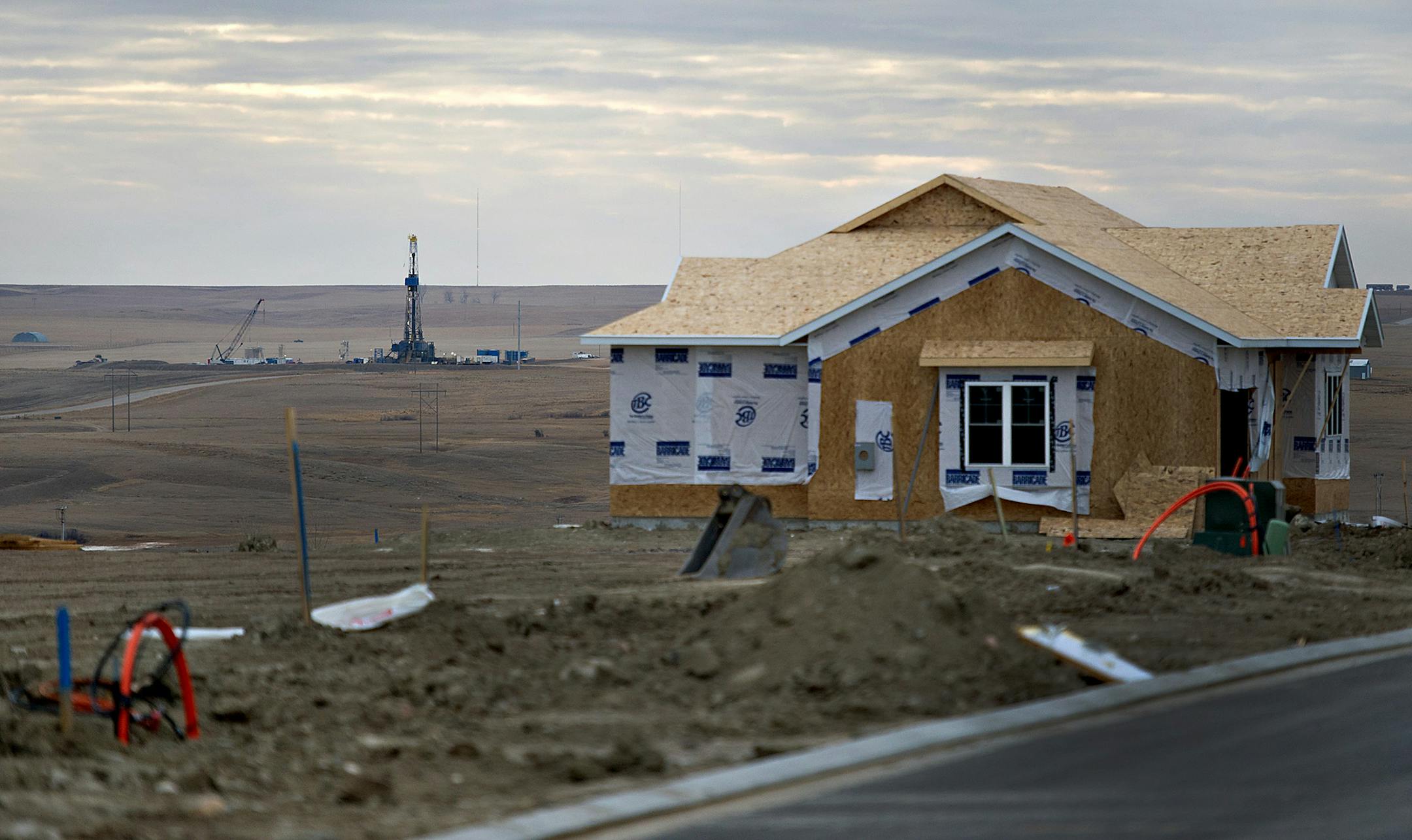
A crude oil drill rig stands in the distance of a single-family home under construction in Williston, North Dakota, U.S., on Monday, Feb. 13, 2012. The oil boom fueling the nation's lowest unemployment rate has put pressure on North Dakota's tight housing market. Officials expect some 1,200 apartments and single- family homes to be completed in Williston by summer. North Dakota will hold its Republican presidential caucus on March 6. Photographer: Daniel Acker/Bloomberg ORG XMIT: 140227233
A crude oil drill rig stands in the distance of a single-family home under construction in Williston, North Dakota, U.S., on Monday, Feb. 13, 2012. The oil boom fueling the nation's lowest unemployment rate has put pressure on North Dakota's tight housing market. Officials expect some 1,200 apartments and single- family homes to be completed in Williston by summer. North Dakota will hold its Republican presidential caucus on March 6. Photographer: Daniel Acker/Bloomberg ORG XMIT: 140227233 (The Minnesota Star Tribune)
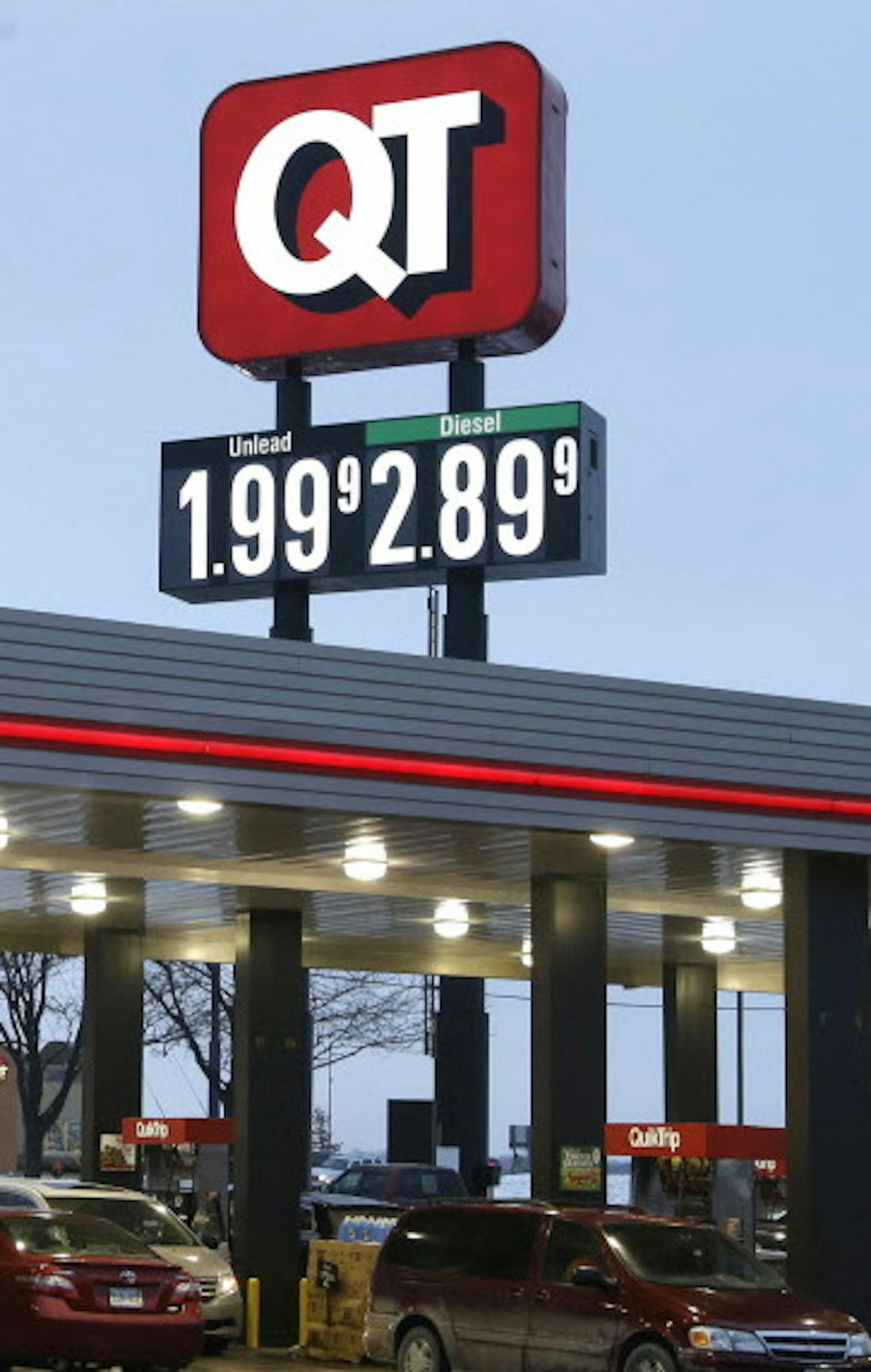
FILE - In this Friday, Dec. 19, 2014 file photo, motorists fill their tanks at a convenience store in Platt City, Mo., where prices dropped below $2-per-gallon for regular gas. In the second half of 2014, the price of oil dropped by half, to depths not seen since May of 2009 when the U.S. was in the Great Recession. By December, some drivers even saw a price at the pump that started with a $1. (AP Photo/Orlin Wagner, File)
Gasoline prices dropped below $2 per gallon for regular in Platt City, Mo., last week. (The Minnesota Star Tribune)
about the writer

about the writer

Hui-yong Yu

More from Business

See More
card image
Elizabeth Flores/The Minnesota Star Tribune

The state’s rehabilitation plan suggests UCare has enough assets to pay off the roughly $900 million in owes to health care providers and have a small surplus left over.

card image
card image