

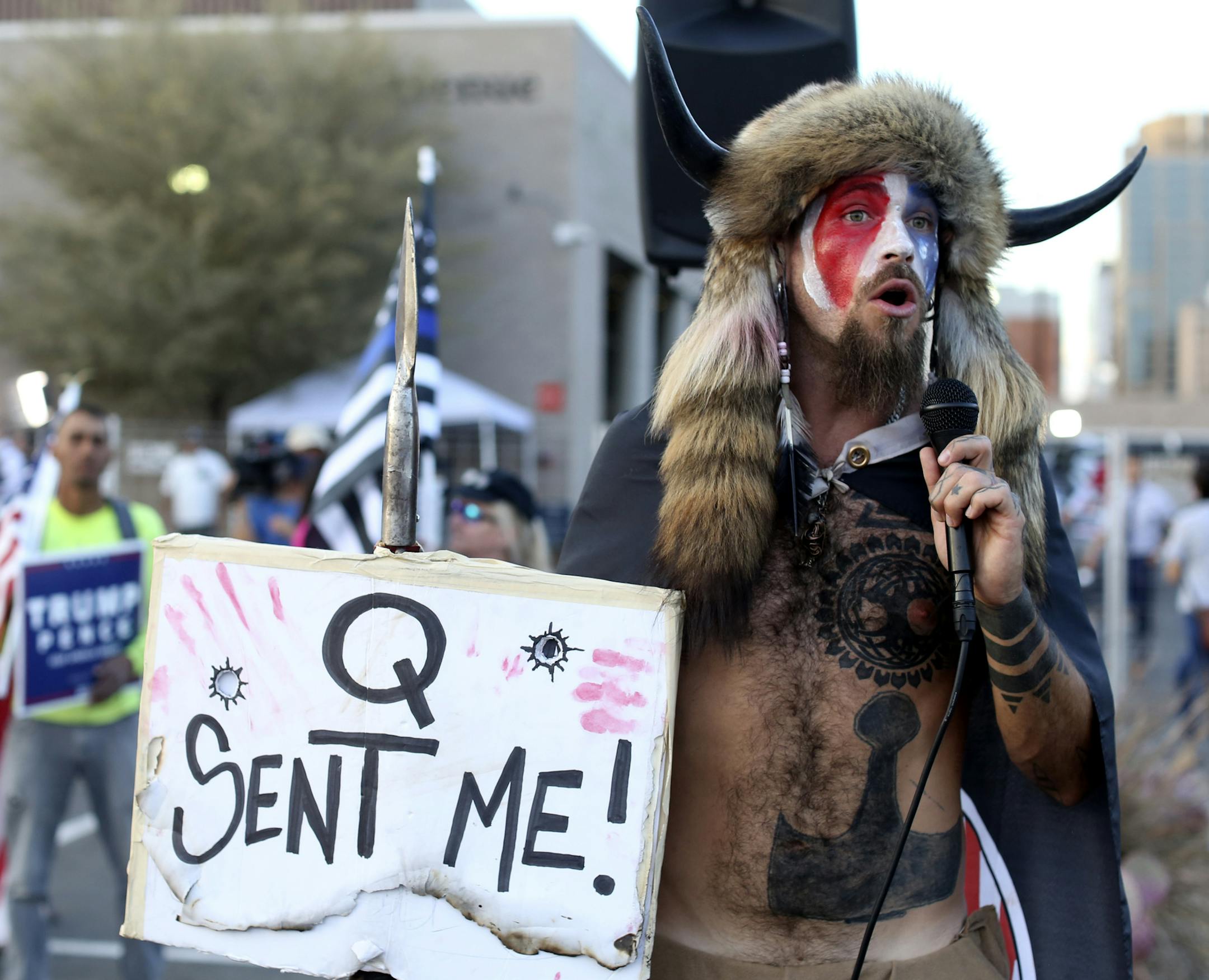
QAnon is such a weird theory that it's tempting to think humanity is getting dumber. But it's better seen as a highly sophisticated way of manipulating people. QAnon may one day be considered a masterpiece of propaganda.
This cultlike belief revolves around a conspiracy theory in which prominent Democrats and Hollywood celebrities are systematically victimizing children in order to extract something called adrenochrome from their blood. They consume this substance, so the story goes, as both a youth elixir and a recreational drug.
People may believe the theory, or parts of it, are true, even if they don't know that it's called QAnon. In a December 2020 NPR/Ipsos poll, 17% of Americans said that they thought it was true that "a group of Satan-worshipping elites who run a child sex ring are trying to control our politics and media," and another 37% said they weren't sure.
Why would anyone believe this, let alone so many people?
One reason is that believers discover the details of this conspiracy theory for themselves by solving puzzles and finding clues called "drops." Game designer Reed Berkowitz says he quickly recognized QAnon as a kind of a game known as an alternate reality game. These are fictional stories that send people out into the real world to gather clues. On the way, players encounter others who are engaged in the same hunt.
Berkowitz doesn't just think QAnon is like a game — he thinks it is a game, though he says it was intended to fool people into thinking it's real. When people find drops, they are meant to look like valuable, high-level leaks.
The drops are designed to make people feel a sense of discovery, something believers find highly rewarding. In a piece he wrote for Medium, Berkowitz argues that when people think they've found an idea themselves, they become attached to it. And they get pleasure from it.
When I talked to him by phone, he said alternate reality games use something called rabbit holes to send people in search of clues. The games can lead to phone calls and real meetings between players. Reality and fantasy blend, but the players recognize they are taking part in a game.


