
Brown: In Ely, a bustling arts scene salves conflict and unites community

Ely is a town most Minnesotans know for its conflicts. But its arts scene brings the community together.

Columnist Icon
The Minnesota Star Tribune
July 29, 2025 at 11:00AM
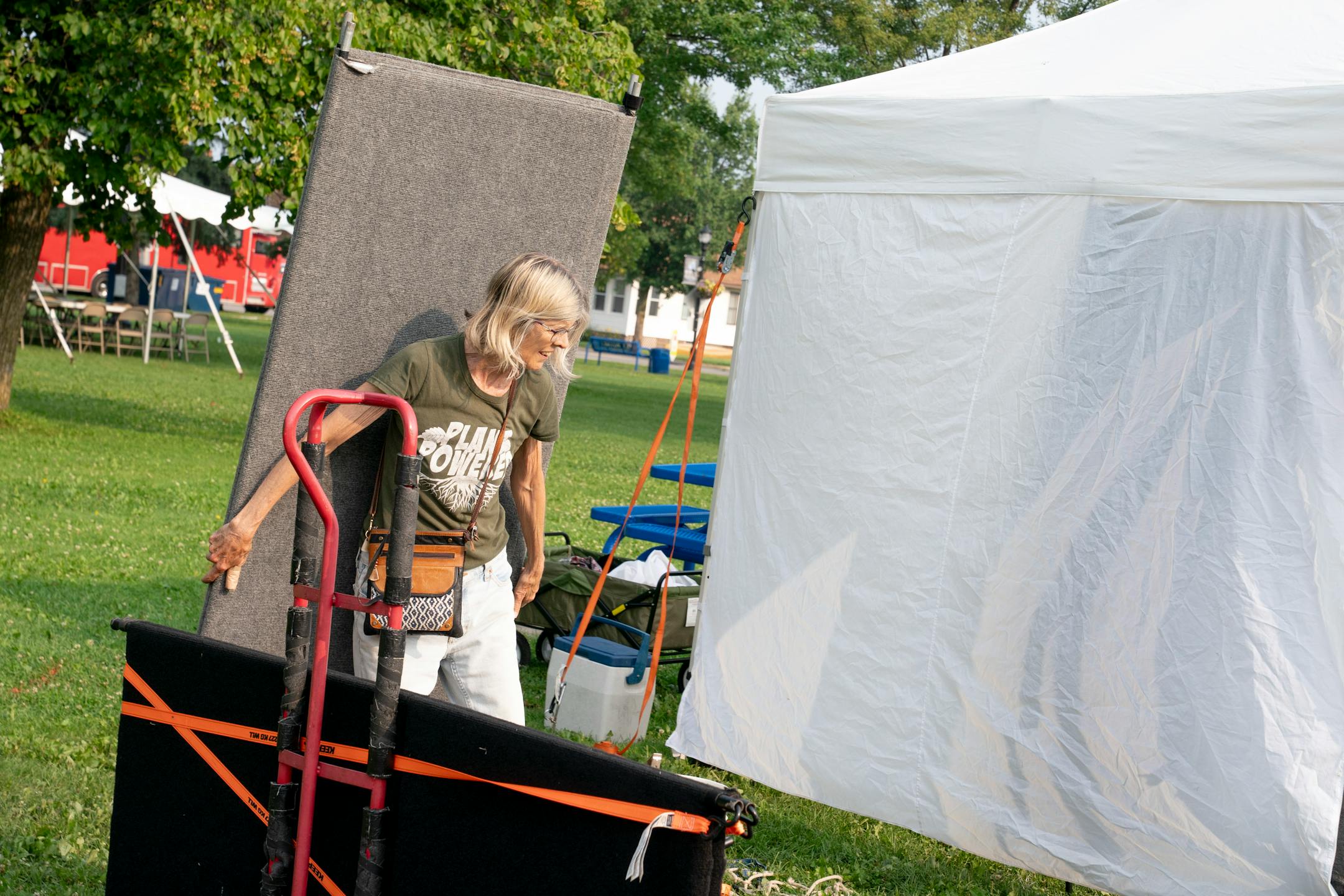
Artist Annette Mattingly, 70, of Ely, Minn. sets up a booth for Morning Glory Creations pressed flower art for the 45th annual Blueberry Arts Festival weeklong event that draws thousands of attendees after a flash flood Thursday, July 24, 2025 at Whiteside Park in Ely, Minn. "We are resilient," Mattingly said about the festival continuing on despite the weather event.
Artist Annette Mattingly, 70, sets up a booth for Morning Glory Creations pressed flower art for the 45th annual Blueberry Arts Festival after a flash flood July 24 at Whiteside Park in Ely, Minn. "We are resilient," Mattingly said about the festival continuing on despite the weather event. (Erica Dischino Special to the St/For the Minnesota Star Tribune)

Opinion editor’s note: Strib Voices publishes a mix of commentary online and in print each day. To contribute, click here.

•••

In the often-theatrical setting of a small town, people play many roles. This was abundantly clear in my recent visit to Ely on the edge of the Boundary Waters Canoe Area Wilderness in northeastern Minnesota. And in many cases, the arts bring together a quirky community that can be divided over other topics.

Speaking to a crowd of 100 people at the Ely Tuesday Group this month, I met artists, civic leaders, and at least two customers of my family’s long defunct Iron Range junkyard. Pride briefly allowed me to believe they were there to see me, but I later learned that this is typical summer turnout. People don’t just come to see the speaker; they gather to share community information and support each other’s work.

Lacey Squier, moderator of the Tuesday Group for Boundary Waters Connect, passed the mic around the crowd. New events were announced, and one man asked for help to rekindle a sled dog race next winter. Squire suggested I talk to the Ely Folk School, where she teaches a class on making Slovenian potica, an intricate walnut-based dessert bread usually concocted from closely guarded family recipes.

So, I talked to Lucy Soderstrom, who runs the Ely Folk School, a place where people gather to learn practical and artistic skills in 220 annual classes and more than 100 annual events. She also helped organize the first Ely Film Festival.

“We didn’t know much about film festivals,” said Soderstrom. “But I know I care about Ely, and we knew this would be something that a large portion of the Ely community would be excited about and show up for.”

The festival is now entering its fourth year.

Ely’s past and present combine in many interesting ways. Jess Edberg manages the Dorothy Molter Museum, celebrating the legendary resort owner and nurse who served homemade root beer to canoeists before the BWCA was founded. But Edberg is also renowned for her bar trivia and plays center for the Ely Chix with Stix, an amateur women’s hockey team. Oh, and she knows a lot about wolves from her time at the International Wolf Center.

“Ely started building community around people rather than just things to do,” said Edberg, who moved here almost 30 years ago.

That made all the difference.

Ely is a town most Minnesotans know for its conflicts. For 20 years, residents have argued over the merits of proposed copper-nickel mining in the BWCA watershed. Before that, the formation of the BWCA divided the city and surrounding region.

Last November, Ely voters backed Democratic nominee Kamala Harris over Donald Trump by 67 votes. But they also supported Republican Pete Stauber over his Democratic opponent for Congress by four votes and Republican State Rep. Roger Skraba (a former Ely mayor) by 102 votes. If you raise the topic of politics with a random Ely resident, you could hear just about anything.

“Everybody knows what side of the aisle everyone is on,” said Ely mayor Heidi Omerza, an elementary school teacher serving her second term. “No one holds that card very close to the chest. But the arts are an area we can agree.”

The interconnectedness of the town, among both the lifelong residents and those who arrived in more recent years, was remarkable. And when discussing the arts, nearly everyone brought up the Northern Lakes Arts Association, helmed by Ely native Ian Lah.

“Sometimes it feels like the arts are elite or that only certain people should have access, but I am firm believer that arts are for everyone,” said Lah. “The arts aren’t just paintings on the wall, or ballet or opera, but rather the catharsis we feel. The arts help us connect to humanity better.”

When people are connected, they do more, care more and generally report their town as more successful.

Ely changed a lot from when I had friends there in the 1990s. The decaying State Theater on Sheridan Street has been refurbished into a multi-purpose theater and arts center. The Miners Dry at the historic Pioneer Mine features an art gallery that’s now used year-round. Festivals span the calendar, celebrating, in no particular order, blueberries, the harvest moon, winter and beards.

A bustling, collaborative arts community is a huge asset but doesn’t fix all the economic woes of small-town life. Finding year-round jobs for residents has been a problem since the seasonal labor days of mining and logging.

“What’s the longevity of a mining job?” asked Soderstrom. “What if it busts? We need to work toward a little more stability in the realm of job benefits and job duration. The same thing is true for tourism jobs. We have so many seasonal people with a month or two in fall and spring off. I think that is a big deal.”

Soderstrom works to connect artists and teachers at the folk school to other opportunities so they can stay in Ely. One of her biggest challenges is finding ways for people to secure health insurance, something on the mind of other leaders, too.

“We cannot live on tourism alone,” said Omerza. “We cannot live on any other thing by itself. We need everything we can get in Ely.”

That’s why the town’s collaborative approach works, even though people don’t agree about everything. When people talk to each other, they can share ideas and help each other, too.

“What the arts scene is doing is opening people up in a face-to-face way,” said Soderstrom. “It’s putting us in contact with each other and encouraging us to have these conversations to get to know each other and build a stronger community.”

A stronger community is more resilient to change, and we can all agree that times are changing.

about the writer

about the writer

Aaron Brown

Editorial Columnist

Aaron Brown is a columnist for the Minnesota Star Tribune Editorial Board. He’s based on the Iron Range but focuses on the affairs of the entire state.

See Moreicon

More from Columnists

See More
card image
card image