

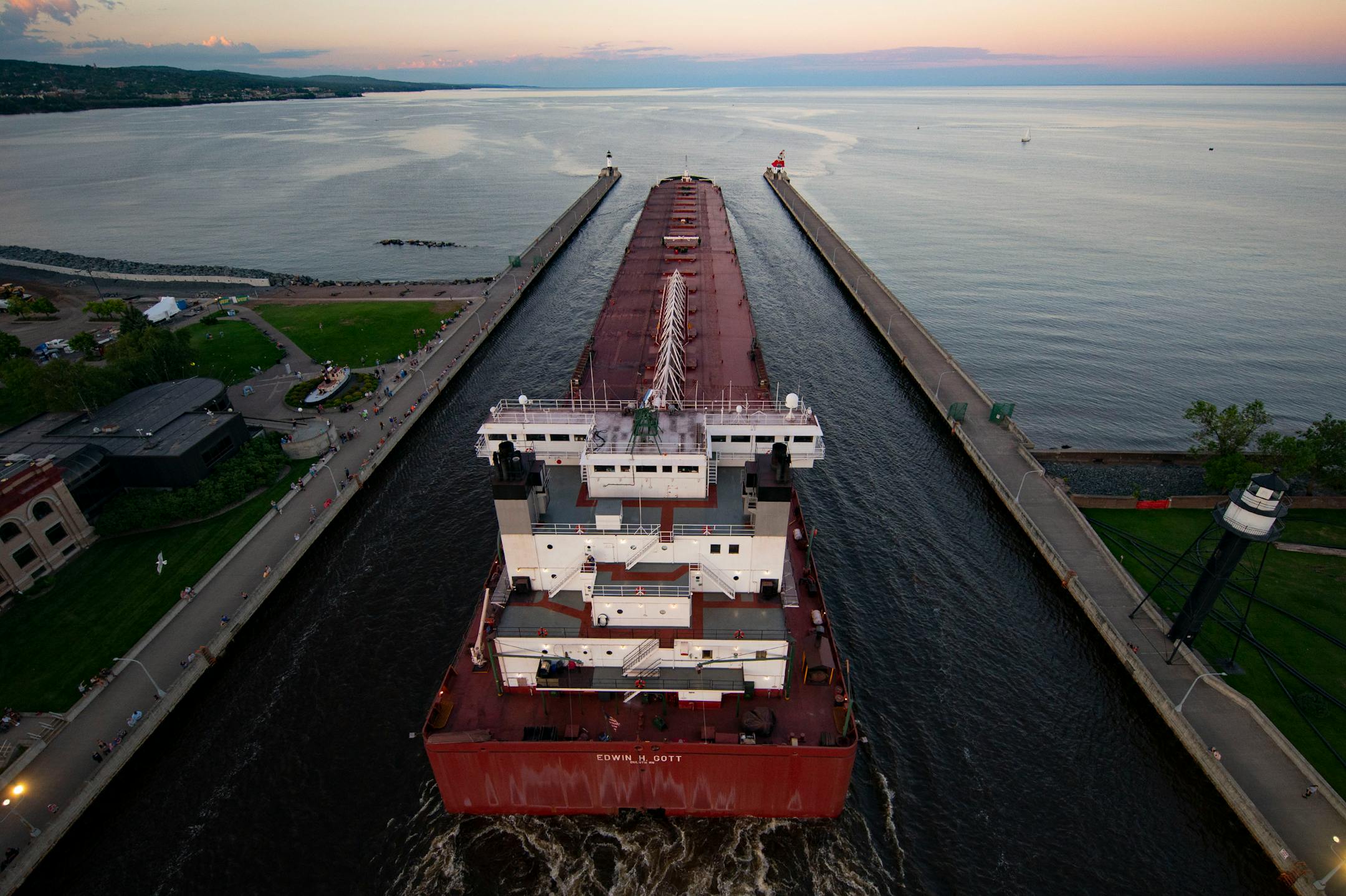
In a typical year, more than 12 million tons of iron ore, most of it mined in Minnesota, would have been shipped across the Great Lakes by now.
But just 8 million tons have made the journey since the Soo Locks opened in March in one of the slowest starts for taconite shipments in recent history.
Steel mills are running at levels similar to last year, which normally would indicate a steady stream of ore floating down the lakes.
"That relationship hasn't played out in typical fashion so far this shipping season," said Duluth Seaway Port Authority spokesman Jayson Hron.
The movement of ore-hauling ships across Lake Superior was hampered by ice in March and April, but May's open-water results show the demand for taconite pellets to make steel isn't where it used to be. May shipments were 20% below the year before and 22% off the five-year average, according to the Lake Carriers' Association.
Earlier this year Cleveland-Cliffs CEO Lourenco Goncalves said "our iron-ore needs are not as high as before," indicating the below-average shipment numbers may be a new normal.
Cliffs controls the majority of Iron Range taconite production via the Minorca, Hibbing Taconite, Northshore Mining and United Taconite mines. But the company has taken several steps in the past year that will reduce production.
Northshore Mining was idled on May 1 to be a "swing" operation, in part to avoid paying royalties for iron mined in Babbitt and processed in Silver Bay.



