

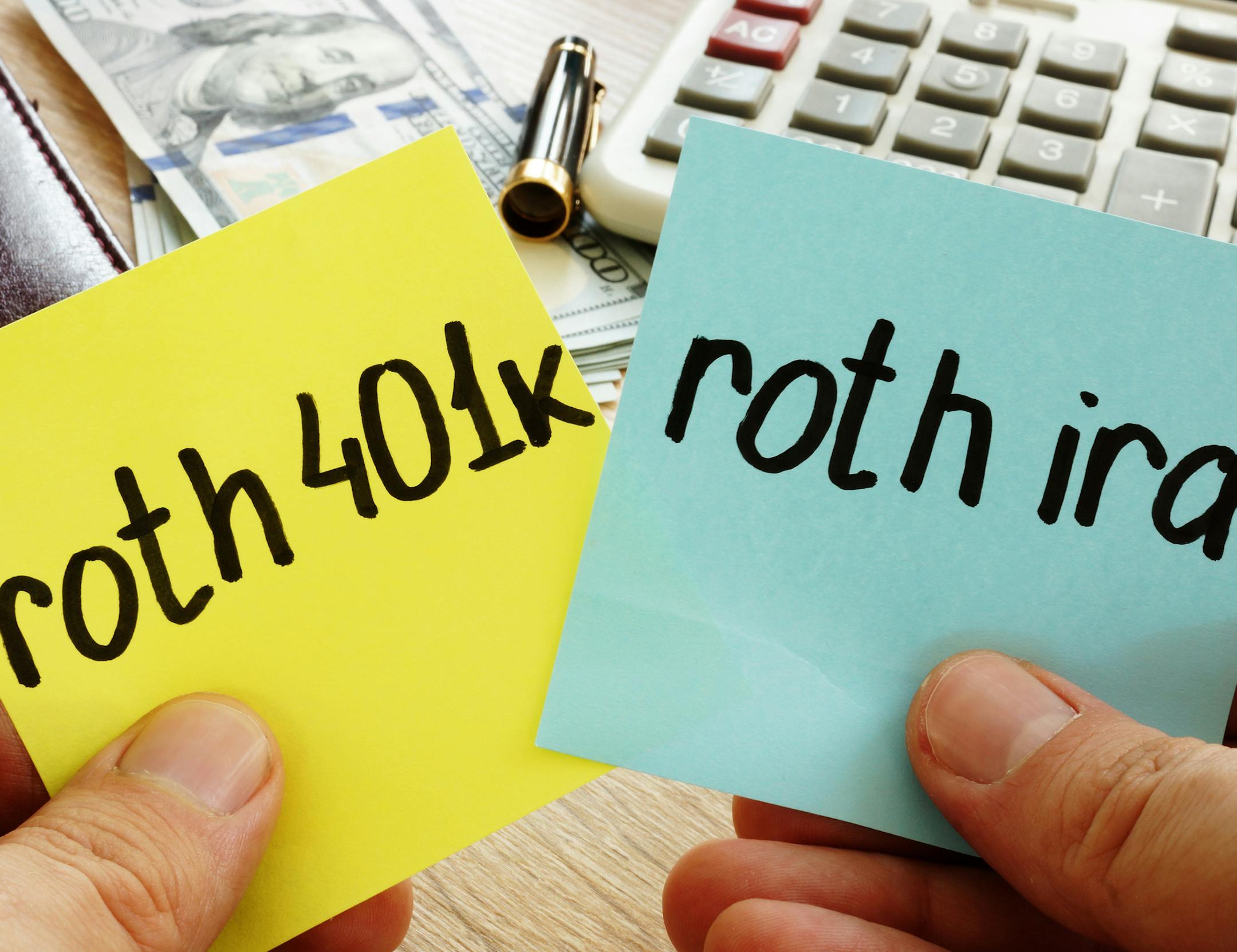
If you are saving for retirement, you probably know about the 401(k) and the Roth IRA too. But are you familiar with a Roth 401(k)?
It's a bit of a mashup — a Roth product available through your traditional 401(k). It allows people to save after-tax money through their workplace plan that can then be withdrawn tax-free in retirement. Although it has been around for years, its availability has picked up steam.
There's no exact measure of how many plans provide it. But nearly 85% of midsize and large employers had a Roth offering in their defined contribution plan in 2018, according to a survey by consulting firm Callan.
That's up from nearly 62% in 2015. Adoption by employees remains fairly low, in part because of a lack of awareness.
Should you consider one? A few things to know:
Definition
A 401(k) is an employer-sponsored retirement plan that allows workers to set aside pretax money from their paycheck for retirement.
Some employers will match contributions up to a certain level. Because the money that goes in isn't taxed, it is taxed when withdrawn.
A Roth IRA, on the other hand, is an individual retirement plan that is typically established outside of the workplace, such as through a bank or investment firm. The money that goes in has already been taxed, so the withdrawals during retirement are tax free.


