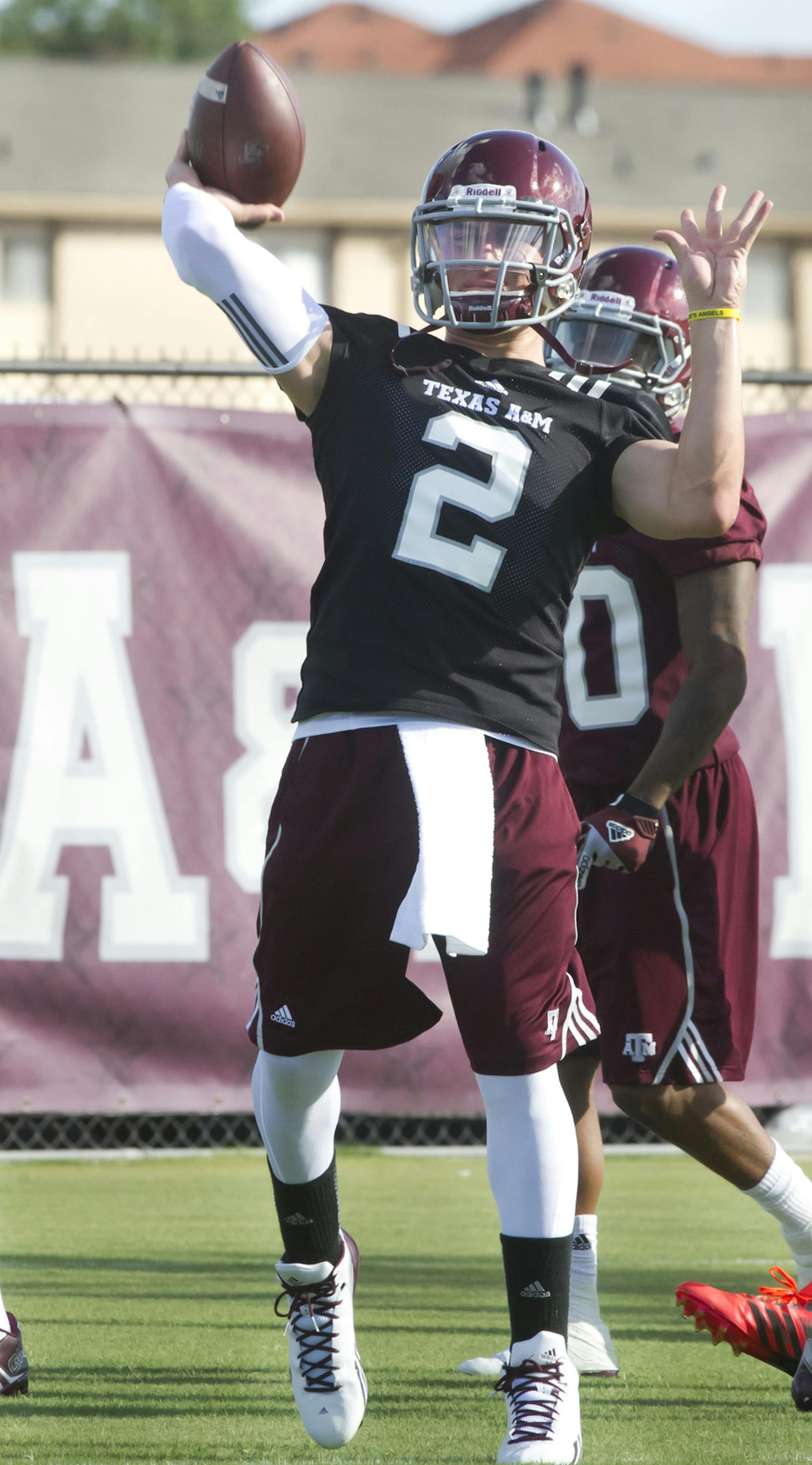
The NCAA reportedly is investigating Heisman Trophy winner Johnny Manziel over allegations that he sold his autograph to memorabilia dealers for a five-figure sum. This could become a watershed case in college athletics, but assigning blame is not a one-sided argument.
Do you blame Manziel for seeking to profit off his fame, success and Johnny Football mystique? Or do you blame a self-serving NCAA that clings to archaic rules and principles.
The answer is yes. Blame both for this messy situation, which has raised questions about Manziel's eligibility and, in the process, exposed the hypocrisy of college athletics and the NCAA's culpability.
College sports — football in particular — have become such a financial behemoth that everyone wants and deserves a piece of the action. That quaint notion of amateurism was once a fine concept, but this is not a mom-and-pop operation.
According to estimates, the Big Ten Network will pay each member school at least $30 million annually once Rutgers and Maryland join the conference in 2014 and open doors to new television markets.
Have you seen photos of Oregon's new football complex? The 145,000-square foot palace reportedly cost $68 million and includes a lobby wall that features 64 55-inch televisions, a barber shop inside the locker room, rugs imported from Nepal and a two-story theater.
Ah, the smell of amateurism.
The anti-NCAA chorus is in full throat over the Manziel investigation, but the Texas A&M quarterback hardly paints himself as a sympathetic figure. If the investigation ultimately discovers that Manziel sold his autograph for profit, he deserves to be punished based on his own selfishness.