
Opinion | School shutdowns are only a Band-Aid solution to gun violence

A recent wave of closures across the south metro serve as yet another reminder that the Legislature must act to stop this scourge.

December 18, 2025 at 7:30PM
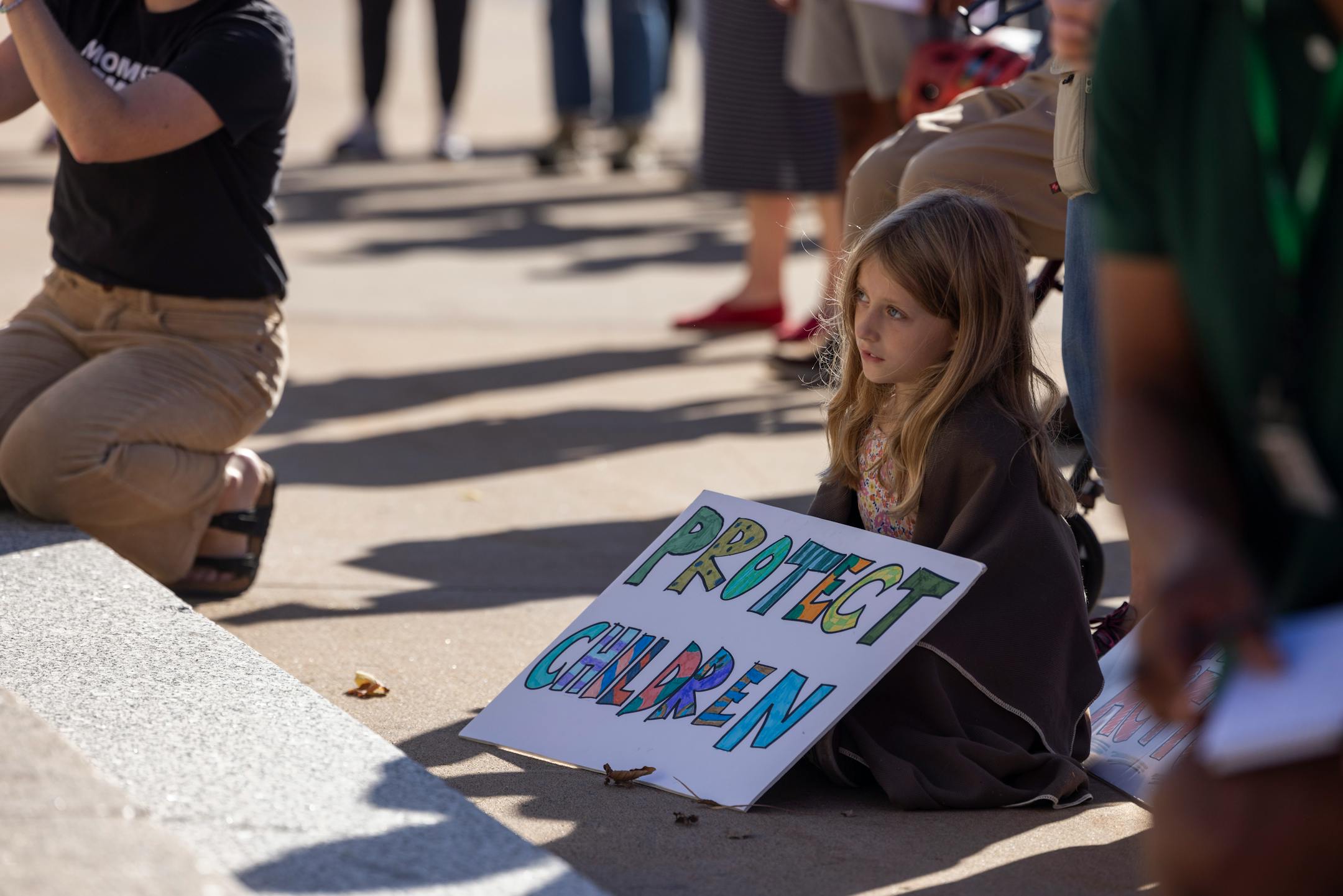
A young girl holding a sign that reads “Protect Children” sat front row of rally in St. Paul that called on Gov. Tim Walz to convene a special session to ban assault weapons, one month after the attack at Annunciation School. (Jaida Grey Eagle/For the Minnesota Star Tribune)

Opinion editor’s note: Strib Voices publishes a mix of guest commentaries online and in print each day. To contribute, click here.

•••

Texts started coming in early Tuesday morning — from friends, neighbors and parents of basketball teammates. High schools across the southern Twin Cities metro were closing because of a school shooting threat. Apple Valley. Eagan. Eastview. Rosemount. In District 196, buses were already on the road when they turned around and brought children back home.

More than a dozen schools canceled classes that day. All 13 schools in the Burnsville–Eagan–Savage district shut down. Burnsville High School and Burnsville Alternative High School dismissed students by midmorning. Parents scrambled for child care. Students sat at home refreshing their phones, unsure what was happening or when they would feel safe returning to school.

School shooting threats are not rare. What’s rare is how visible this one became. Few states require districts to report the threats they receive publicly, so the true scope of the problem is largely hidden. But where data exist, the scale is staggering. In Texas, school officials reported more than 67,000 threats in 2022 — an average of four threats per school. In recent years, districts nationwide have faced waves of false, automated “swatting” threats, including the viral TikTok warning a few years ago calling for a so-called “National Shoot Up Your School Day.”

In a peer-reviewed study, we analyzed 1,000 publicly documented school shooting threats. Most turned out to be jokes, hoaxes or attempts to disrupt school. The problem is that perpetrators who go on to commit school shootings often make threats beforehand. That means every threat has to be treated as real until proven otherwise.

Threats are considered most credible when they include specific targets, specific dates and indications of access to firearms. School leaders are left weighing student learning against student safety, the risk of panic against the risk of catastrophe. We have spoken with principals who describe lying awake at night, replaying their decisions and praying they made the correct choice.

By that standard, what happened Tuesday in the southern metro was the system working. Students saw something concerning on social media and reported it. Adults took it seriously. School leaders and law enforcement coordinated. Schools closed quickly. The source of the threat was identified.

We all exhaled. “There is no ongoing threat to the public.” Until the next time.

That sense of relief was already fragile. Just days earlier, a student on the Stewartville High School wrestling team was shot in the school parking lot by a former teammate. He remains in critical but stable condition. That was not a threat. It was not a hoax. It was real violence, in a Minnesota school community, with lifelong consequences for everyone involved.

Yet we continue to place the burden of preventing school violence on children and educators, treating the violence as fixed, while it is people and institutions that must adapt. Students now run through multiple active shooter drills each year, starting in kindergarten — sitting silently in dark closets, rehearsing how to survive being shot at school. Districts divert limited budgets toward bullet-resistant glass, surveillance systems, and detection drones.

It is not surprising that some young people joke about school shootings. For them, the threat is omnipresent and overwhelming. This week, thousands of children across this state woke up afraid to go to school. Their parents spent the day imagining their worst nightmare. That is not a normal or acceptable way to educate a generation.

We can do better — and Minnesota has begun to.

On Tuesday, Gov. Tim Walz signed executive orders establishing a Statewide Safety Council, expanding the use of extreme risk protection orders, and promoting safe firearm storage education. These are meaningful, evidence-based steps. But they are not sufficient on their own.

The Legislature must also act: Fund school-based mental health services. Mandate and support behavioral threat assessment and management teams in schools. Increase investment in statewide crisis intervention and anonymous reporting systems. Hold social media companies accountable for the role their platforms play in amplifying threats and radicalizing vulnerable youth.

And further regulate access to deadly weapons — including those capable of firing more than 100 rounds in minutes, like the one used this fall at Annunciation Catholic School.

These are not partisan talking points. They are well-established prevention strategies supported by decades of research on school violence.

Closing schools in response to threats will continue, because it must. But prevention cannot stop there. Our children should not have to grow up practicing how to hide from bullets, as if shootings are some unavoidable acts of nature. And parents should not have to wonder, every time their phone buzzes, whether today is the day a threat becomes real.

Minnesota can choose a different path — one that takes prevention seriously, before the next text message arrives.

Jillian Peterson is a professor of criminology and criminal justice at Hamline University. James Densley is a professor of criminology and criminal justice at Metro State University. Together, they are the co-founders of The Violence Prevention Project Research Center and co-authors of The Violence Project: How to Stop a Mass Shooting Epidemic.

about the writer

about the writer

Jillian Peterson and James Densley

More from Commentaries

See More
card image
Jaida Grey Eagle/For the Minnesota Star Tribune

A recent wave of closures across the south metro serve as yet another reminder that the Legislature must act to stop this scourge.

card image
card image