
The case for active management when so few outperform the S&P 500

Cost is one reason why so many highly educated and well-paid investment experts are having such a difficult time beating the the benchmark index.

For the Minnesota Star Tribune
January 24, 2026 at 1:01PM
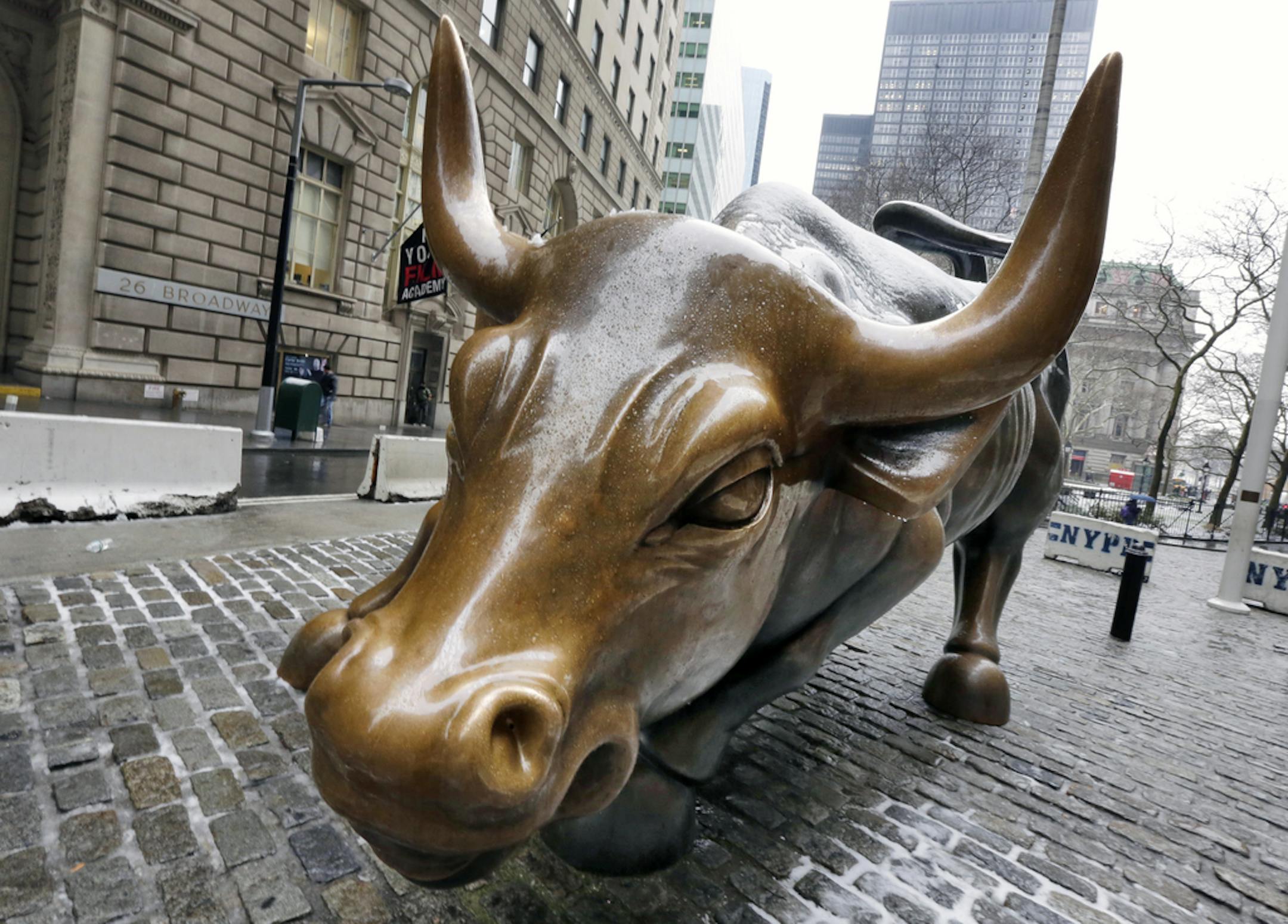
The Charging Bull sculpture by Arturo Di Modica, in New York's Financial District, is shown in this photo, Wednesday, Feb. 7, 2018. The current bull market is set to turn nine years old in about a month. As of Jan. 26, the date of the last market record, the S&P 500 had more than quadrupled over that time. The market had made big gains over the last year, and many experts felt stocks were overdue for a slump. (AP Photo/Richard Drew)
The Charging Bull sculpture by Arturo Di Modica, in New York's Financial District, is shown in this photo, Wednesday, Feb. 7, 2018. (AP Photo/Richard Drew) (Richard Drew/The Associated Press)

One question many are asking after 2025’s continuation of the artificial intelligence-led stock market rally is whether we still need actively managed stock funds.

The relative performance numbers from last year aren’t pretty. According to Morningstar, of the thousands of actively managed U.S. large-cap blend stock funds, an embarrassingly small number of them (27%) outperformed the S&P 500 index in 2025.

And that’s the good news, because the number of actively managed large-cap blend funds outperforming the S&P 500 index in the past three and five years is even lower, at 22% and 16%, respectively.

Cost is one reason so many highly educated and well-paid investment experts are having such a difficult time beating the S&P 500. But the construction of the index itself is another telling part.

Concentration

The S&P 500 index, like most indexes, is “cap weighted,” which means each holding is weighted based on the market value of its outstanding shares when calculating the index’s return.

In other words, the more valuable the company, the larger its influence. In 2025, less than 5% of the S&P 500’s holdings were responsible for more than 71% of its return.

As investors pile more money into S&P 500 index funds, the cash is invested in the same cap-weighted manner, meaning an increasingly large percentage of incoming cash goes into a handful of already very large technology companies.

The better the index performs, the more assets it attracts. This virtuous cycle of performance-attracting assets, which in turn boosts performance, is at the heart of the current problem for active management.

Understanding risks

The last time the S&P 500 index was this concentrated was in the early 2000s, a period now affectionately referred to as the Tech Stock Bubble.

At their peak, the top-10 companies in the index represented approximately 25% of the index and carried an average P/E of 43. This period preceded a technology stock swoon greater than 70% in a matter of months and serves as a painful reminder of the risk of putting so many eggs into so few baskets.

Today, the top-10 companies represent just more than 40% of the index, but some argue this time is different because their average P/E is “only” 28. I fear many investors don’t fully understand how concentrated their index fund has become and are unaware of the amount of risk they are currently accepting.

Everybody has their own risk tolerance, and it is easy to grow complacent and forget a bull market can cause a virtuous circle, but that can quickly become a vicious cycle of wealth destruction as a bear market causes the rapid selling of a similarly narrow group of stocks.

Active element of passive

While the S&P 500 index generally is invested in 500 different companies, the actual list of companies is constantly changing.

Historically, the list of companies has seen an average of 20 to 30 new companies a year. The S&P index Committee is constantly on the lookout for U.S. companies to add to the index and uses a number of criteria to decide which companies to add or remove from the index, including factors such as liquidity, market capitalization and profitability.

This means there is an “active” element to the S&P 500 index. Case in point, when one well-known member of the S&P 500 index, Enron, filed for bankruptcy in 2001, the committee decided to replace it with an up-and-coming video game chip maker named Nvidia. If you’ve had money invested in this index since 2001, you’ve participated in one of the greatest home-run investments of all-time.

Looking ahead

History shows the ebb and flow of the relative performance of active managers.

In bull markets, index funds become extremely difficult to beat. In bear markets, what was their strength becomes their weakness, and they become easier to beat.

Today’s S&P 500 index operates at odds with its long-stated objective of offering a well-diversified portfolio, and it should be no surprise the average actively managed fund, which is much more diversified, is lagging. In fact, the only active strategies beating the S&P 500 today are generally those taking even more concentration risk.

In the short term, now might not be an ideal time to overweight indexing given the higher-than-normal amount of risk this strategy currently contains. In the long term, indexing your U.S. large-cap exposure makes sense because bull markets are much more common than bear markets, but only for those willing and emotionally able to suffer through the occasional extreme downside volatility.

Michael J. Francis is president of Francis LLC, a registered investment adviser with offices in Minneapolis and Brookfield, Wis. Mike Francis can be reached at michael.francis@francisway.com. The information contained herein is provided for informational purposes only.

about the writer

about the writer

Michael J. Francis

More from Business

See More
The Charging Bull sculpture by Arturo Di Modica, in New York's Financial District, is shown in this photo, Wednesday, Feb. 7, 2018. The current bull market is set to turn nine years old in about a month. As of Jan. 26, the date of the last market record, the S&P 500 had more than quadrupled over that time. The market had made big gains over the last year, and many experts felt stocks were overdue for a slump. (AP Photo/Richard Drew)
Richard Drew/The Associated Press

Cost is one reason why so many highly educated and well-paid investment experts are having such a difficult time beating the the benchmark index.

card image