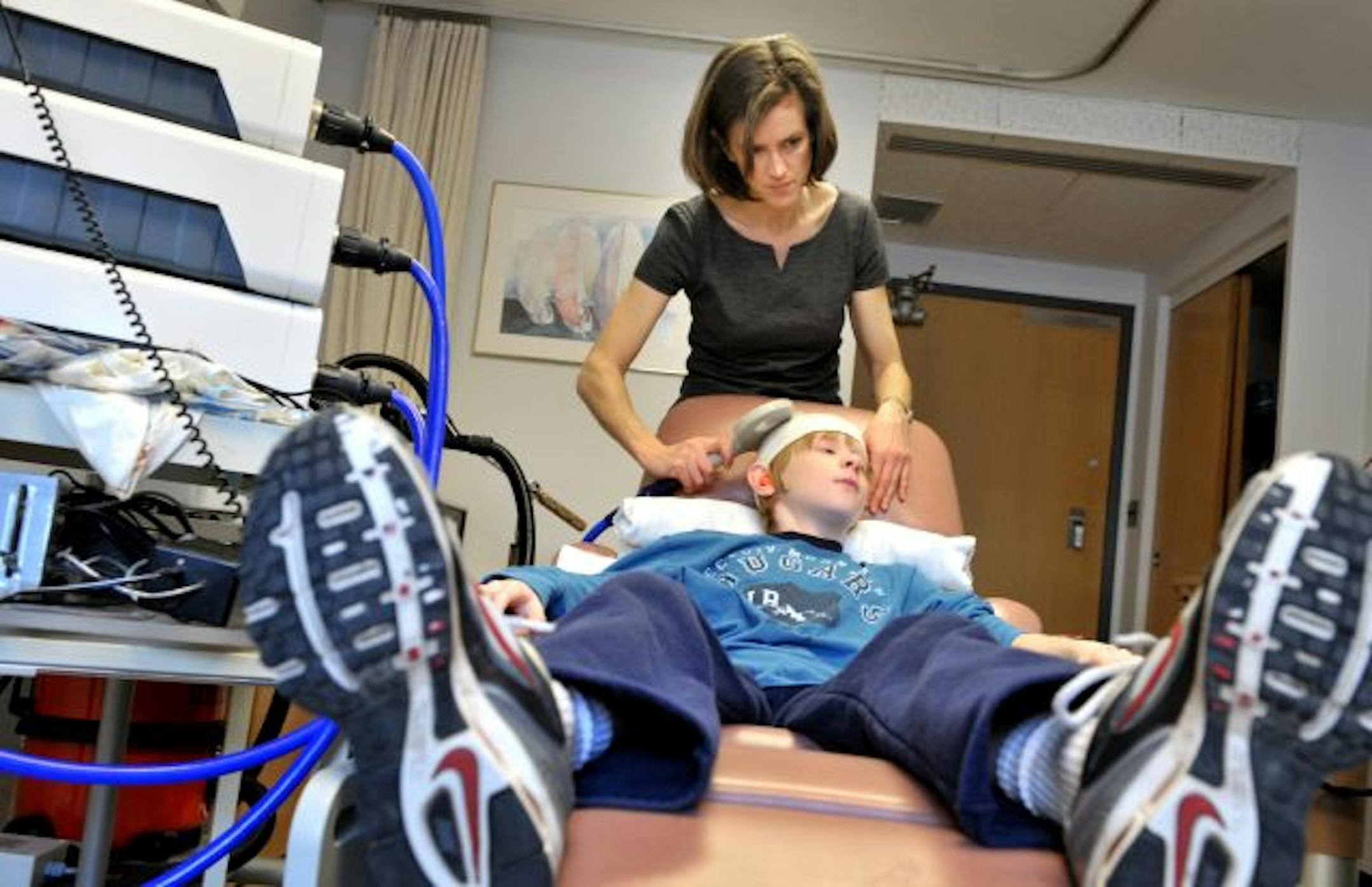
With a mop of red hair and a spray of freckles across his cheeks, 11-year-old Louis Barrett could have stepped out of a Norman Rockwell painting. Instead, he's perched on the very forefront of medical science.
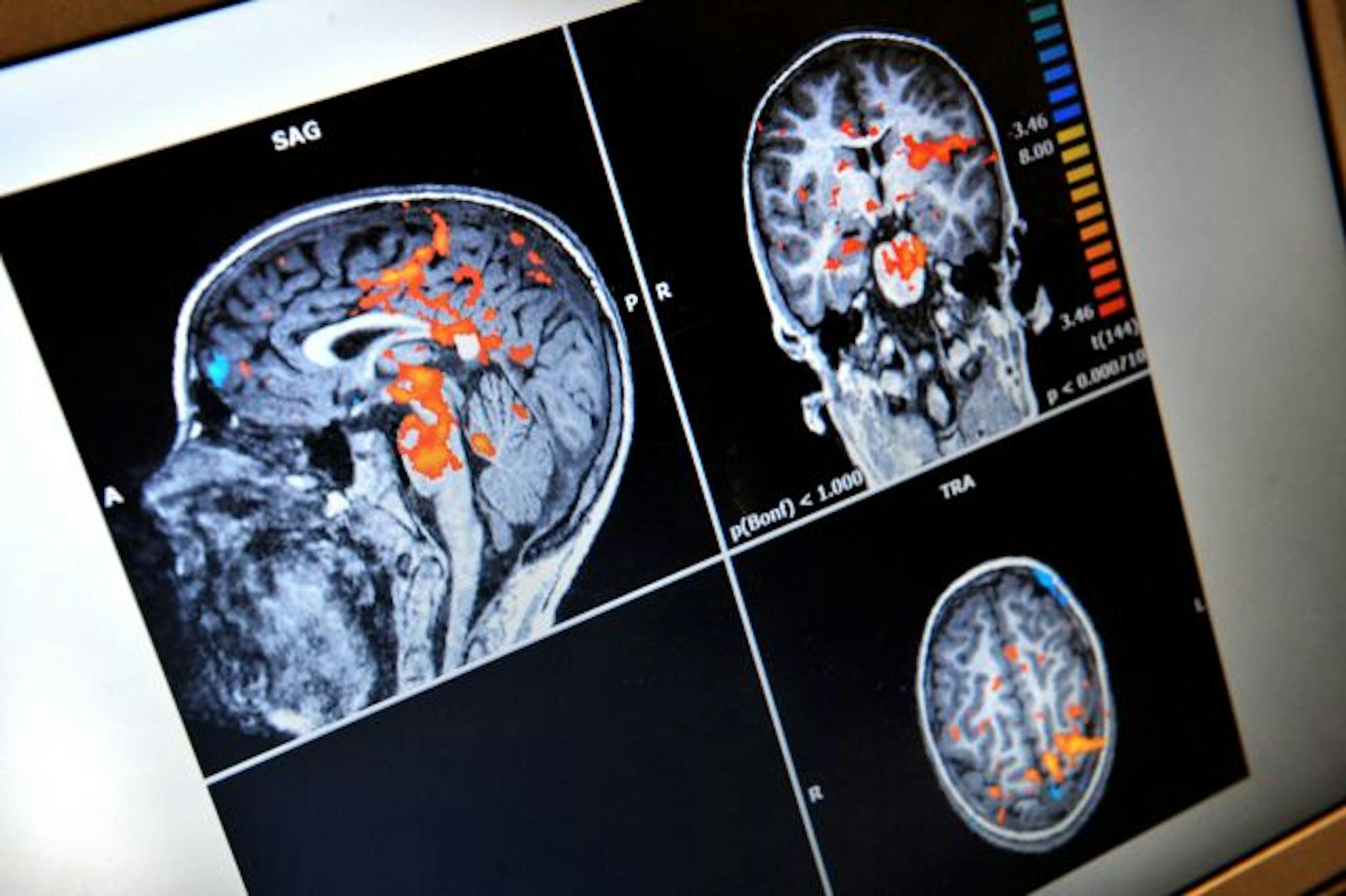
The Roseville boy is part of a small but potentially groundbreaking study at the University of Minnesota examining whether external magnetic stimulation of the brain can help paralyzed children regain function in their hands.
The 30-patient study is just one of hundreds across the country funded annually by the National Institutes of Health (NIH) that seek to discover new drugs, medical devices and biologics treating often-devastating diseases and conditions.
But a study released Tuesday in the Journal of the American Medical Association (JAMA) indicates that the rate of increase in funding for biomedical research in the United States has slowed since 2005. The level of funding from the NIH and industry -- the two key engines of research -- actually decreased slightly in 2008, when adjusted for inflation.
If the trend holds, it could have troubling implications for research-rich environments like the University of Minnesota and the Mayo Clinic, as well as the state's plethora of medical device companies.
In addition, the recession and the prospect of health reform in the United States have sharpened the debate over how research dollars are spent.
The study's lead author, Dr. E. Ray Dorsey of the University of Rochester Medical Center in New York, says the promise of new discoveries still captures the public imagination and enjoys strong support. Plus, he says, research itself can serve as a strong economic engine, creating highly coveted jobs.
But at the same time, policymakers understand that new technologies often spawn new costs. As a result, access to capital for innovative start-up drug, device and biotech companies focused on research has often dried up, and researchers are finding the competition for NIH grants especially fierce.