Review: A devout woman longs for another life in ‘wonderful’ ‘Ruth’

Fiction: Writer Kate Riley’s novel pays homage to a classic.

For the Minnesota Star Tribune
August 11, 2025 at 4:00PM
photo of author Kate Riley
Kate Riley (Colleen Hayes/Penguin)

In structure, tone and theme, “Ruth” owes a debt to Evan S. Connell’s wonderful 1959 novel, “Mrs. Bridge” — a debt author Kate Riley freely acknowledges.

Like “Mrs. Bridge,” “Ruth” is written in close third person and structured in short, flat chunks of anecdote and description. The story follows a slightly baffled but obedient woman trying to fit into a life of conformity.

Born into a fictitious, strict Anabaptist commune in 1963, Ruth is, like all women in the religious colony, destined to become a passive and obedient wife. Any imagination or nonconformity is tamped down. Vanity is squashed, as are most emotions. Women wear kerchiefs over their heads and dress in long, homemade skirts provided by the collective. (“Fabrics were assigned and sometimes punitive.”) Mirrors large enough to show the entire face are not permitted.

Ruth is a believer, and she does her best but she cannot obliterate her thoughts, which are sometimes wickedly funny and at other times seething and rebellious.

Her beauty-loving mother, Esther, had hoped to name her Maybelline Raisinette, and Ruth later in life hoped to name her own daughter Idea. But bestowing names — as with so many other responsibilities — is a job for the men. Maybelline Raisinette became Ruth, “the ugliest Biblical name [Esther] knew,” reminding her of “nothing so much as a tuber,” and Idea became Gretel.

Women’s desires are not acknowledged, much less indulged, and when Ruth brings a school friend for communal dinner, the friend whispers, “You’ve got to get out of here. You can stay with my family as long as you need.”

But like Mrs. Bridge, Ruth clings to her cage and quietly fears what lies beyond.

Much of the book’s quirky humor comes from Riley’s deadpan tone and her juxtaposition of odd details — Ruth’s brother painted a portrait of the Virgin Mary that is “careful and menacing.” The women in an old photograph look ”like rats in kerchiefs.”

Riley’s descriptions of people are devastating. Dick McLeod was “a zealous toad of a man.” Seven-year-old Robert Mueller studied Ruth’s friend “with the intensity of a predator.” At a Mother’s Day outing, where “all qualifying sisters” were bused to a lake, one of them hoisted up her skirt “and rushed into the water like a stung hen.” I chuckled throughout this novel, even as I despaired that Ruth would ever be free.

She has no say in her life, and she is left to watch in lovelorn sorrow when the boy she fancies is paired with another woman. Ruth understands who her husband will be when another youth, Alan (“purely medium in all qualities”), speaks to her when they are both looking at a bulletin board.

She is cautiously curious about the outside world. “She never lingered online, though she desperately wanted a few hours, unseen by God and Alan, to search.”

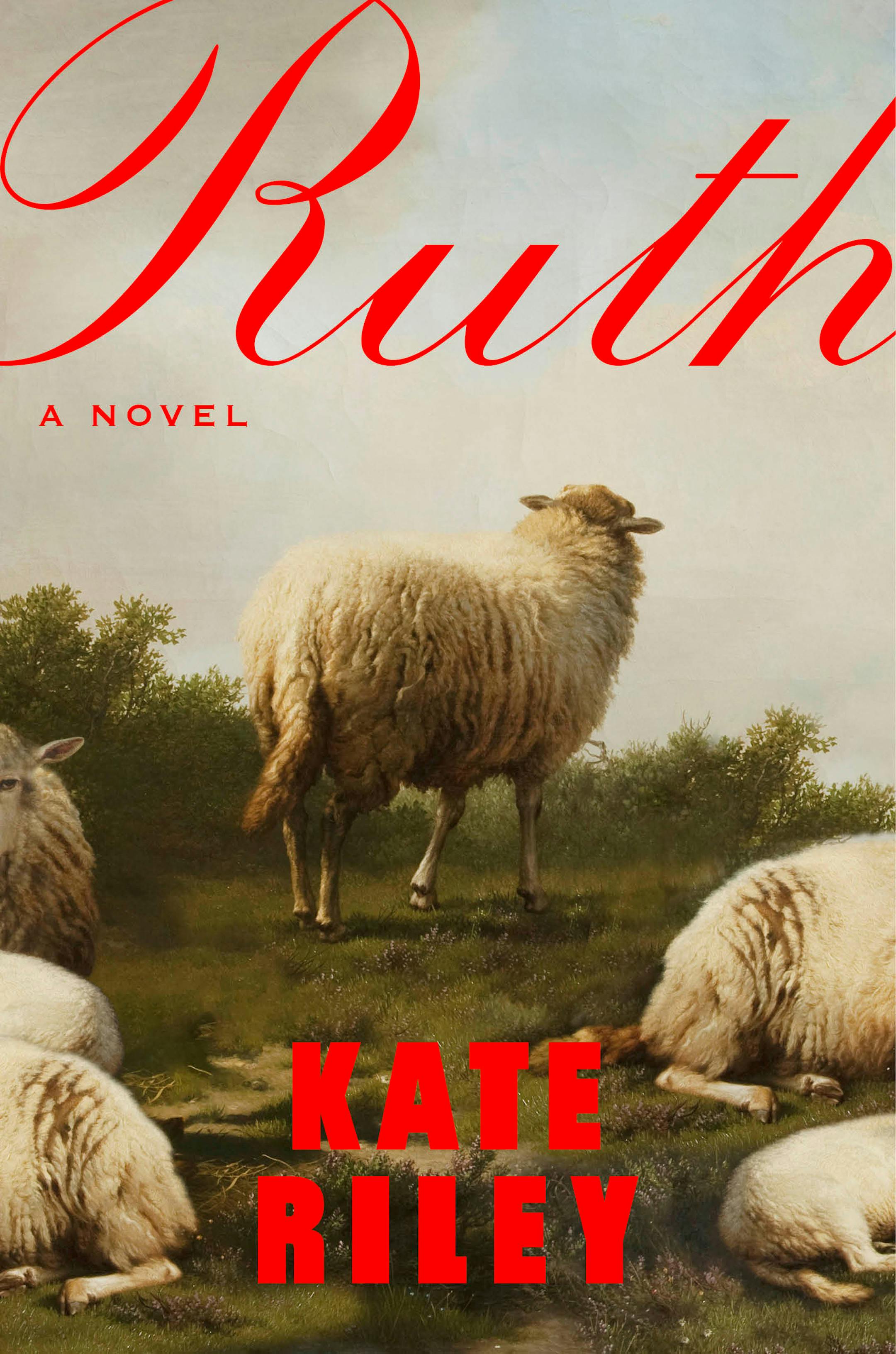
cover of Ruth is a painting of sheep relaxing on a hill
Ruth (Penguin)

“Ruth” grapples with free will and with valuing the collective over the individual. No one in the commune goes hungry, everyone is safe, babies are watched, clothing, food and necessities are provided. All questions are answered through faith. But is all that enough? “Ruth” raises questions the reader must ponder as it shows again and again that you can control a person’s behavior but you cannot control their inner life.

What a strange and wonderful book this is — emphasis on the strange. No, wait — emphasis on the wonderful.

Laurie Hertzel reviews books and teaches in the nonfiction narrative MFA program at the University of Georgia.

Ruth

By: Kate Riley.

Publisher: Riverhead Books, 248 pages.

about the writer

about the writer

Laurie Hertzel

Senior Editor

Freelance writer and former Star Tribune books editor Laurie Hertzel is at lauriehertzel@gmail.com.

See Moreicon

More from Books

See More
The Abbey Church is a landmark on the St. John's University campus located in Collegeville.
The Minnesota Star Tribune

Local nonfiction: “Greater Minnesota” travelogue details a home-grown returnee’s conversion.

photo of author Tilar Mazzeo
card image